
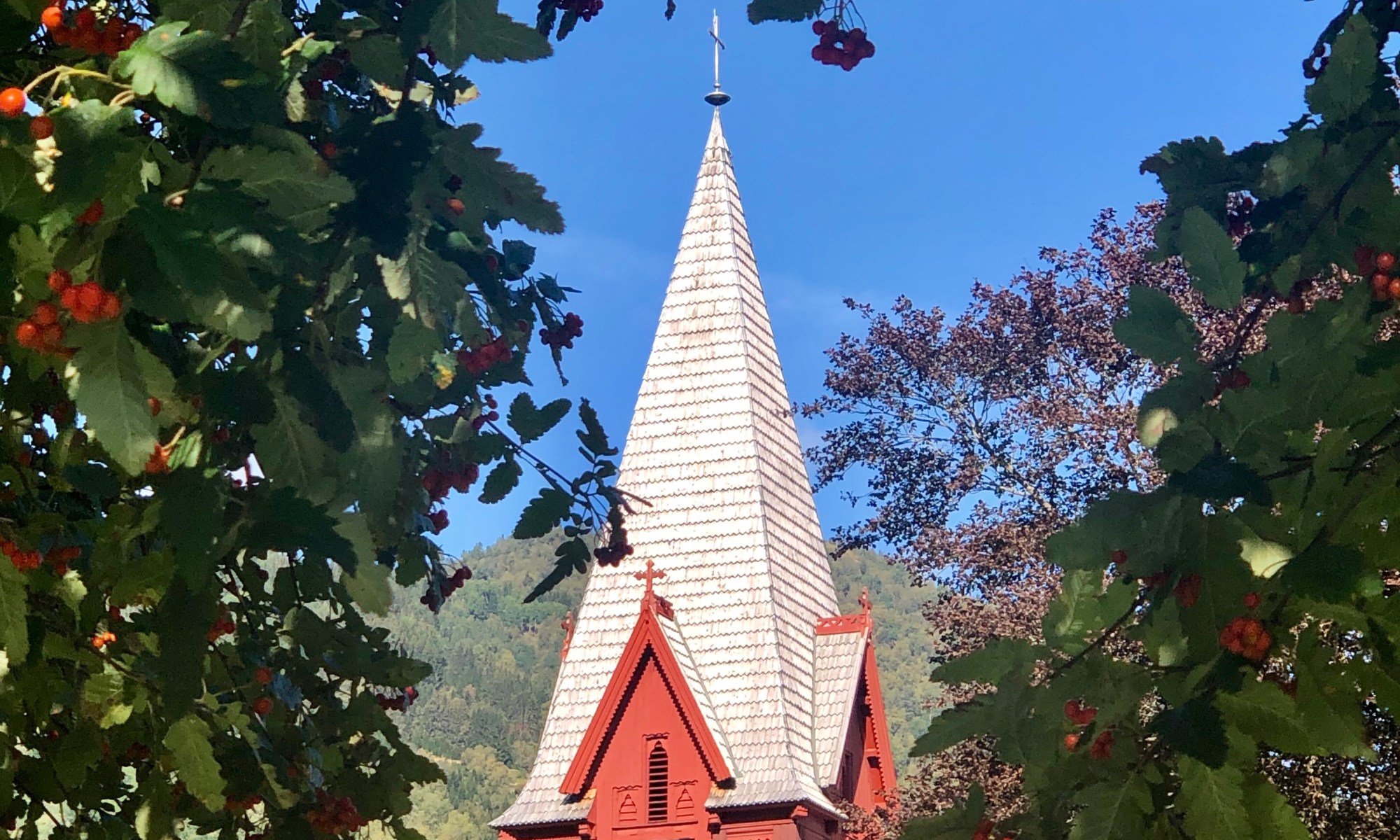
Even on the days in Sogndal when the sun has put aside its typical shyness, it has done so only under the condition that the clouds offer moral support; today, however, it found the courage to command the sky alone and gifted us with an enviable day of beautiful conditions. Anxious not to waste the sun’s generosity, we set out on foot for a tour of sights we’d not yet covered.
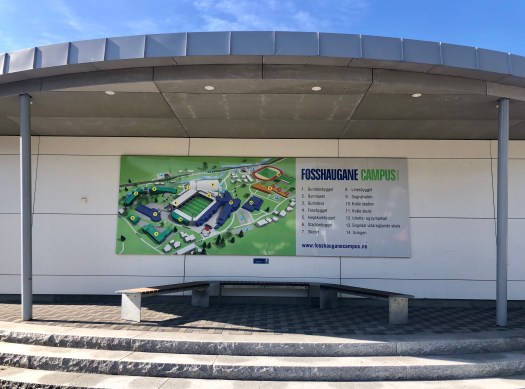
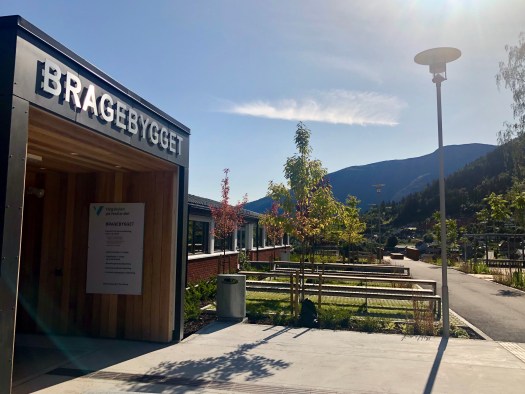
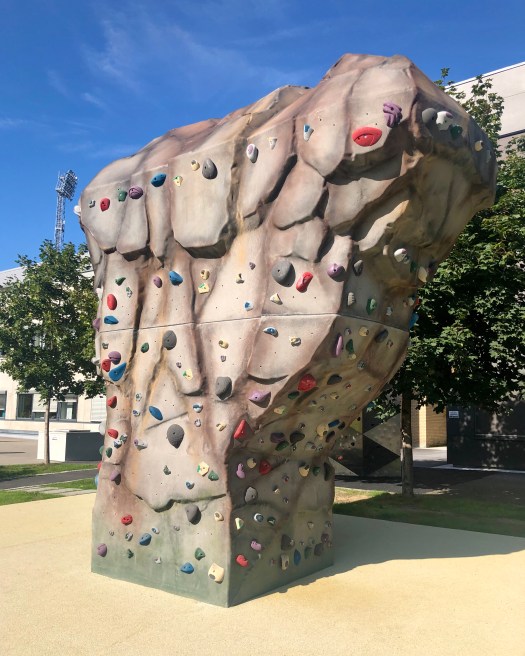
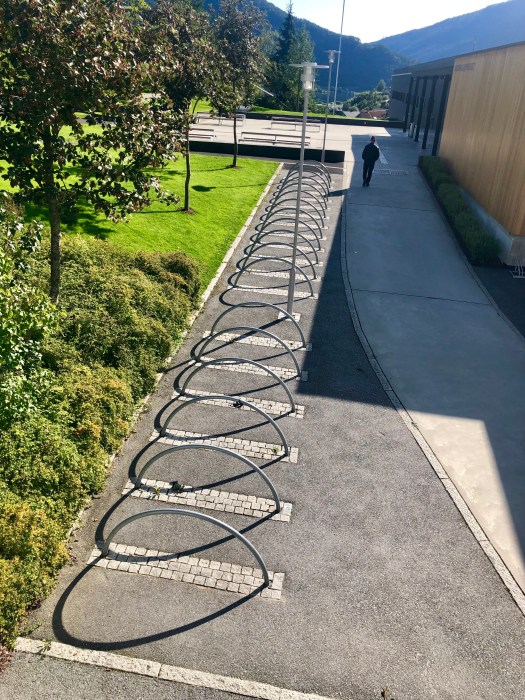
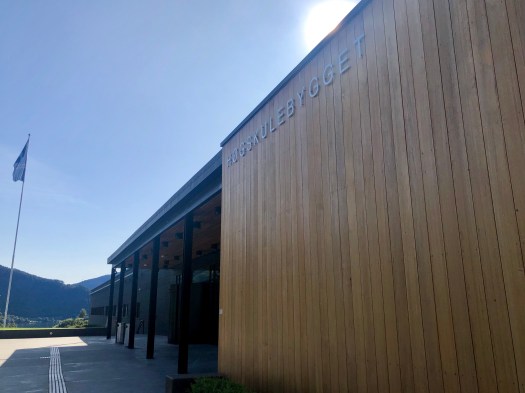
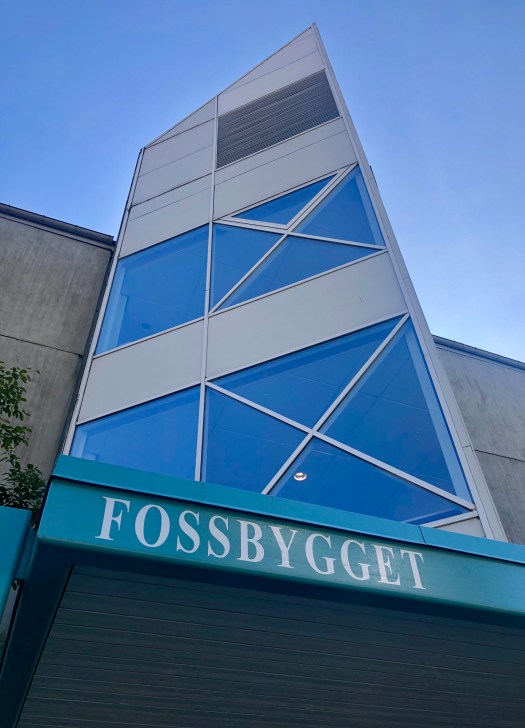
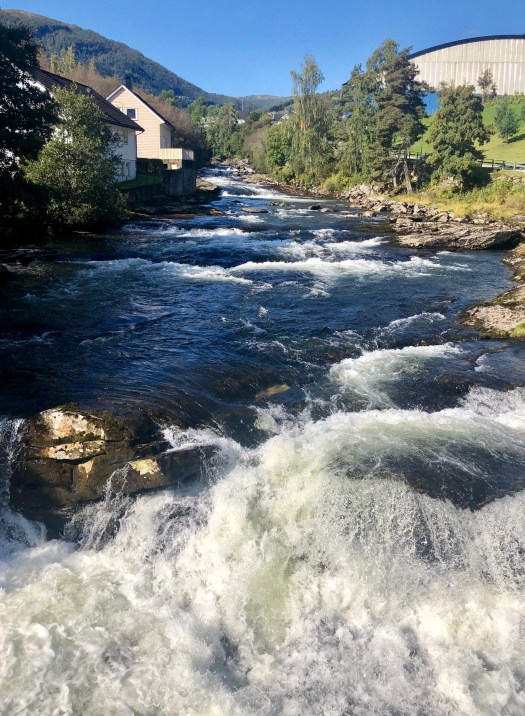
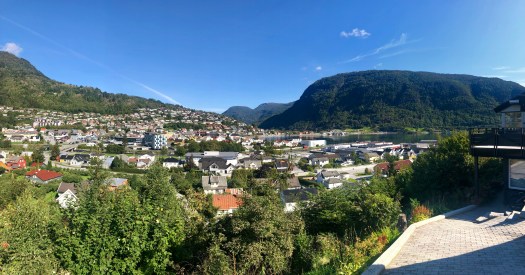
En route to our main destination, we perused Fosshaugene Campus, a sprawling education and sports complex that covers much of the nearest land that our apartment overlooks. The separate buildings that comprise the grounds are attractively constructed with a modern flair, and many different outdoor activities are supported, from beach volleyball to rock climbing. And, of course, as the campus’s name suggests, the local waterfall also runs alongside the lot. All of this is to imply that, while no students were present during our tour today, it is difficult to imagine many of them spend much time indoors when the choice is given.
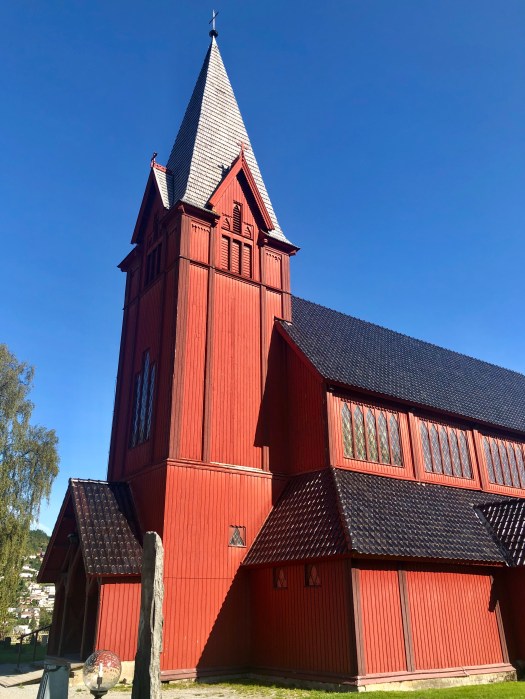
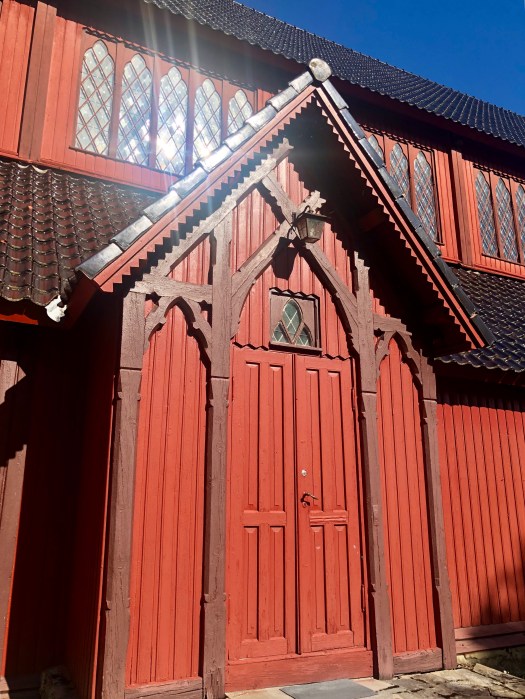
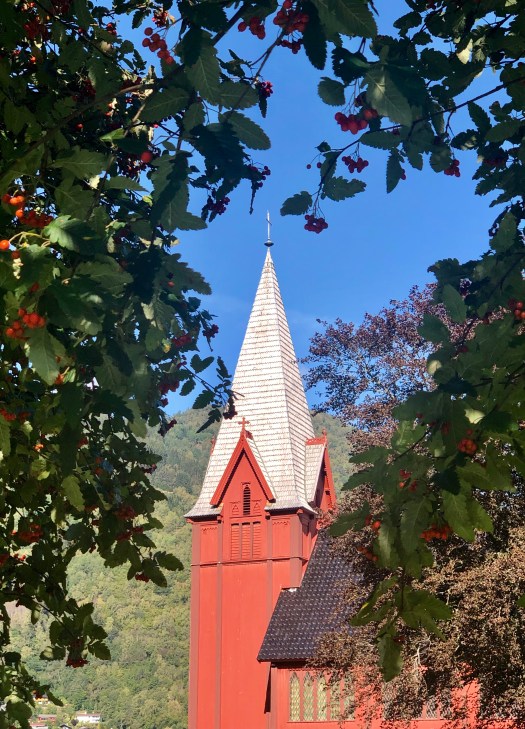
The transition from this would-be bustling campus to our next destination–Stedje, the nineteenth century church of Sogndal–took us from new to old, lighthearted to somber. The church is a marvel of old world architecture, though its 1867 construction date is not so impressive next to that of the original church it was erected to replace, whose first mention in historical text is found as early as 1184. The church is surrounded on all sides by gravestones commemorating bygone names that implore you to imagine the circumstances of their lives. Some markers show children who left the world before their first birthday. Others passed almost certainly as a result of war. There was history both corporeal and ethereal at Stedje, entrancing in its gravity and mystery.
As one might expect, many Fosses have been laid to rest in the lawns here, including Bjarne, the youngest of six Foss brothers (two of whom–Erik and Arnor–have been previously mentioned here) who was also one of the Norwegian relatives I met many years ago when he visited us at our home in Madison. I was too young then to remember him clearly, but it was nonetheless comforting to pay respects to him here.
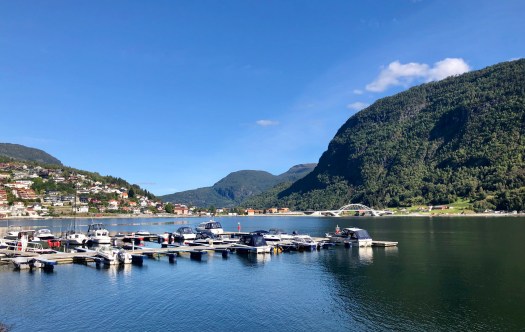
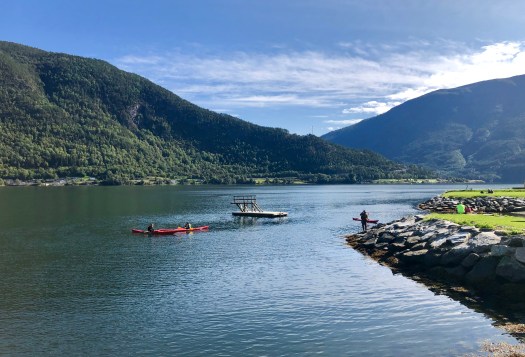
Our circuit back to our apartment took us along the waterfront, where happy Sogndal weekenders enjoyed kayaking and boating in the fjords. Seeing the city from a new angle is a fresh joy every time. I know it’s likely a tired trope at this point to hear me wax poetic about the beauty of our surroundings, but the way I’ve been able to experience the world in the places I’ve lived has never offered me the opportunity to see the earth like this. The blues are bluer here, the greens greener. There is a vibrancy to the hillsides and the horizon that is unmatched. It is my hope that everyone has the chance to witness this–if not here, somewhere. It is a powerful reminder of both our smallness and our responsibility.
 Where the Waterfalls Mean Home