
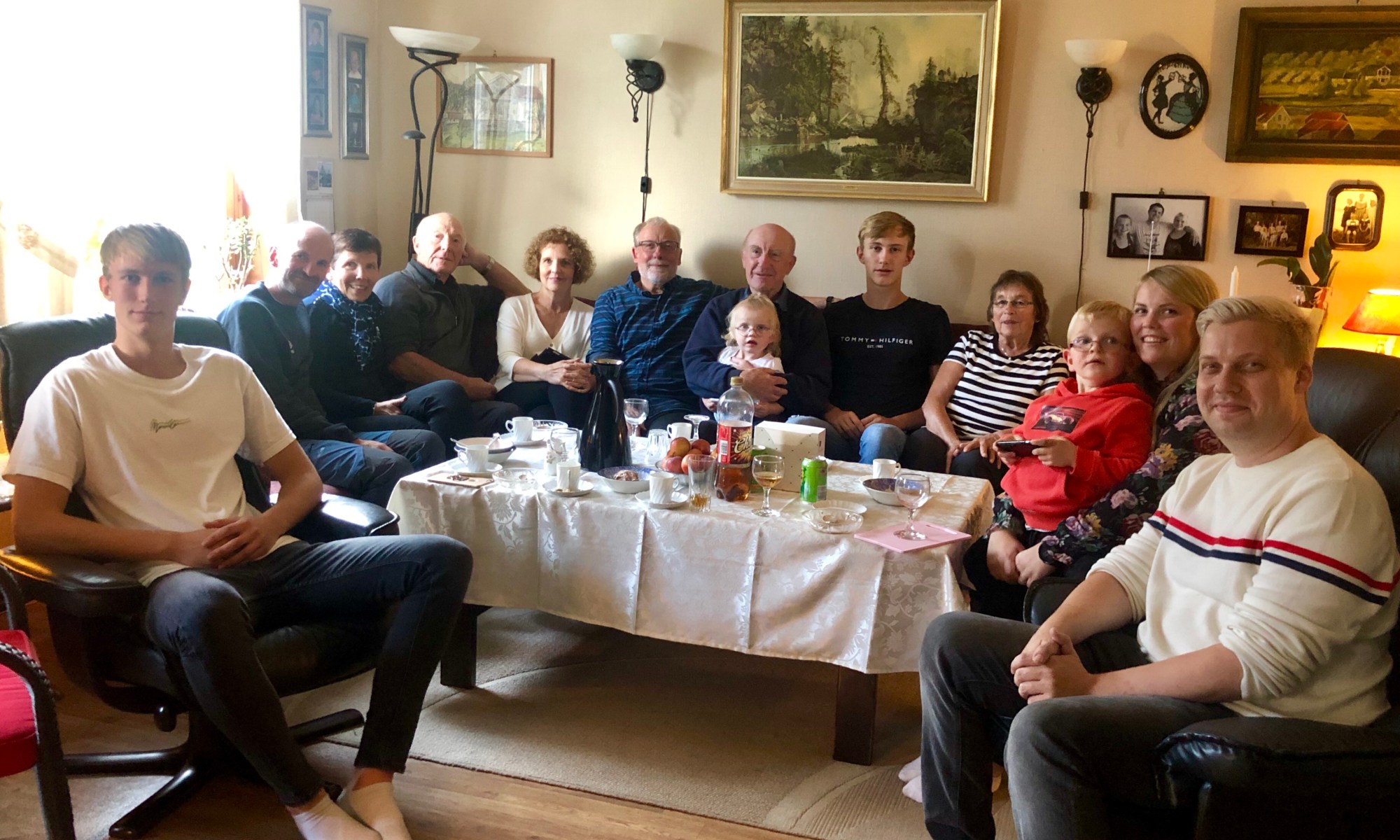
A rainy day in Sogndal called for a day of conversation and food, so without much ado, we headed over to join Erik and Kari for coffee and chit-chat before migrating two doors over to meet many new faces (for me, at least!) at one of the many Foss households. Our lengthy conversation touched on many subjects–too many to remember or recount here–and has given me some cause for reflection that I share below.
Years ago, I was introduced to the writing of Chimamanda Ngozi Adichie, the accomplished author of books like Americanah, Half of a Yellow Sun, and Purple Hibiscus. Her résumé also includes the speech-turned-essay We Should All Be Feminists, an excerpt of which was prominently featured on one of Beyoncé’s songs, Flawless; countless literary awards and honorary university degrees; and numerous lectures and academic contributions that continue to shape international discussions in literature.
I first encountered her through one of her TED Talks, entitled The Danger of a Single Story, delivered a little over ten years ago from today. In the speech, Adichie analyzes how our views of the world and the people in it are shaped, both intentionally and otherwise, by the stories we encounter about them. Further, she discusses how power and influence have historically been wielded to reduce specific people and cultures to oversimplified, caricatured versions of their reality, while other places have retained a sense of complexity and multitudinousness as a result of their ubiquitous representation in media and storytelling. Her talk made a profound impact on the way I think about the world; to this day, I still find myself referencing the wisdom and the caution Adichie delivers in that lecture very, very frequently.
You can watch the video of that talk here.
I have thought about Adichie’s speech dozens of times on this trip to Norway, because its central thesis is something I have grappled with as I process my experience here. I think about my preconceived notions of this place and how they shape my intellection. And I think about the reverse: the preconceived notions of Americans, the stories that shape how the rest of the world thinks about us, and the pervasiveness of popular media and politics coming out of the United States. I think about how we react when those previously known stories align with the reality in front of us and what happens when they don’t. I think about the great responsibility that comes with the privilege of forming new stories that, in turn, will inform the way I think about this place in the future, and in representing myself in a way that adds substance and purpose to the impressions I am forming with the family members I meet here.
If this sounds precarious or mired in circular contemplation, it’s because it is.
It can be difficult to confront the reality that, for example, my uncontainable hatred for our president does little to detract from the fact that his influence tarnishes our place in the world as Americans and, even absent our permission, links our stories with his. That our relatives have politically informed opinions of America at all is also woefully unreciprocated. Our relatives clearly digest a vast wealth of information about American politics and their ramifications across the globe; conversely, I was asked several times before departing for Norway if I was planning to visit Elsa’s castle when I got here, the most substantive question many Americans are able to produce about this country (and erroneously, to boot).
As Adichie notes, the problem with stereotypes is not necessarily that they are unfounded, but rather that they are incomplete. And so I have attempted to discipline myself to center this idea as I reflect on and digest our travel experience here. I am careful to remember that my interactions with individual people are reflective of those individual people: I should not feel emboldened to extrapolate their words and actions to be representative of an entire region or, worse, an entire country.
As I reread my own words as I write this, I realize I may be inadvertently implying that I’ve encountered some grave malfeasance here that I am hoping to cast aside, and I want to reassure readers–some of whom are undoubtedly among the great people I’ve met while here–that this is untrue. It is clear that many of the political injustices that occupy much of my time and thought in the United States are non-issues here. Norway seems to wisely choose to invest very little time in denying people the right to live as they are, and it has been a joyous, if mystifying, thing to experience.
But I do feel a great weight of responsibility to be thoughtful, if not burdensomely methodical, about the imprint I leave in the many exchanges we will conduct while here. While many impressions of Americans are lighthearted and harmless, it is critical to my moral values to note that many are not. President Trump has, more than any president in my lifetime, weaponized the concept of storytelling in ways that will take decades to repair, if they are ever repaired at all. While his stupidity and baseless arrogance are sometimes humorous, or are at least helpfully processed through the lens of humor, the real harm he causes to countless people around the world is not. I take it as a duty of principle to make my objection to this harm known when it is called for, and this feeling is only magnified by my awareness of the stereotype of American greed and self-indulgence. (Remember: stereotypes are not always untrue, but rather incomplete.)
As we gathered for one of our many conversations earlier in the week, I was struck by some words Erik offered: “sometimes we must talk about the bad, but it is important, I think, to always remember the good.” In accordance with this astute perspective, I am careful about what I will choose to focus on and remember from my experiences here.
I will remember Geir’s (and Marco’s!) companionship and insight as I hiked up a mountain for the first time in Norway. I will remember Marit’s warm generosity and her important friendship that she and my mother share. I will remember Erik and Kari inviting us into their home for the first time and the palpable sense of welcome I felt there then and still feel now. I will remember joyful laughs in the car with Arnor and Kari as we traversed a landscape I couldn’t forget if I tried. I will remember the mutual thirst for broader understanding we quenched in conversation today–and many times before–as we connected many generations together across a variety of languages and capabilities within each. I will meet each new encounter with a dedication to creating shared memories that make a positive–and lasting, if I am fortunate–difference. My understanding of the world is not expanded by seeking to differentiate and categorize, but rather by recognizing what we share inside of us that makes us all human. I close today’s reflections with Adichie’s words: “I think you travel to search, and come back home to find yourself there.”
 Where the Waterfalls Mean Home