
The knowledge that today was the last full day we would be in possession of our rental car quickly brought the reality of our impending departure from Sogndal to the forefront. A full reflection will take more time than I have to offer tonight, but I do hope to take some time to process this journey through words sooner rather than later; it will be important to record my thoughts in their rawest form.
I have met a fairly staggering number of relatives during our visit, but more impressive still is the wealth of stories and histories that have widened my scope of understanding about where, when, and how my Foss family arrived at our current state of being. This, of course, includes information about both people who are still here and others who are no longer with us. And while it is naturally easier to increase my understanding of the former, it is sometimes right and necessary to take time for the latter.
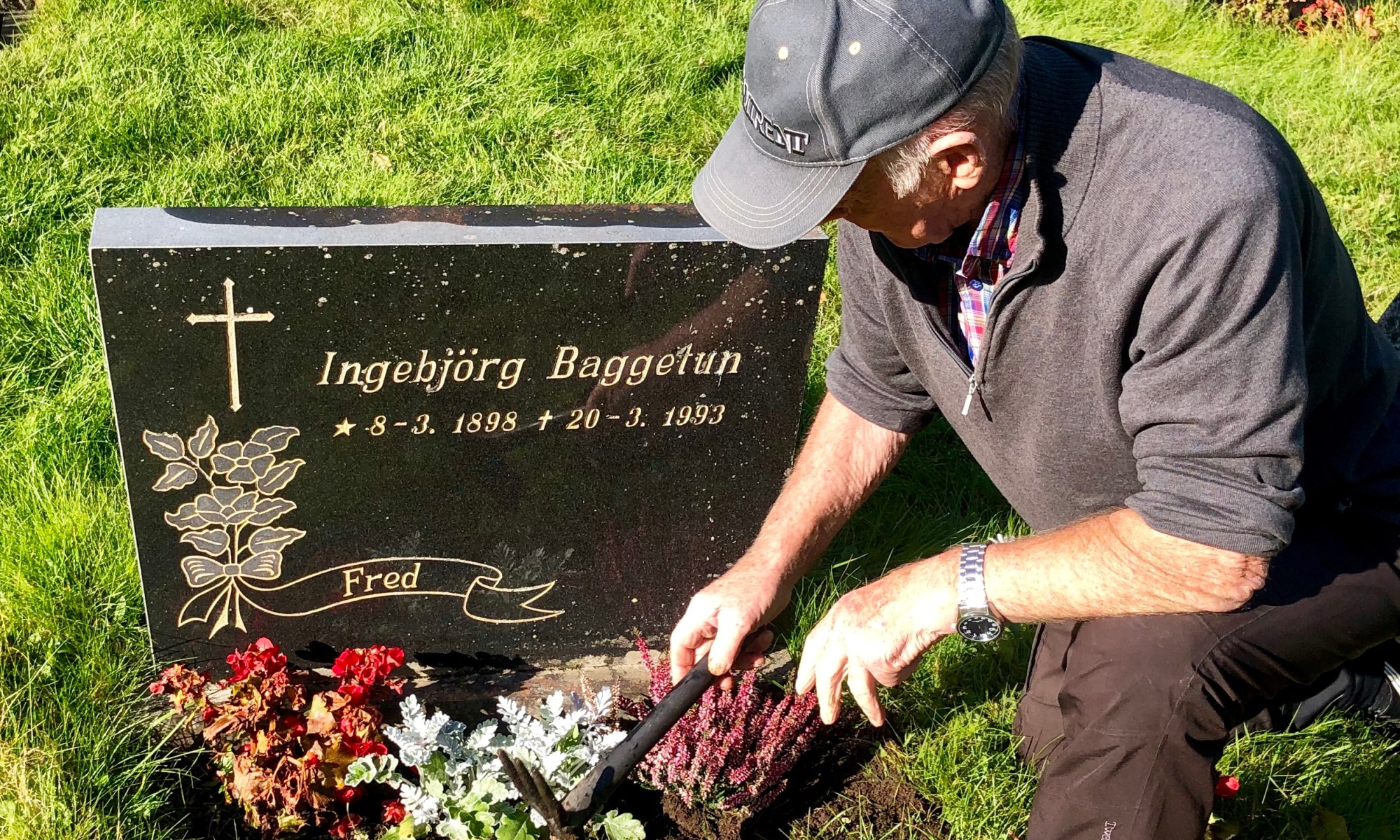
One woman whose name has come up frequently in our conversations about the evolution of the Foss homestead and the way of life from older times is Ingebjörg Baggetun. While not a Foss in name, her honorary membership in the family is not in dispute. Ingebjörg was the budeie–dairy maid–for the six Foss brothers who grew up together in the mid-twentieth century around the Foss orchard and also Fosskamben, the area of cabins perched on a nearby mountainside. Dairy maids are not in vogue anymore today, so I have had to piece together Ingebjörg’s full repertoire of contribution from Erik and Arnor’s retellings; as best I can understand, she shared many responsibilities with a modern nanny, though her job included some tasks no longer typically encountered, like caring for livestock, churning butter, and preparing bread from scratch.
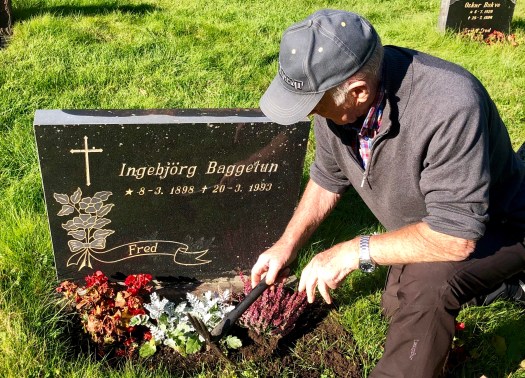
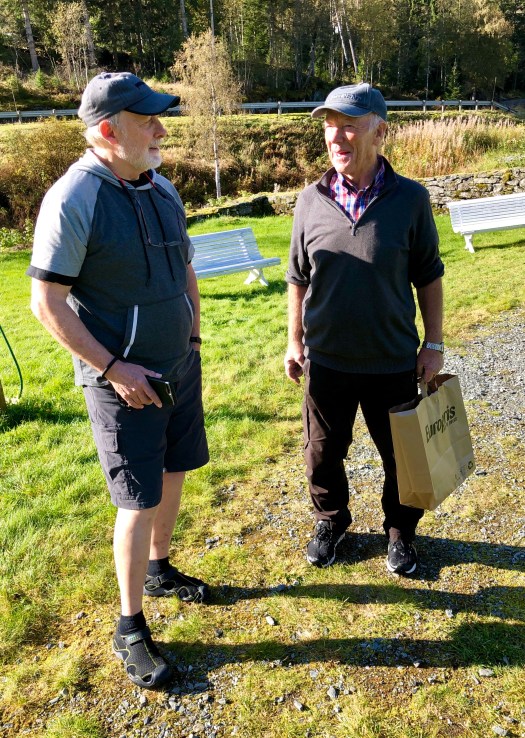
Some of the finer details of Ingebjörg’s life remain hazy to me (as a product of a more recent generation, I simply can’t picture some of what they describe), but Erik and Arnor’s enduring affection for her is quite clear. Both have separately identified her as a second mother to the family, noting her warmth and kindness; in truth, listening to them revere her is enough to make you wish you had known her. Ingebjörg died in 1993 at the age of 95, and the brothers have maintained regular visits to her gravesite about an hour’s drive from Sogndal to pay respects and keep the flowers that line her resting place in good repair. We were honored to join Erik on one such trip to Jostedal today.
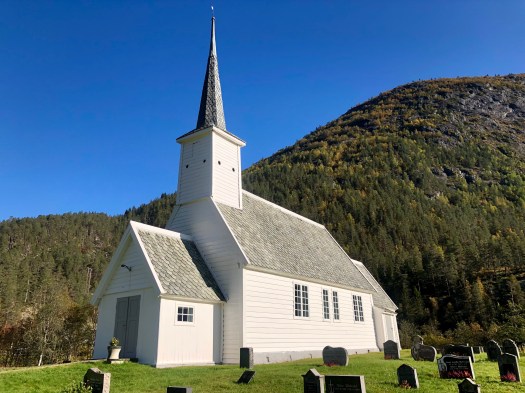
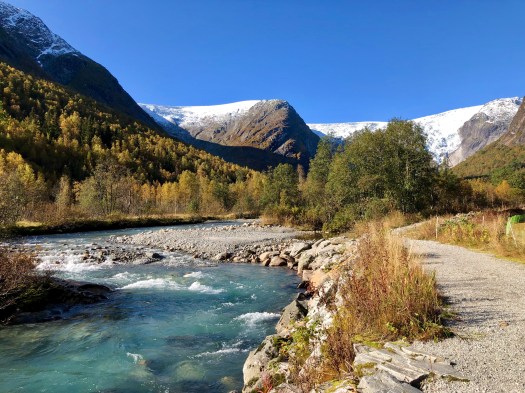
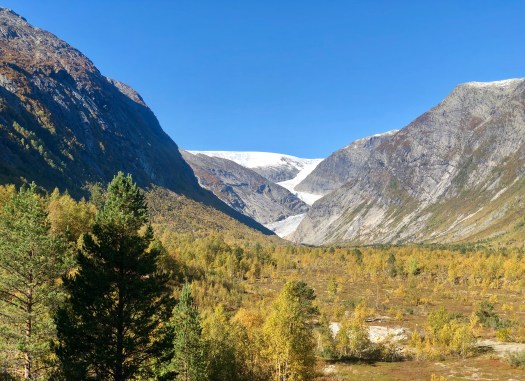
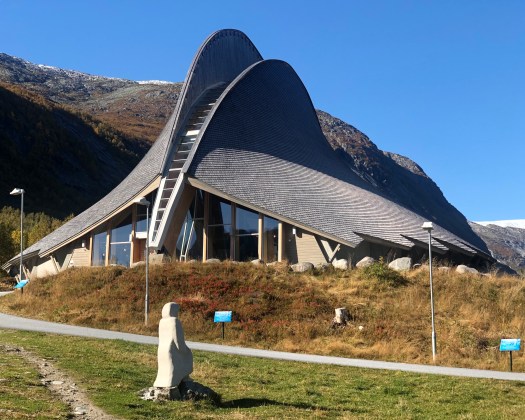
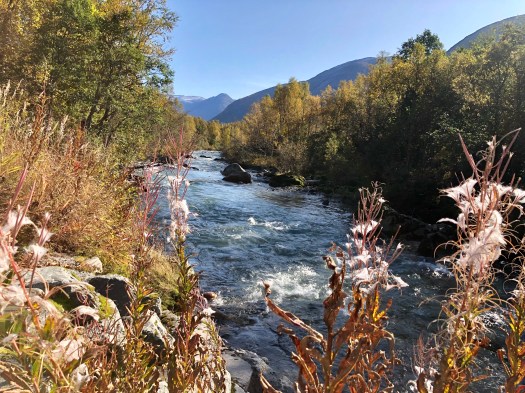
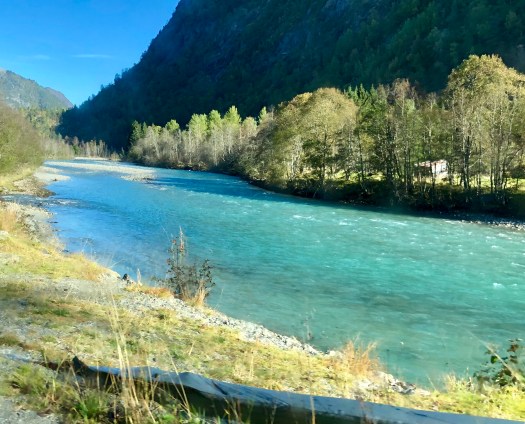
Although Jostedal is a fairly unimposing town, the nature to which it lends its name is anything but. I have previously written of Jostedalsbreen, the largest glacier in continental Europe, that sprawls across almost 200 square miles of mountaintop area; the glacier is named for the municipality. A short jaunt from the town, you can see one of the many “arms” of the glacier–this one is named Nigardsbreen, named for an old farm that was buried by the encroaching ice–that jut out from the main glacial mass. Erik shared–and I later read more about–groups of visiting tourists who ignored travel warnings regarding Nigardsbreen‘s unpredictable volatility and suffered fatal consequences, causing the government to curtail the number of available paths to the glacier. Our viewing of the geographic landmark was thusly limited to a fair distance.
Back in Sogndal, it was time for Marit and me to reunite for round two of our budding cooking partnership, this time over a lesson in venison meatballs. I felt particularly lucky to have this experience because, as I mentioned previously, Marit’s family includes some accomplished hunters, and we were using meat they had obtained themselves. I appreciated being a part of the effort to make sure the animal’s sacrifice was not wasted merely for sport. Marit is a kind and personable teacher, and spending time in the kitchen with her will unquestionably stand among my favorite memories from Norway (and it should be noted that there is no shortage of competition in that category).
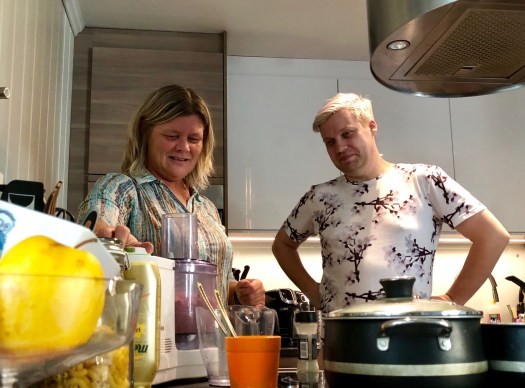
Our dinner chat with Marit, Geir, Kristine, Arnor, and Kari resembled conversation among old friends, and, of course, that makes some amount of sense. I felt a pang of sadness as we wrapped our discussion that spanned topics from politics to family history to language; these people have become more than just family to me: they are also treasured friends. And while the internet has undeniably removed the barriers to long-distance communication, I know there will be times in the future when I wish the talking were happening on this side of the Atlantic. On the bright side of things, what a gift it is to have developed these relationships. It is greater than any souvenir.
 Where the Waterfalls Mean Home