
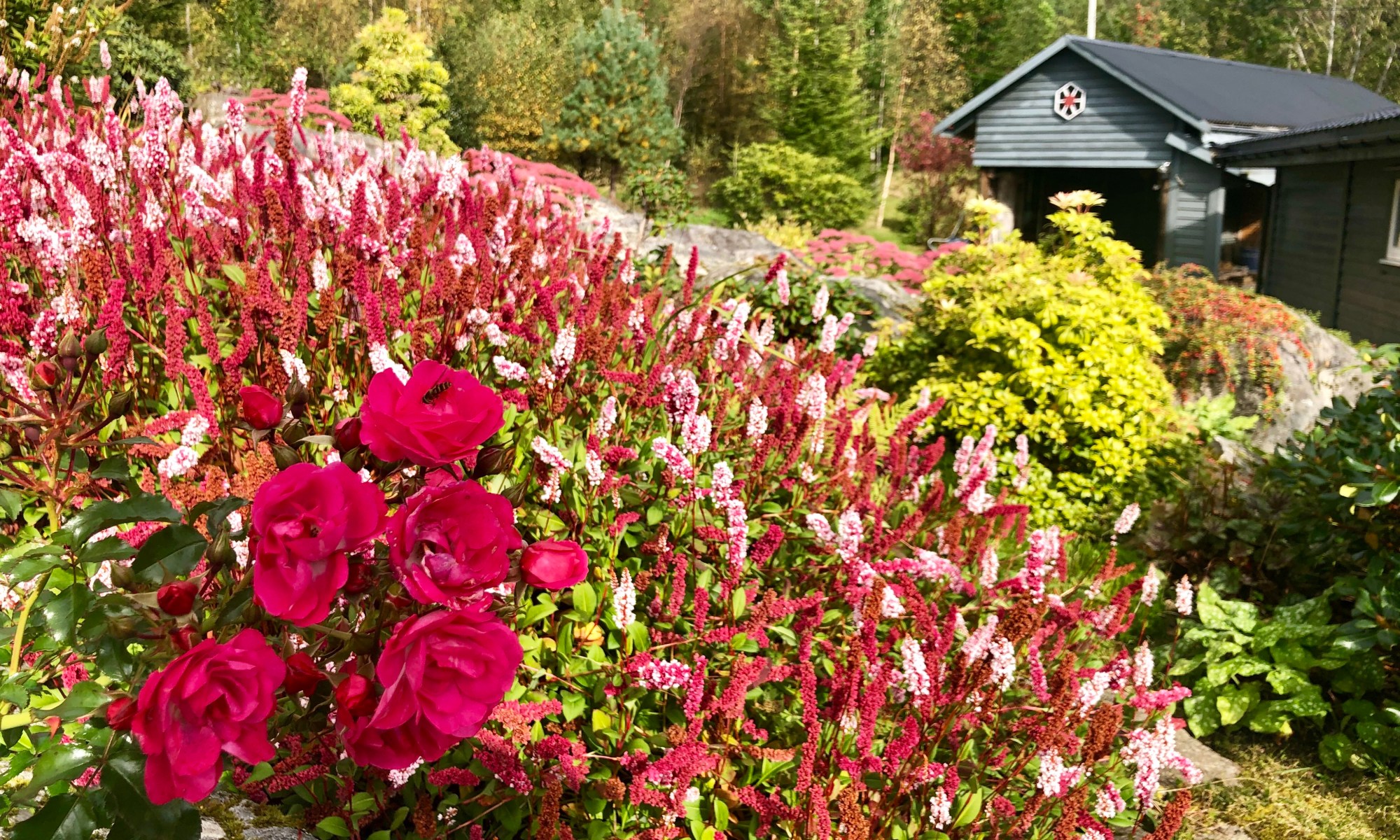
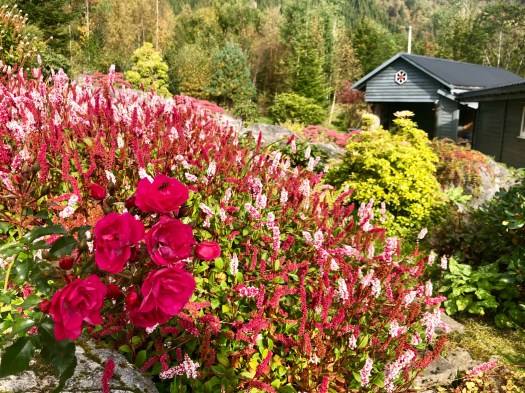
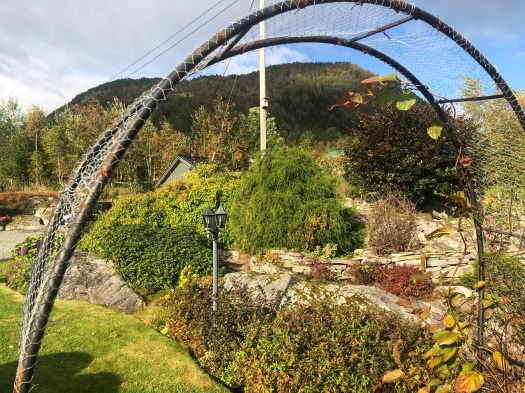
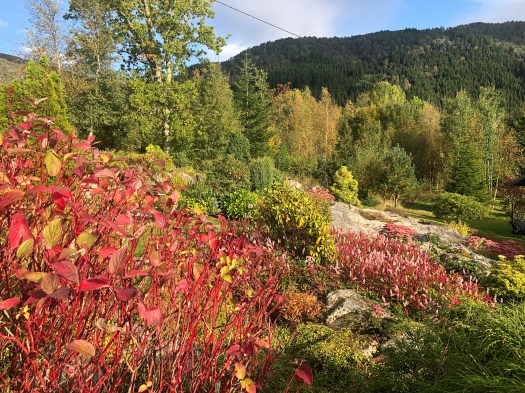
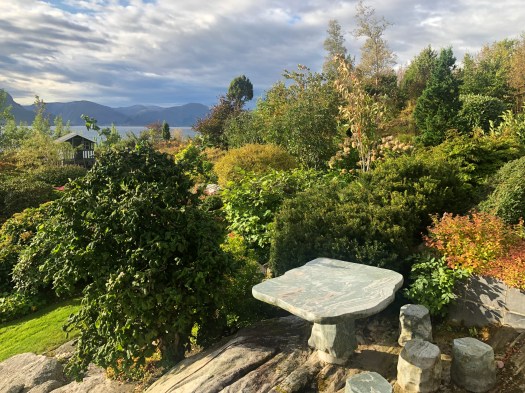
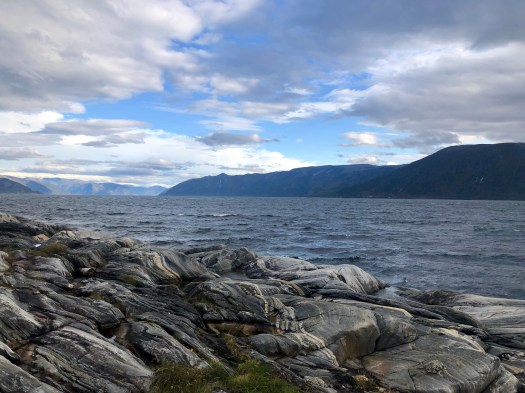
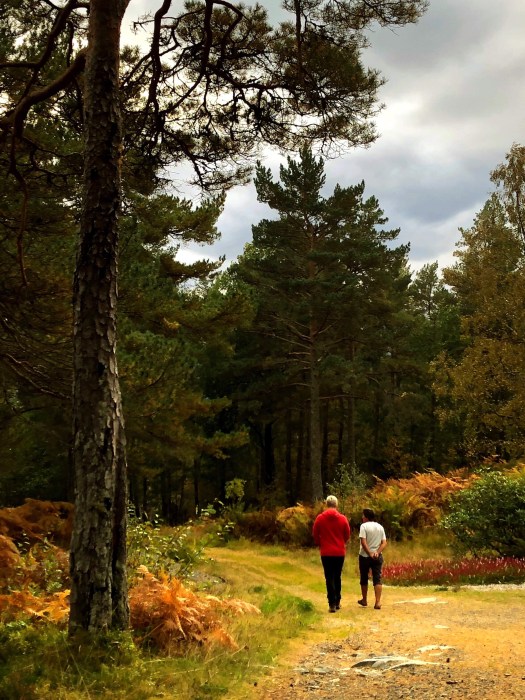
When speaking about the fjords, I would normally suggest the order of the nouns in the title ought to be flipped; few sights are capable of relegating the view across the water to second place. But Bjørg’s epic garden might be one such giant slayer. Only a truly passionate horticulturalist could love living here–and Bjørg is one, admitting to spending eight to nine hours per day working in her yard–but for lucky house guests like us, the chance to sit back and enjoy the fruits of her labor is simply breathtaking. A professional photographer could find many hours’ worth of content here. (My father demonstrated this earlier in the day when our attempt to exit Bjørg’s property for our walk around Lavik was severely delayed by multiple moments of sudden inspiration.)
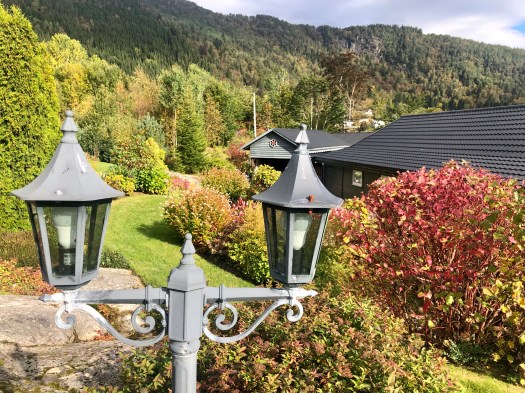
Our stroll through the town revealed a fascinating mashup of modern convenience with old-world vestige. Atop houses still featuring antique wooden architecture, cable satellites protrude into view. Kitty-corner from the Lavik Fjord Hotell, built in the 1860s, sits a parking lot for supercharging electric Tesla cars. And next to the harbor, where giant electric barges ferry vehicles across the fjord, a local man has posted advertisements for lessons in time-tested, old school fishing techniques. Evidently, the age of the town’s population skews quite old: “the young ones need jobs,” Bjørg explained, echoing a refrain that has often accompanied discussions of why our ancestors would have left such a beautiful country in the first place.
When I traveled to Australia in high school, I was mystified to discover that most locals could only identify the same few states (Florida, California, New York); the thought had never occurred to me that only Americans would know all the states in America. (My youthful naïveté diminished, I now understand the colossal ignorance of that impression.) Amusingly, the group of familiar states to Norwegians almost always includes Wisconsin and Minnesota, since so many Scandinavians emigrated to the Midwest. This was reinforced when we visited the local hotel and, upon hearing we were visitors from the United States, the kind employee at the desk correctly assumed our familiarity with Minneapolis and shared that she had visited there. (This same conversation has transpired many times in Norway.)
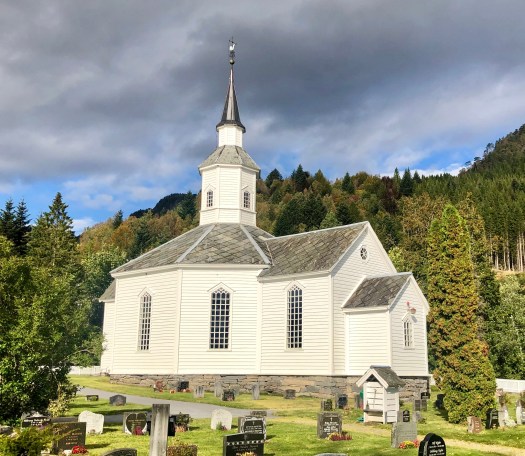
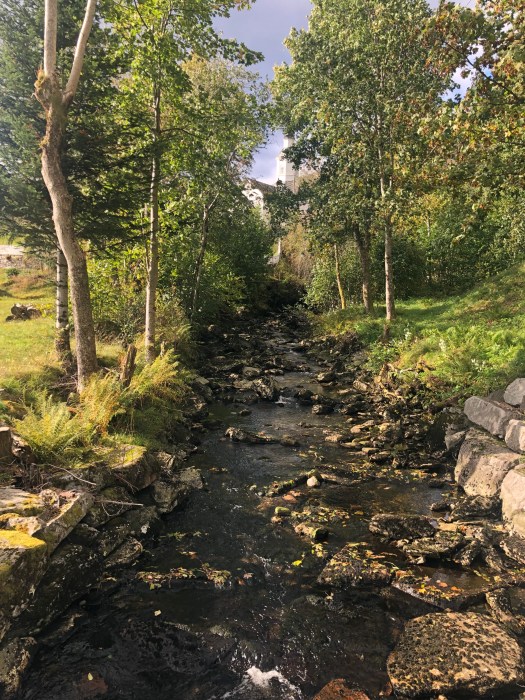
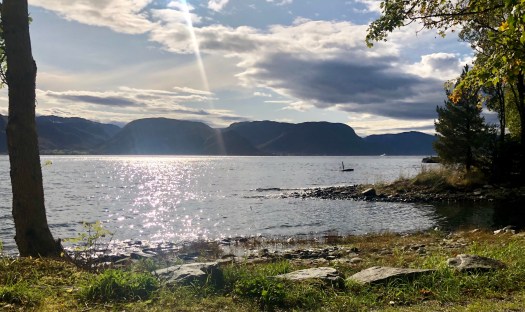
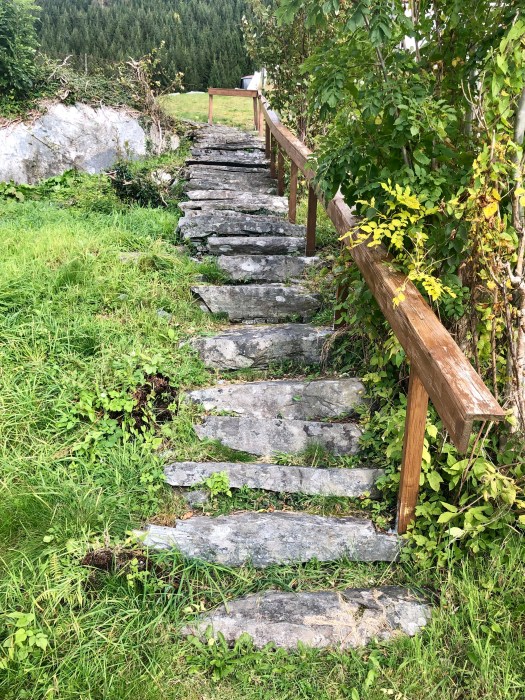
To cap off our afternoon, we hopped in the car with Bjørg for a guided tour of a few sights around the city, including a brief trek up the mountainside where she often walks. She has lived here for much of her life, including as a child, so she is well acquainted with not only the gradual evolution of the town’s appearance, but also details regarding the families who previously lived and/or currently reside in Lavik’s many households. She shared that farming was once a leading industry among townsfolk, but the practice has dwindled in recent years, perhaps corresponding with the advancing age of residents.
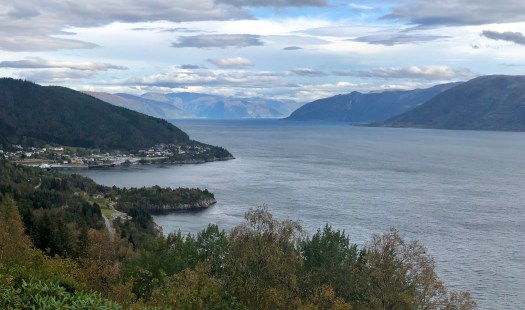
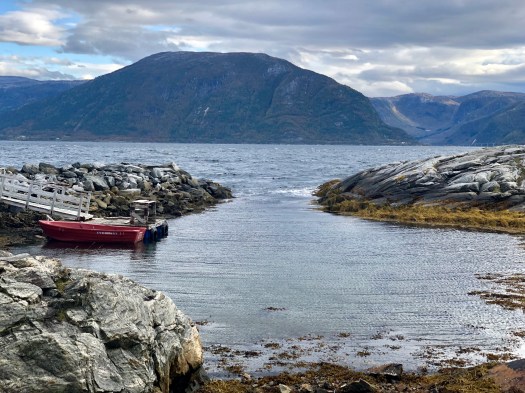
Tomorrow morning, we will board another boat for our final relocation across Norway, this time to Bergen. The city’s population of 250,000 will make for a helpful bridge between Sogndal’s 8,000 and my hometown of Washington, D.C.’s 700,000, hopefully diffusing some of the culture shock I expect to confront upon my return. I have missed many aspects of what a bigger city can offer; firmly planted at the top of that list is the variety of local and international culinary options, so I look forward to partaking in what Bergen holds in store in that category.
We extend our heartfelt appreciation to Bjørg and Hege for their consummate hospitality and the enjoyment of this gorgeous property. We’ve had exactly the relaxing couple of days we needed to give us the energy to meet the conclusion of our Norway travels with renewed vigor. Mange takk for alt. See you in Bergen!
 Where the Waterfalls Mean Home