
Fifteen years ago, while attending St. Olaf College for my undergrad, I had the opportunity to study Norwegian for two semesters. (St. Olaf, a school founded by Norwegian-American immigrants in the late 1800s, is one of the 21 colleges in the U.S. that offer Norwegian language classes; five of them are in Minnesota.) My professor was a woman with whom I had a close relationship prior to the class, because she had been a faculty advisor to the LGBTQ+ student group I coordinated for several years. Nancy Aarsvold’s textbook-based Norwegian course, sett i gang, is still in circulation today, and also has an online option for interested learners. The cover pages to her textbooks were adorned with snapshots of the multifaceted Norwegian experience. Earlier today, I looked back at those covers, and was shocked by how many of the places and cultural experiences represented in those pictures are things I’ve now witnessed for myself in person.
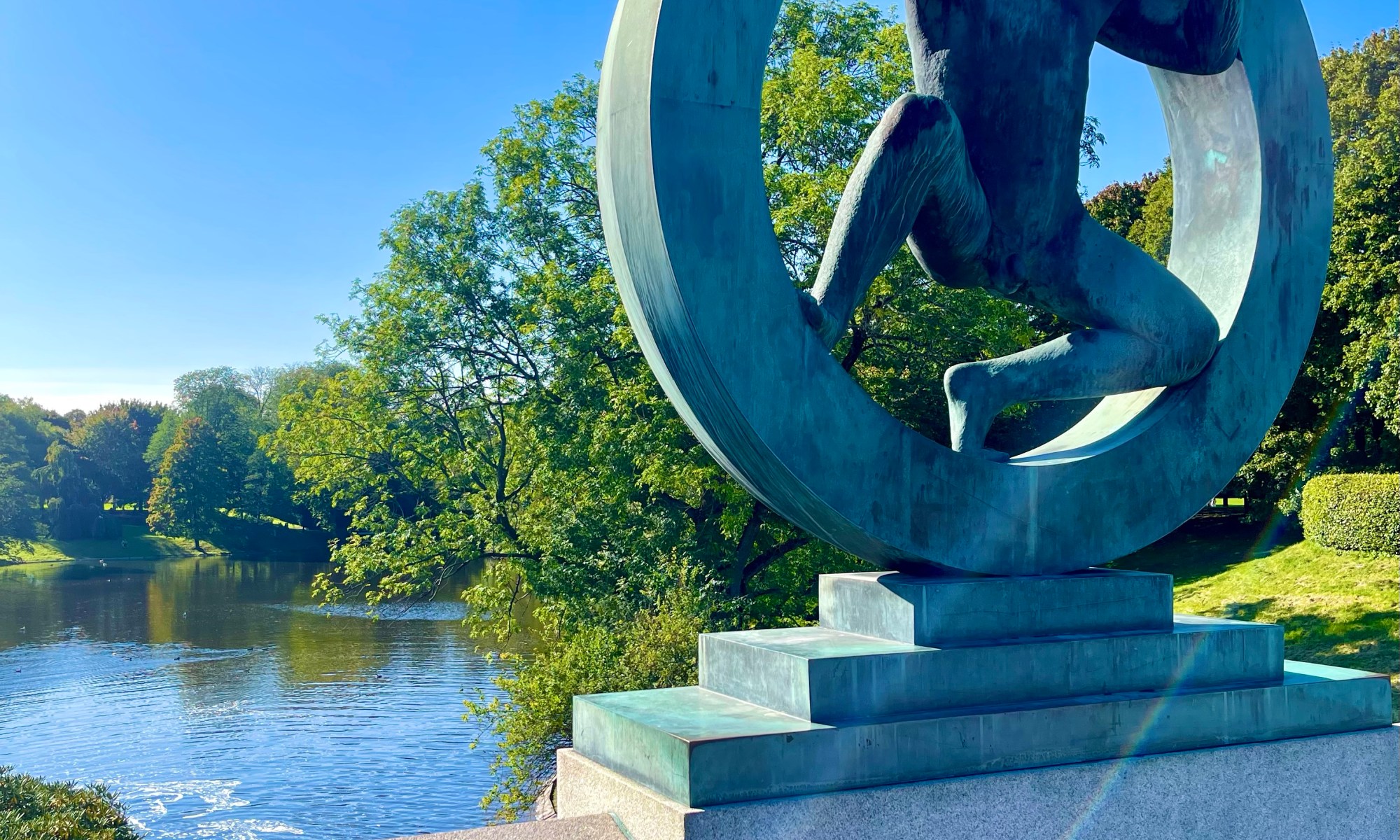
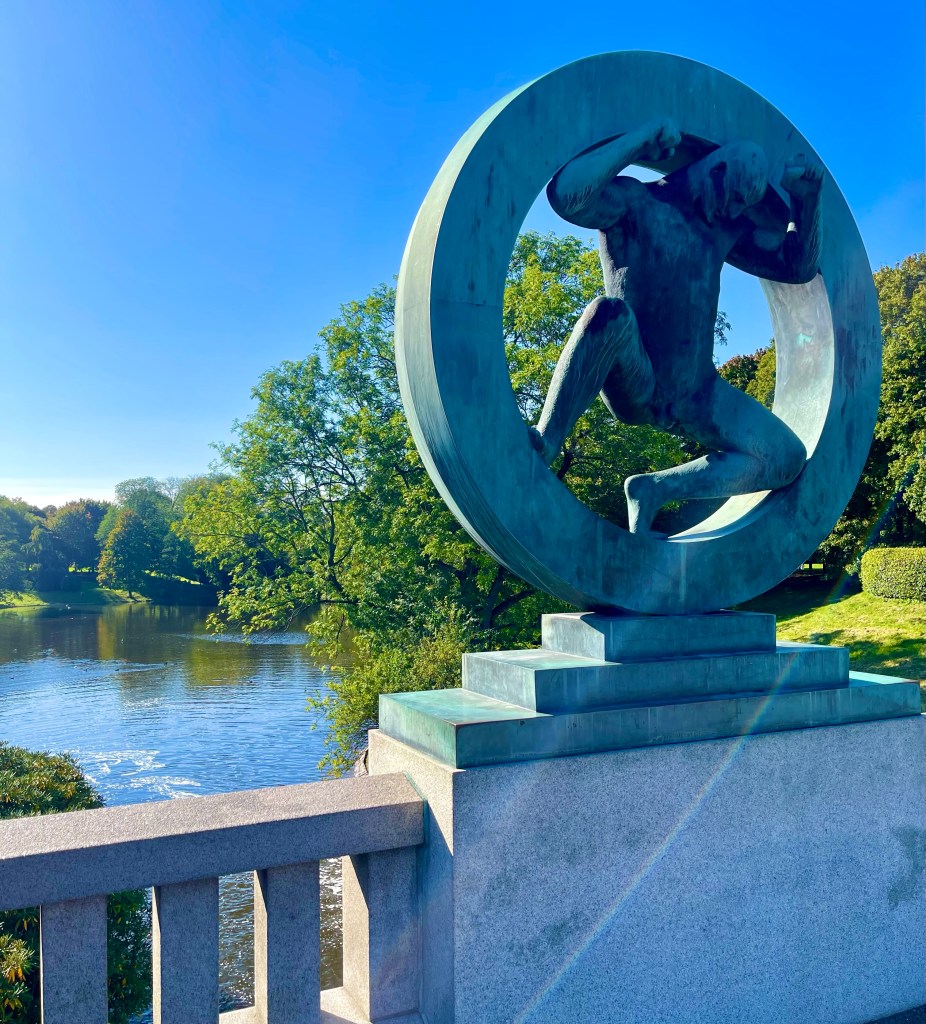
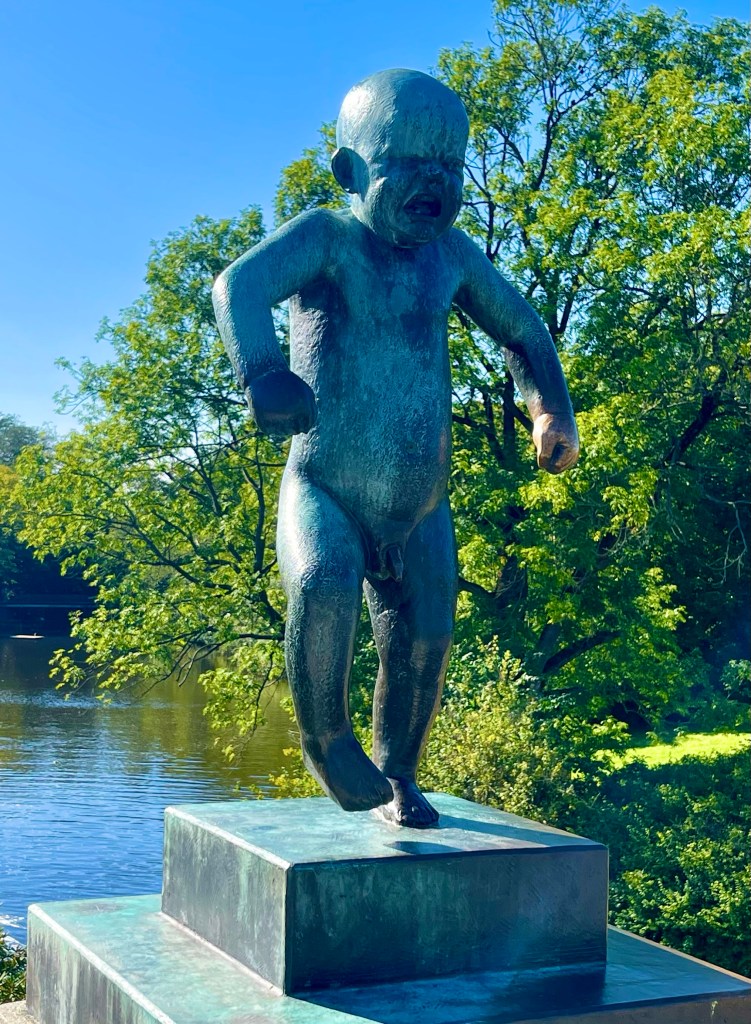
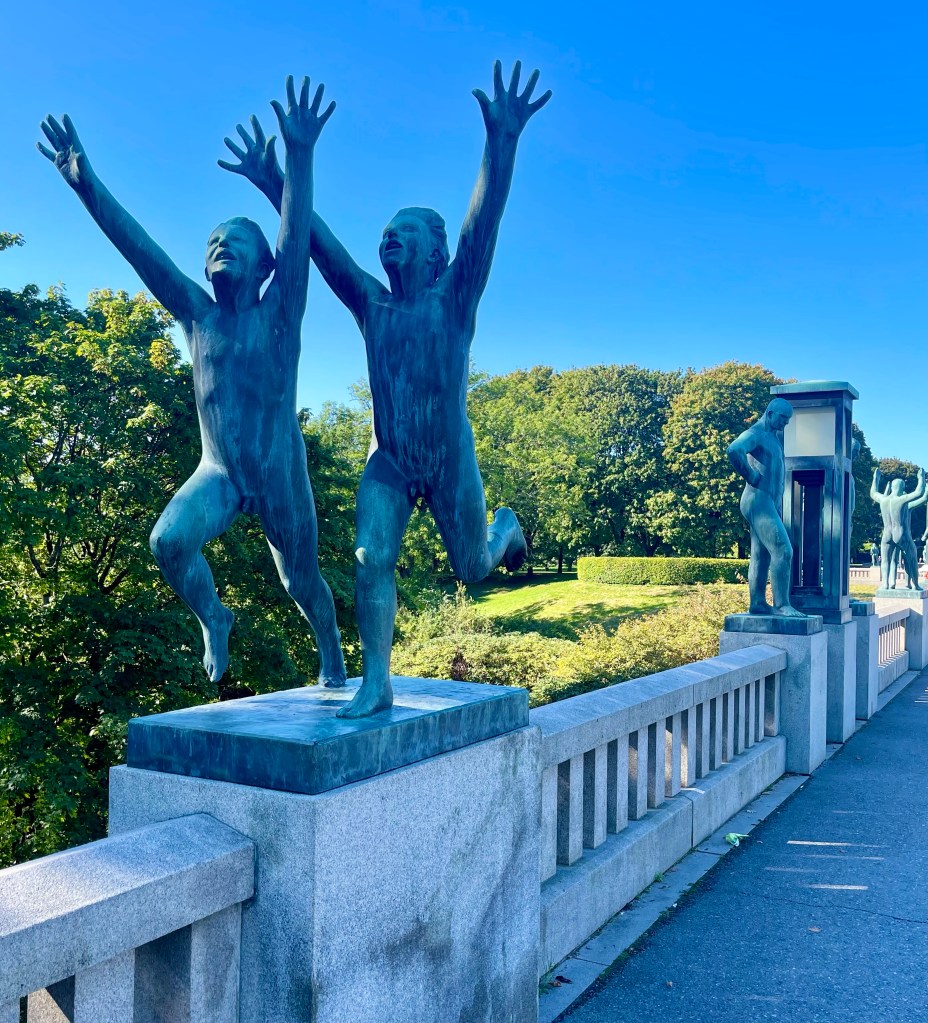
One class period, I remember being introduced to Vigelandsanlegget (the Vigeland installation), perhaps Norway’s most visited tourist destination. The dozens of sculptures that fill Frogner Park–all of them human, of various ages, and none of them featuring clothing–can be a jarring sight for American eyes. We’ve been conditioned to associate nudity with pornography, especially when representations of children are involved, and I can distinctly remember several raised eyebrows in the St. Olaf classroom as we learned about the park. Fifteen years later, I had the opportunity today to witness the colossal art exhibit for myself in person, and I can confidently say whatever controversy we felt was both artificial and overblown. Moreover, the collection is unbelievably powerful and thought-provoking.
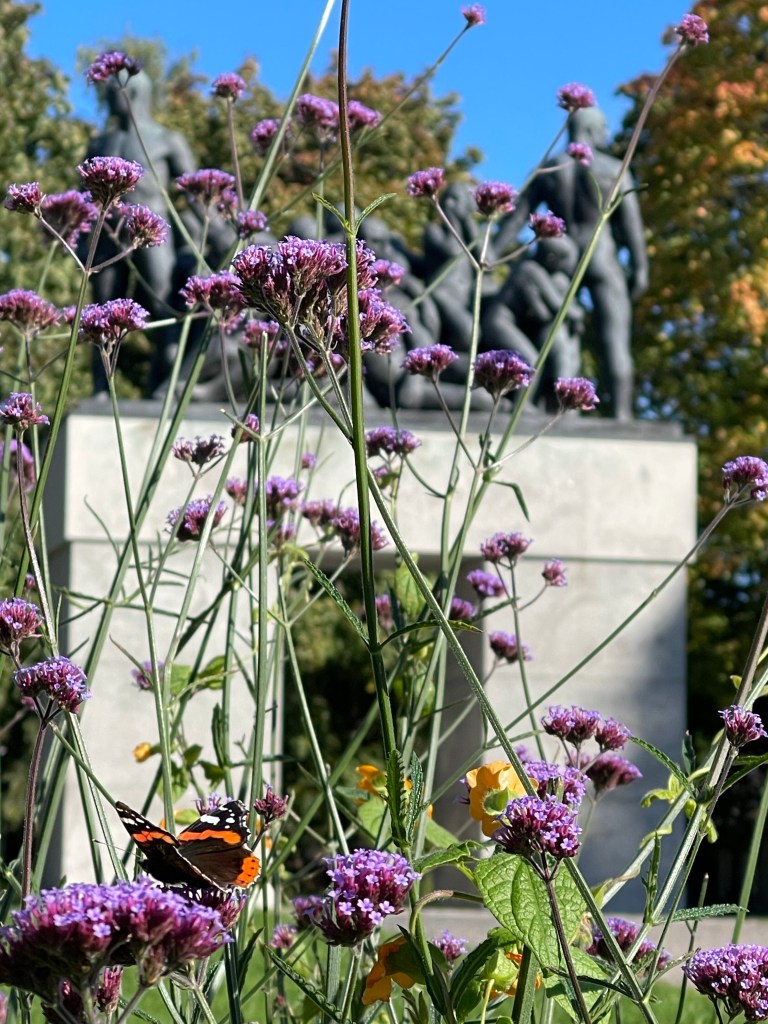
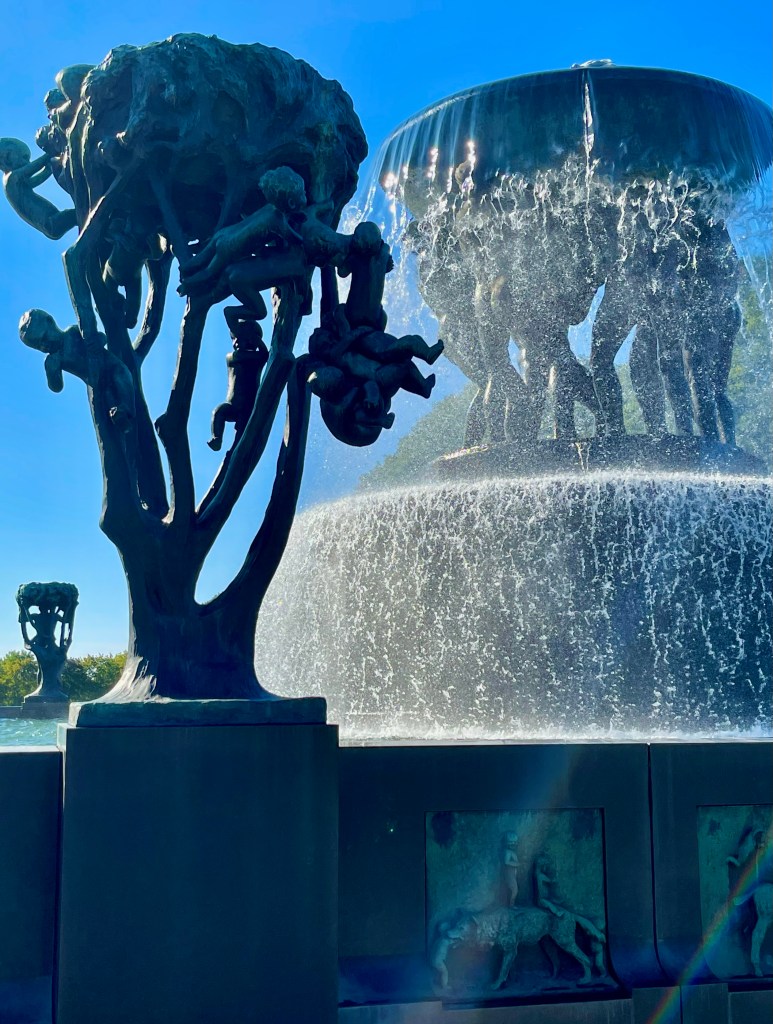
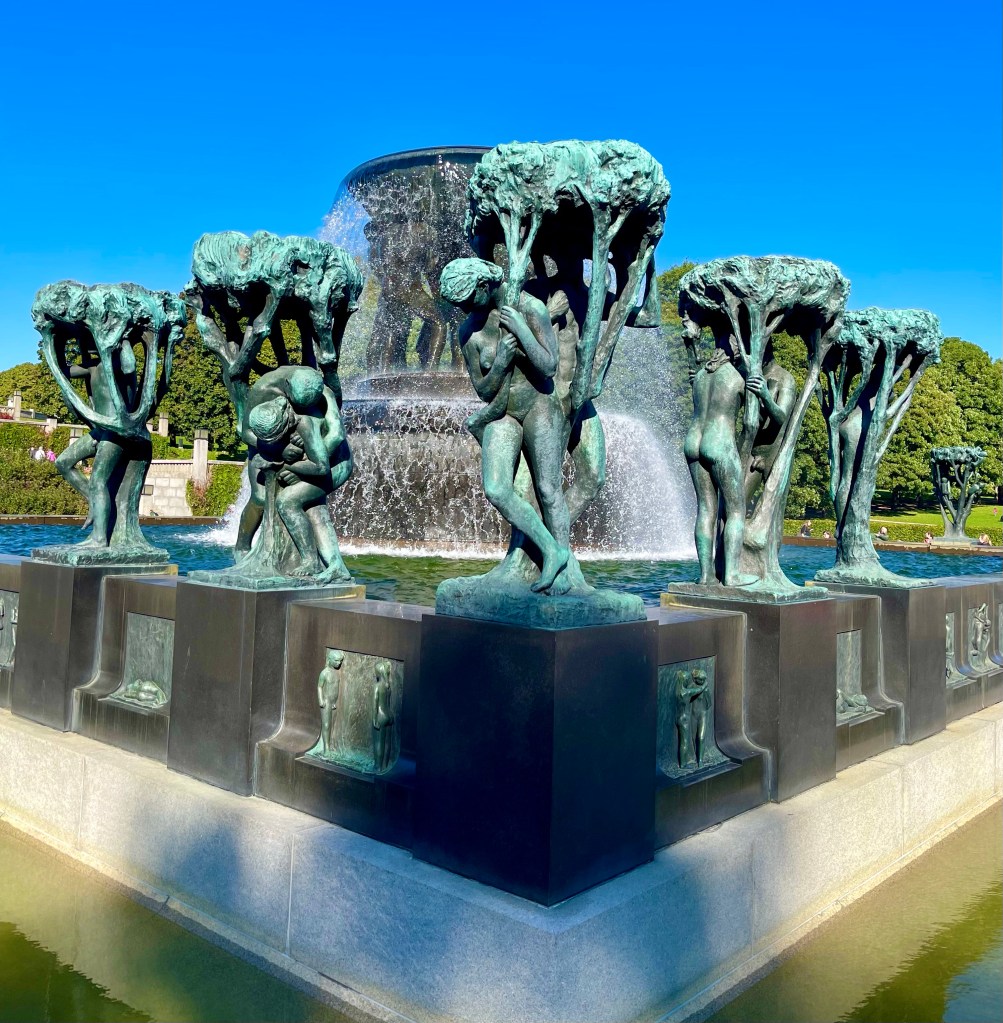
The park’s three main assemblages of sculptures–although there are even more subsidiary pieces scattered throughout the area–are found at the fountain, the monolith, and the bridge. The work is made up of hundreds of human figures, some of them solo but others in groups, with a wide plethora of poses and facial expressions. While the strongest detectable theme in the collection is life and death, I wrote my own list of all the motifs I felt as an observer, and the list is an exhaustive trip through the human experience: love, hate, friendship, connection, loneliness, cooperation, support, reliance, guidance, tutelage, symbiosis, exploration, curiosity, survival, innocence, carnality, sexuality, trust, dominance, greed, exploitation, constriction, rage, struggle, violence, anguish, grief, wisdom, treachery, competition, triumph. If it isn’t clear, Vigeland’s magnum opus is an expansive project covering a swath of topics–almost as if demonstrating the multitudinous nature of life is itself part of the point. I often leave overpopulated tourist attractions feeling underwhelmed and wishing I’d spent my time elsewhere. This was not one of those times. If you are ever in Oslo, visiting this park should be considered nonnegotiable.
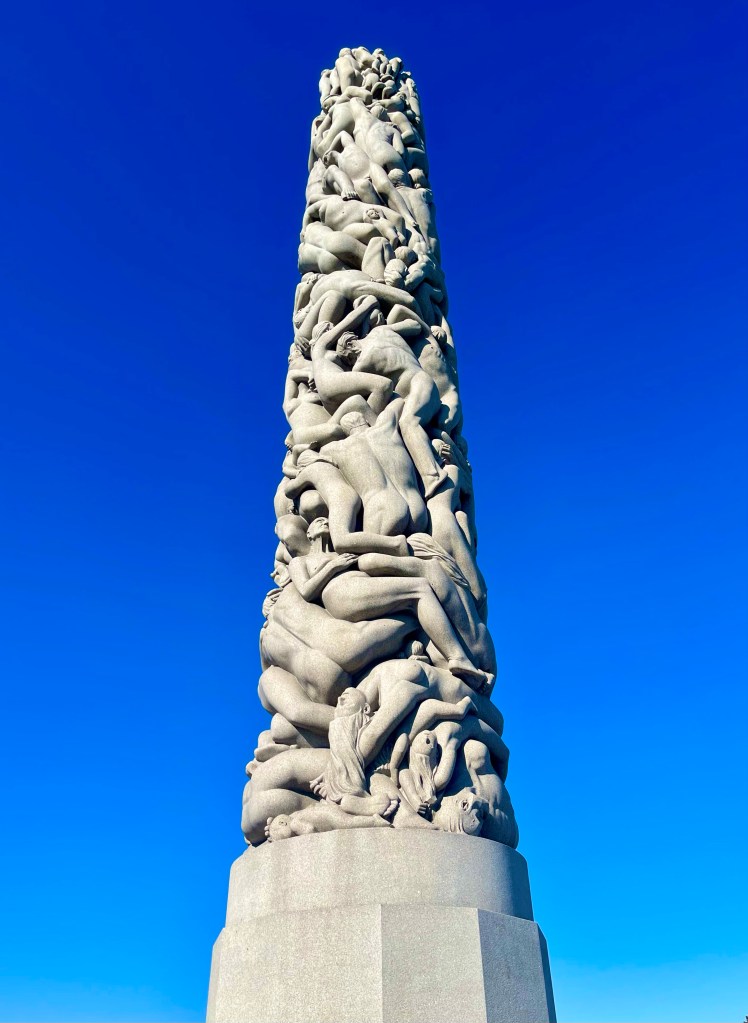
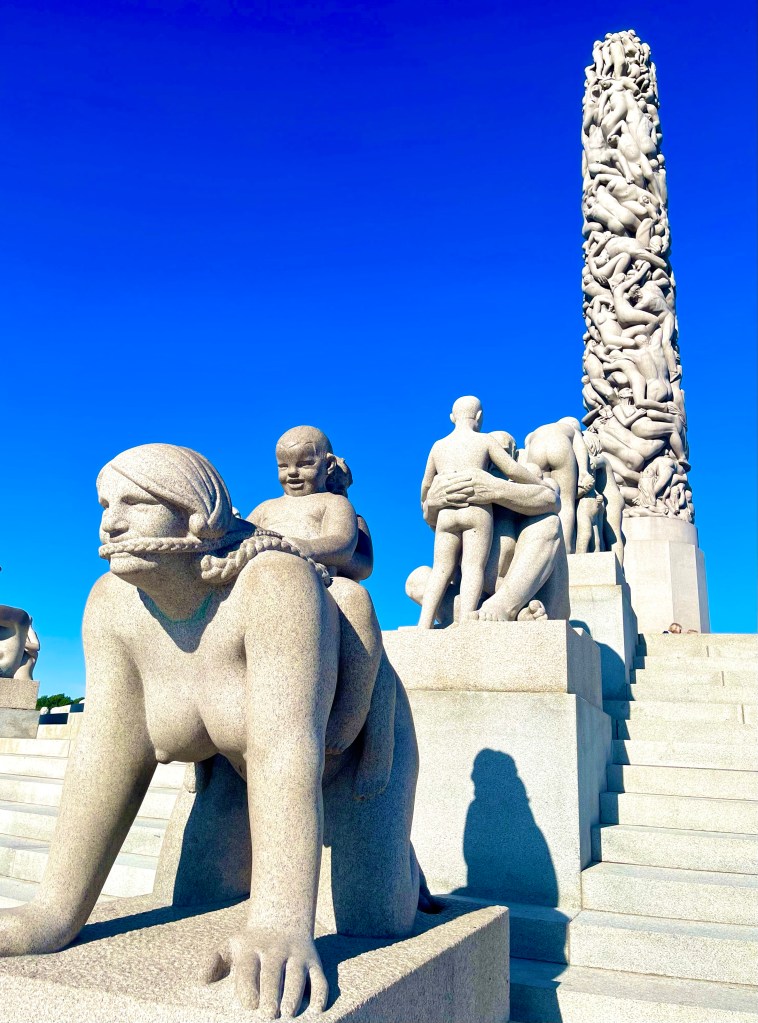
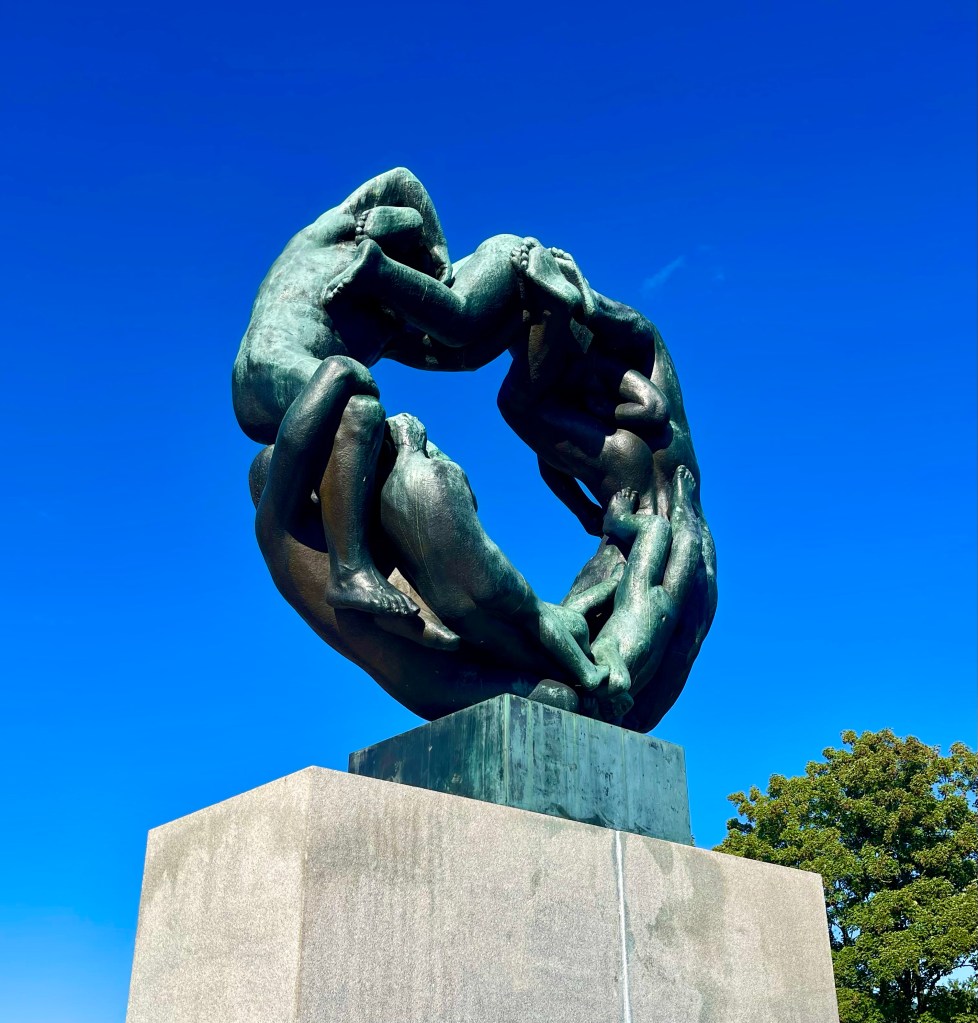
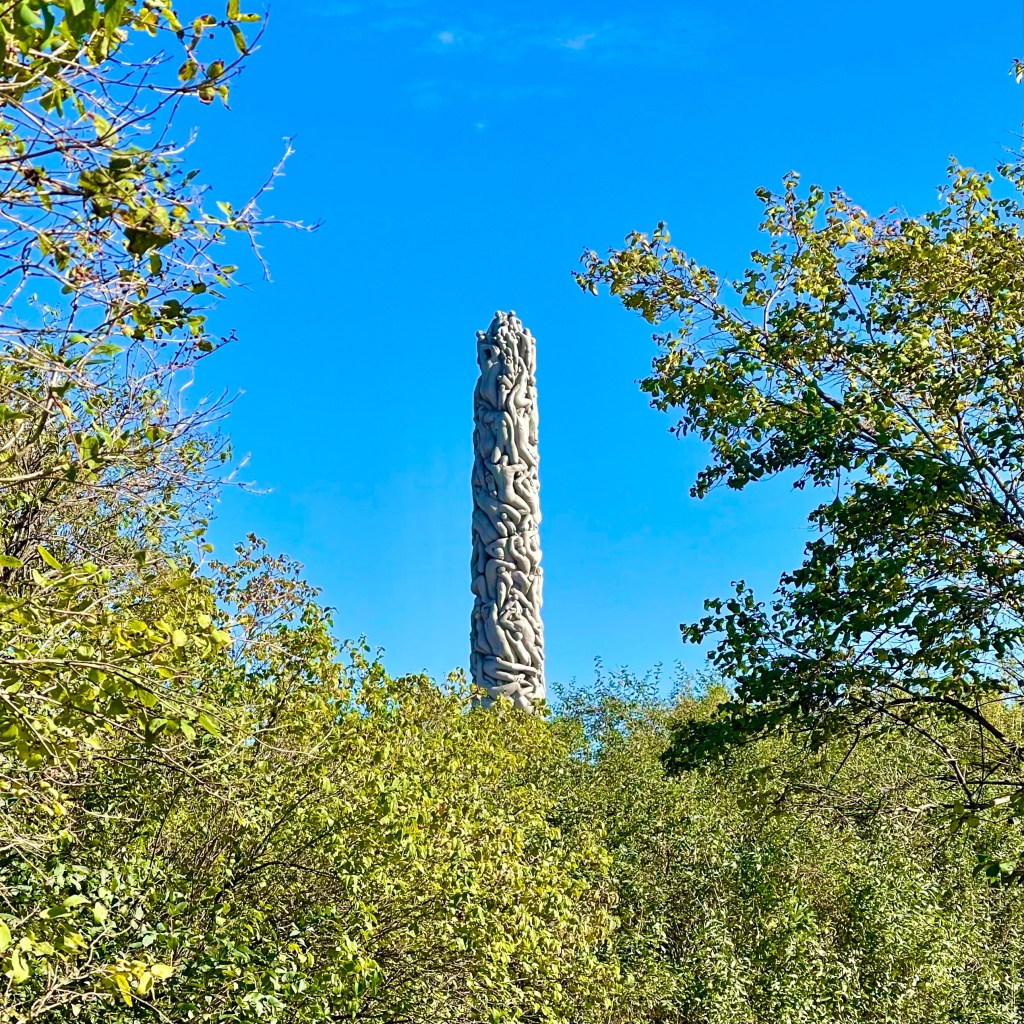
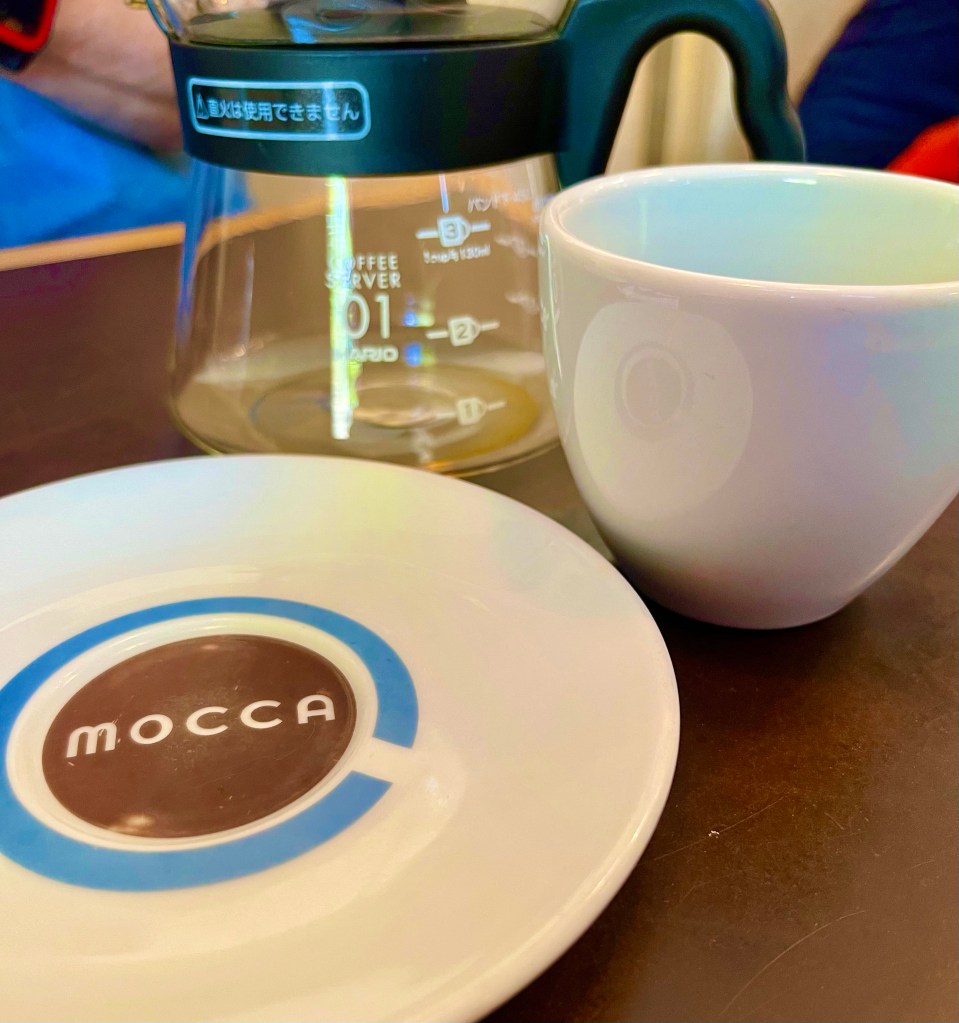
After exhausting ourselves at Vigeland–I think I likely took over 300 pictures–it was time for a quick, and final, coffee break. The last place I had originally written down did not fit terribly well with the rest of our itinerary for the day, so we pivoted to a suggestion from a friend and regular visitor to my home coffee shop in Oregon. (Thanks, Cristina!) The coffee bar at Mocca was started in 2001 as a second expression of the same at Java, formed earlier in 1997; the work at both establishments would later inspire a new business enterprise called KAFFA some years later. During my research, I learned that Trish Rothgeb, who co-owns Wrecking Ball Coffee Roasters with her husband, Nick Cho, was part of the team that founded Mocca and later KAFFA. She is perhaps most famous for being one of the first to coin the term “third wave coffee” to describe the specialty coffee industry’s pursuit of higher quality sourcing. I have been a fan of Trish and Nick and their work in the industry for a long time, and got to visit their café in San Francisco in 2019. So visiting Mocca was a neat full-circle moment (and the coffee was delicious!).
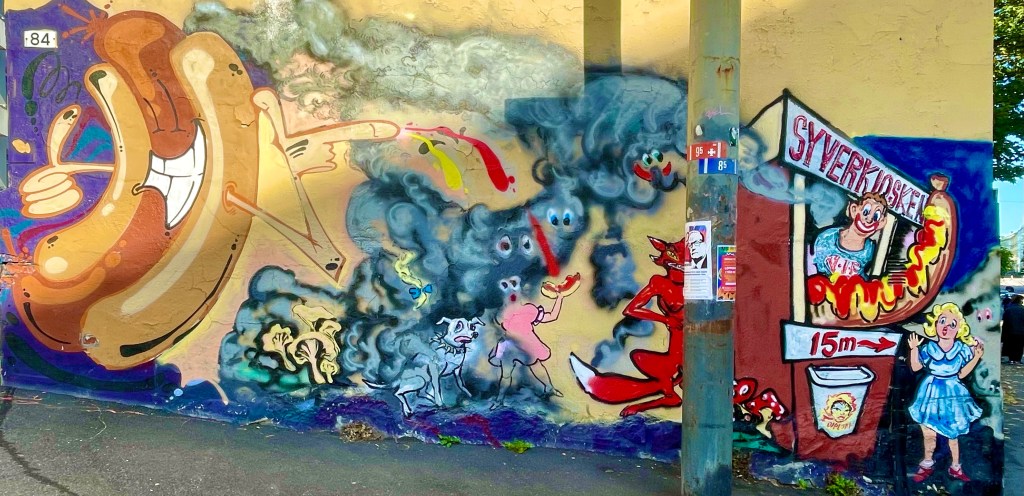
By the time we arrived at Mocca, a good percentage of their food offerings had already been picked through, so an alternative solution was necessary. Luckily, we’d been holding a particular–and peculiar–spot in our back pocket in case of emergency. Syverkiosken, perhaps surprisingly given its bohemian facade and utterly unpretentious vibe, is the only food location in the city that consistently made just about every “Best of Oslo” guide I consulted. The shtick? Hot dogs. Here, though, they come wrapped in lompe, a potato bread that is the closest thing I’ve had to the type of lefse my family eats at home. Hot dog kiosks were, at one time, apparently a Norwegian institution; now, Syverkiosken is the last one standing. The hole-in-the-wall joint has a straightforward list of about ten toppings on a small sign above the door from which you can choose your adventure, and that’s it. Our selections arrived quickly, and disappeared in similar time.
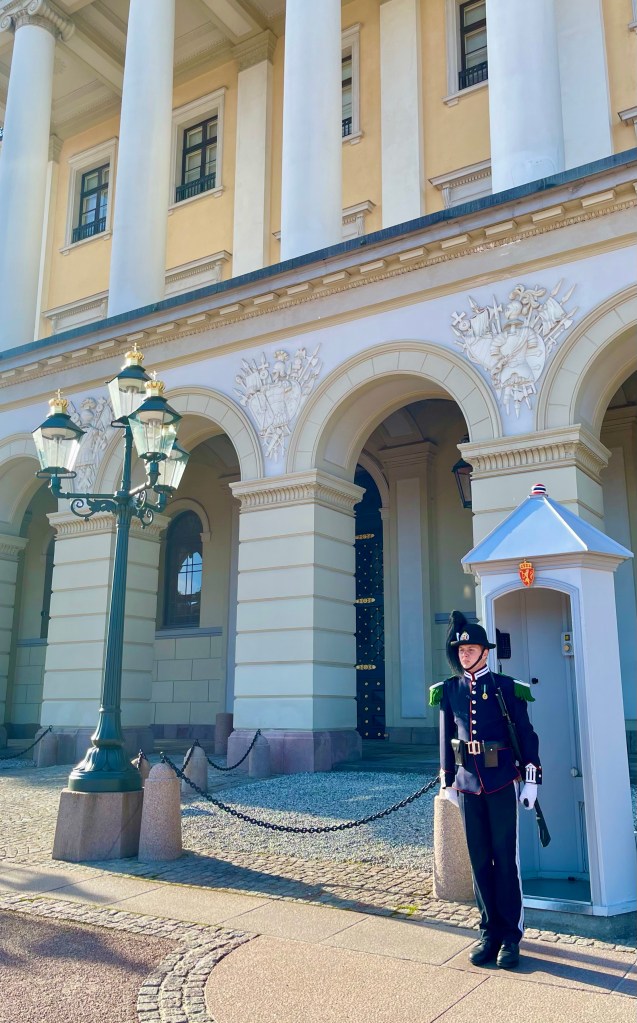
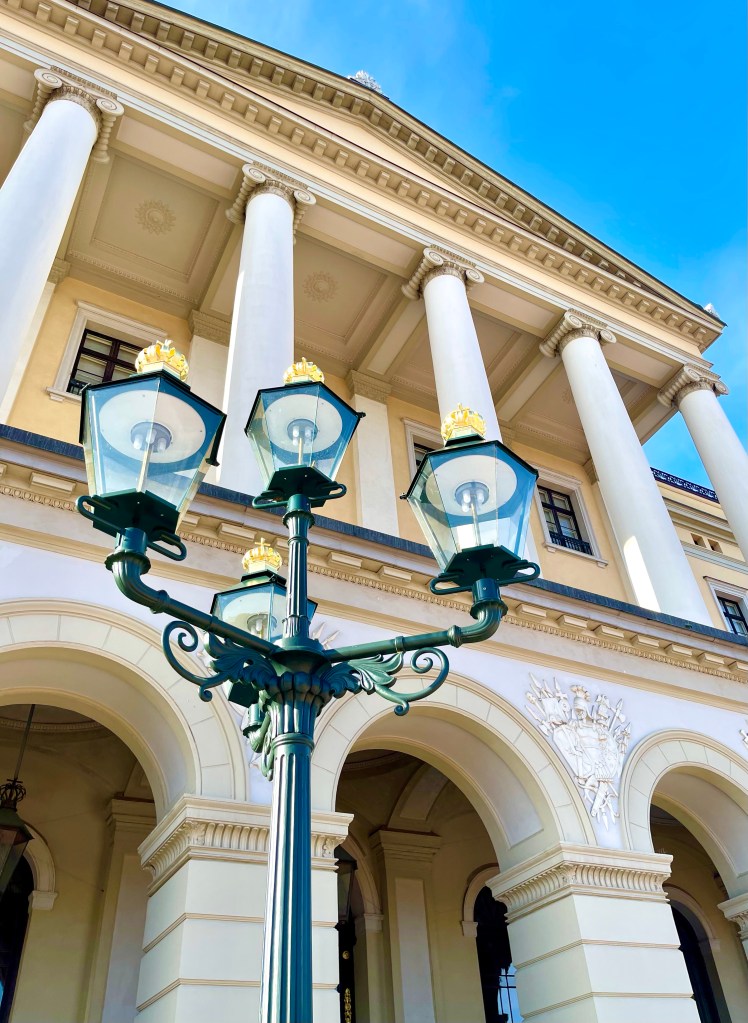
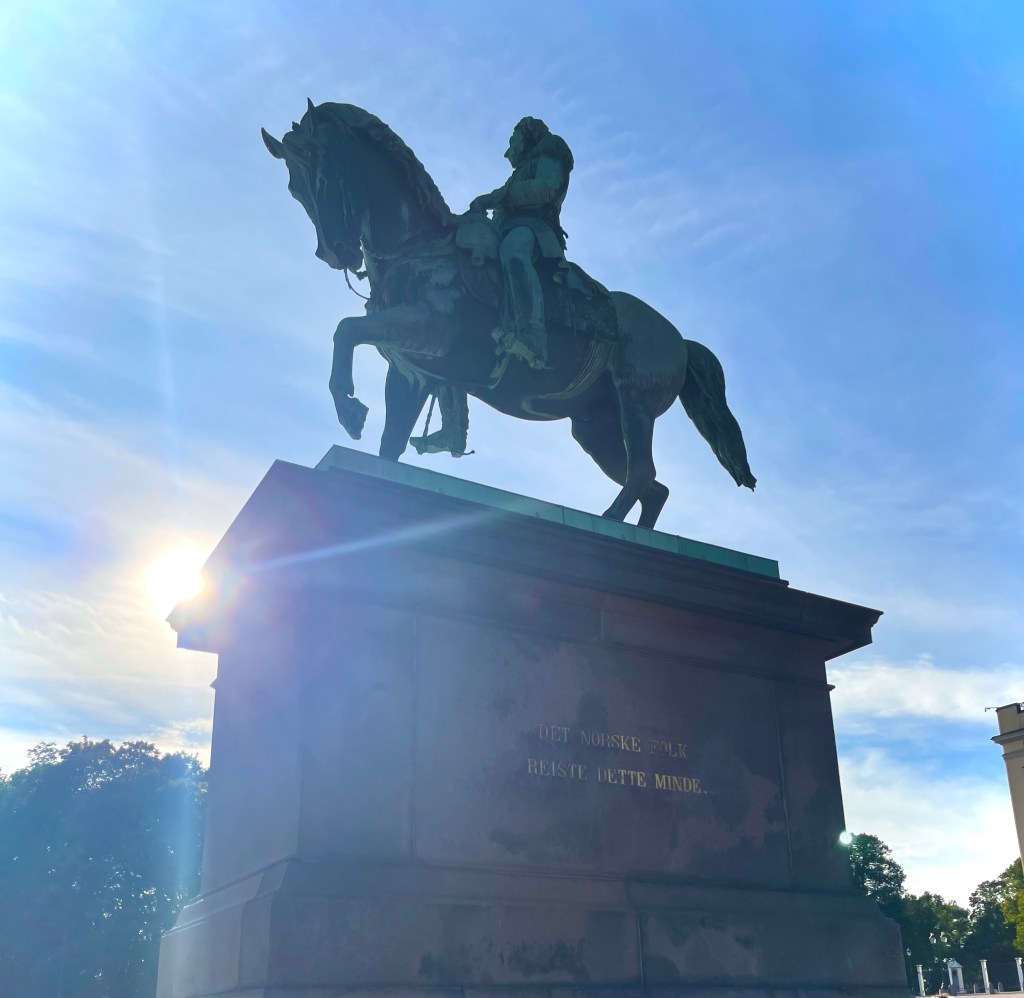
A slow meander back towards the city center brought us past what would become our final tourist stop at Oslo’s Royal Palace. As I bumbled around taking photos, I ran into a guided tour group, and overheard the leader describing exactly what I was feeling as I surveyed the grounds. The comparisons to Buckingham Palace–guards dressed up in full garb and all–were obvious, but so were the differences. Here, you were freely allowed to basically walk up to the front door. In describing the laissez-faire attitude towards restrictions on the palace grounds, the tour guide invoked a connection to the Norwegian ideal of friluftsliv, which is a difficult thing for me to describe concisely. Friluftsliv is a philosophy that promotes spending time outside in nature, and a Norwegian’s ability to do this is actually coded into law in Friluftsloven, which guarantees everyone’s right to access the outdoors in a fair and equal way. While the guide wasn’t necessarily making any reference to outdoor recreation here, what she was trying to describe was the general philosophy displayed by the Norwegian populace that things should be accessible to everyone–including their royal palaces.

Back at Oslo Sentralstasjon, before boarding our train for the last time, we stopped for a final dinner at one of the station’s many restaurants. Our hopes of finding seafood had been dashed by our own ignorance, having forgotten that so many places in Norway are closed on Sundays. (The idea of a commercial area, like a mall, being regularly closed for a day–on a weekend, no less–would be absolutely inconceivable in the United States.) As we walked back to the metro area, the fact that the end of this vacation was nigh washed over me for the first time in a wave of wistfulness. In many ways, I am ready to go home. But to say I’ve enjoyed myself would be an understatement.
To learn and see where you come from–along with the actual people and the physical place–is not only a gift, but also a non-universal privilege. I am aware every time I learn a new detail about my ancestry that not everybody gets to do this, and I’m not just talking about the practical act of taking an international trip. There are scores of people across the world whose ancestries have been forcibly ripped from them and erased beyond any possibility of reconstruction. As much as my heart rejoices to piece together images and details of where I come from, it aches manyfold for those who can’t. There’s no silver lining here. My empathy, no matter how sincere, can’t change the reality it so pities. But my hope is that, by bolstering my own spirit with my family’s histories, perhaps it can strengthen my resolve to make sure others have access to their own going forward.
I would be remiss not to end with a spot of overdue gratitude. Throughout the course of writing this blog, in its second incarnation, I have received comments and messages that have truly warmed my soul. I said in the beginning–and this is still true–that this blog is primarily for me, if for no other reason than to provide my struggling memory with some kind of tether back to substance. It has been an unexpected delight how much I have enjoyed writing it, surpassed only by how strange it is that people enjoy reading it. Your words of encouragement and good wishes have meant so much to me. To Norway–and especially Sogndal–I hope this isn’t the last time. We make a great team, you and I.
 Where the Waterfalls Mean Home