
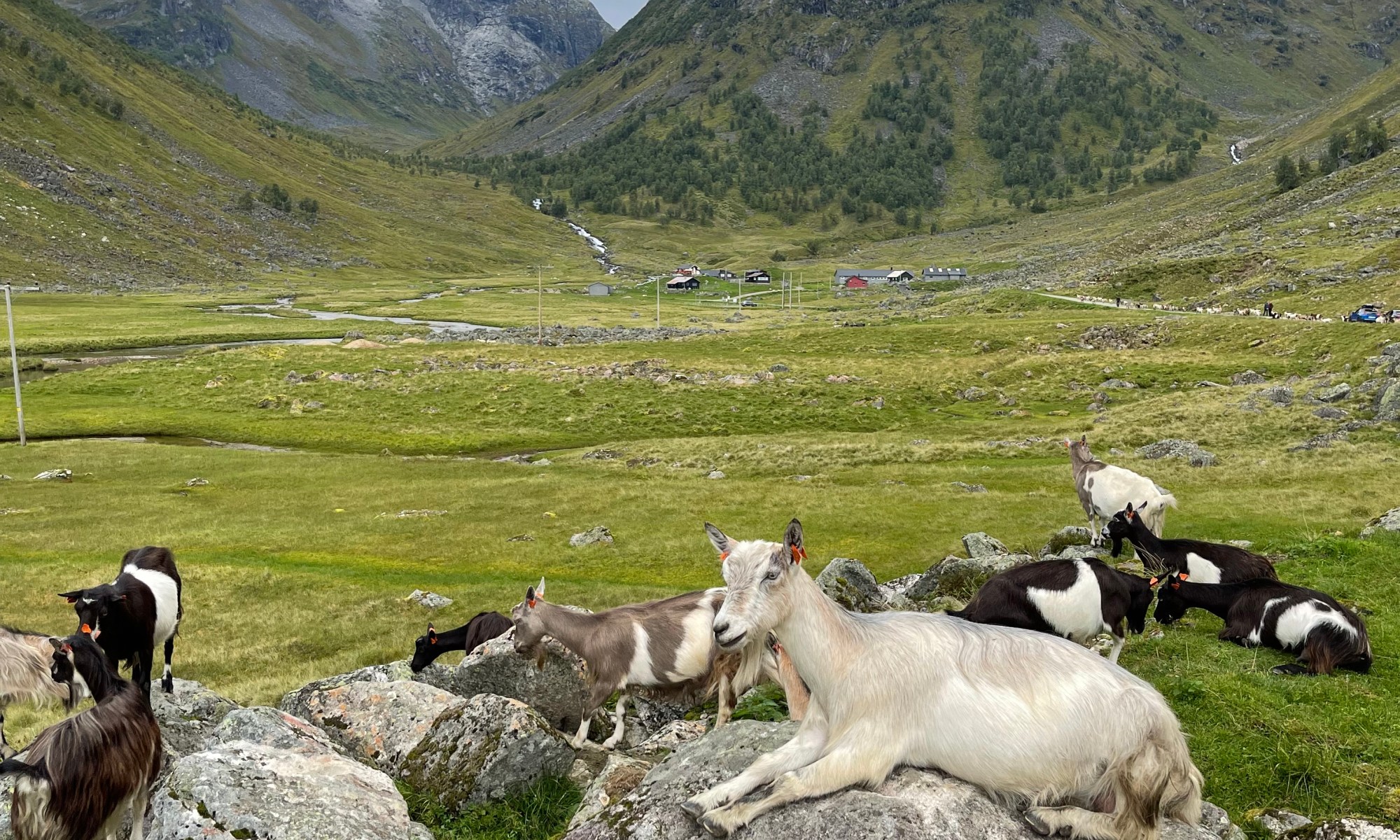
Our approach to today’s schedule was an old Sogndal trip standby: to make no plans at all and hope that something would materialize. It is a strategy that has rarely failed us, and today was no exception. As we sat for breakfast, we received an invitation from Lars to join him and his cousin, Kari (our third Kari of the trip so far, so stay sharp, readers) on a road trip around some of the old farmsteads and other sights around Sogndalsdalen (the valley that runs to the west of the city). While our previous trip took us across the valley many times, we knew there were parts we had missed or would like to see again, so we gladly took him up on the offer.
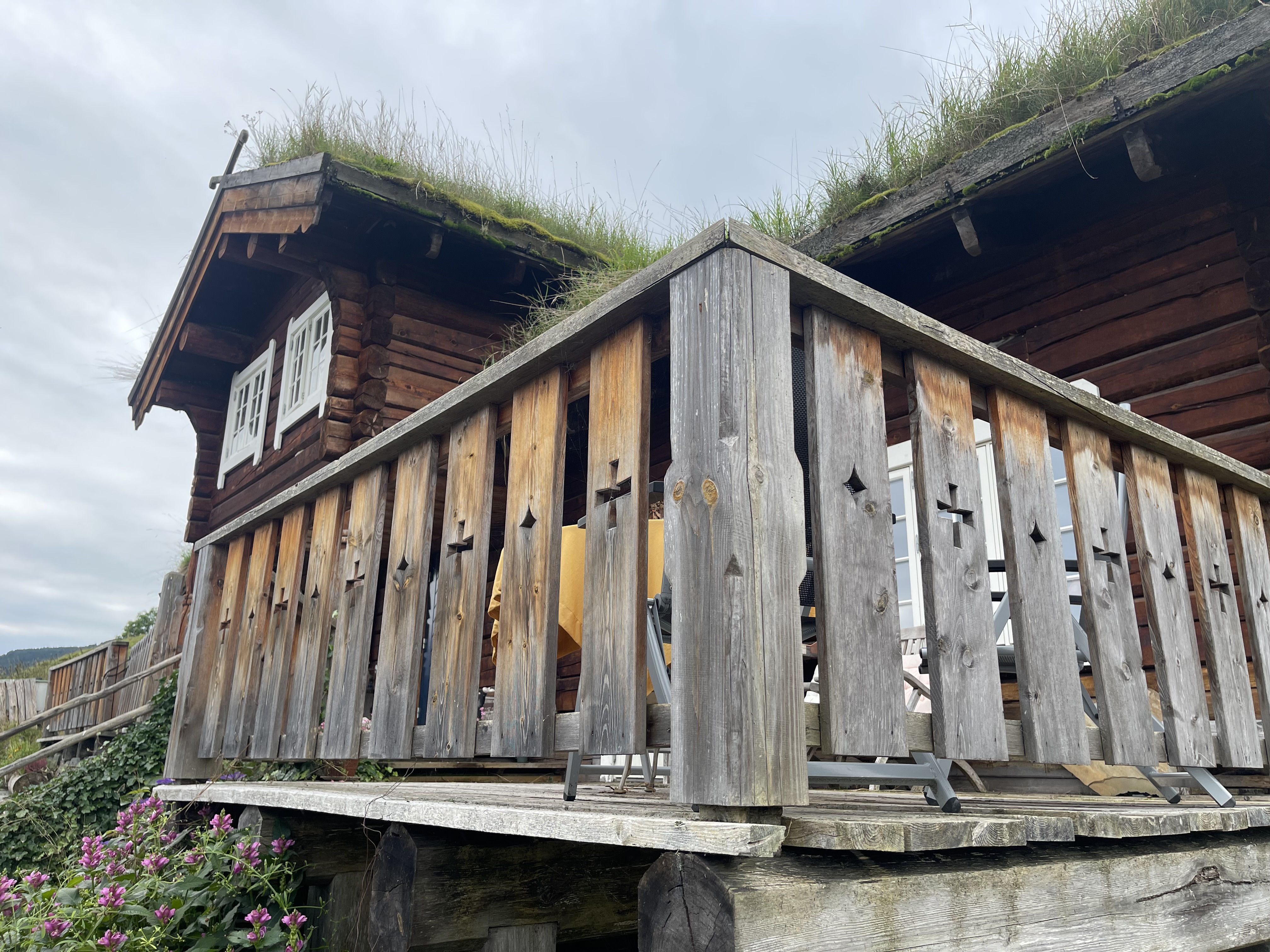
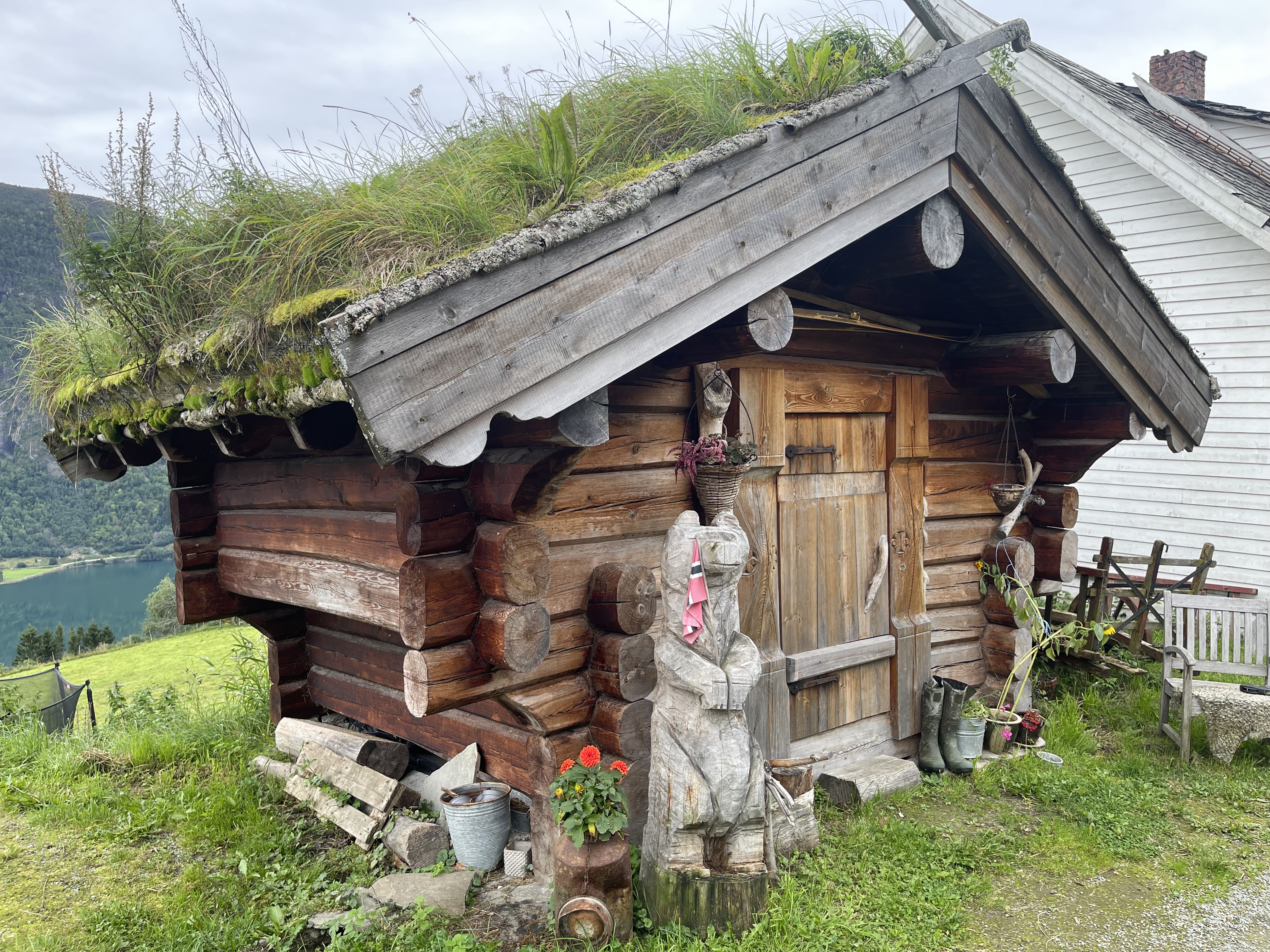
One of my favorite parts of Sogndal, without question, is the way you can feel history in the architecture and the way so many of the living quarters feel almost enmeshed with the land. There are so many visual cues of people who have lived in symbiosis with their environment for generations: smoke running out of chimneys, stacks of firewood, plentiful agriculture. The sight of a television satellite jutting off the side of some of these buildings is enough to cause a jolt of cognitive dissonance, a moment in time disrupted by an alien technological intruder.
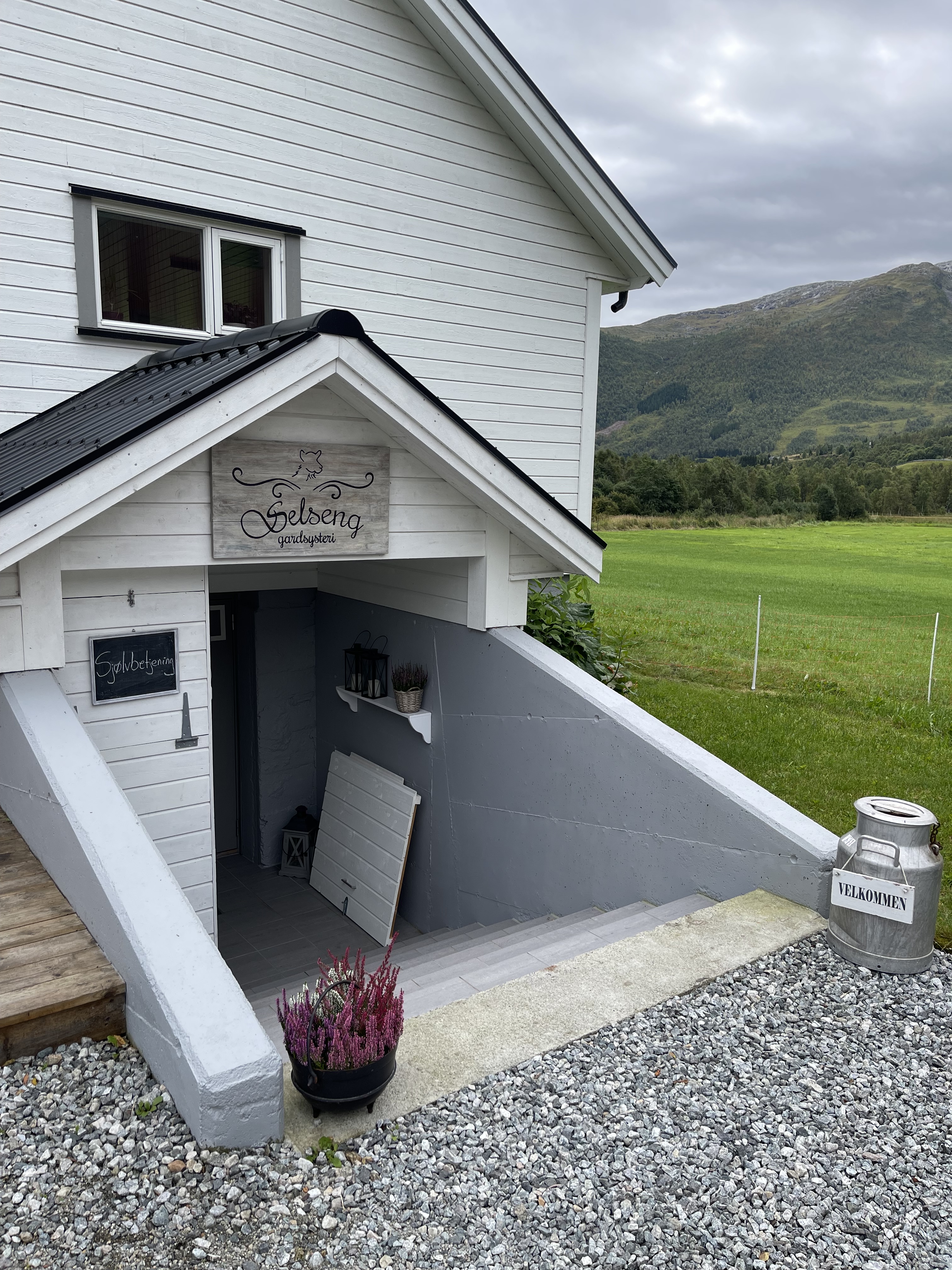
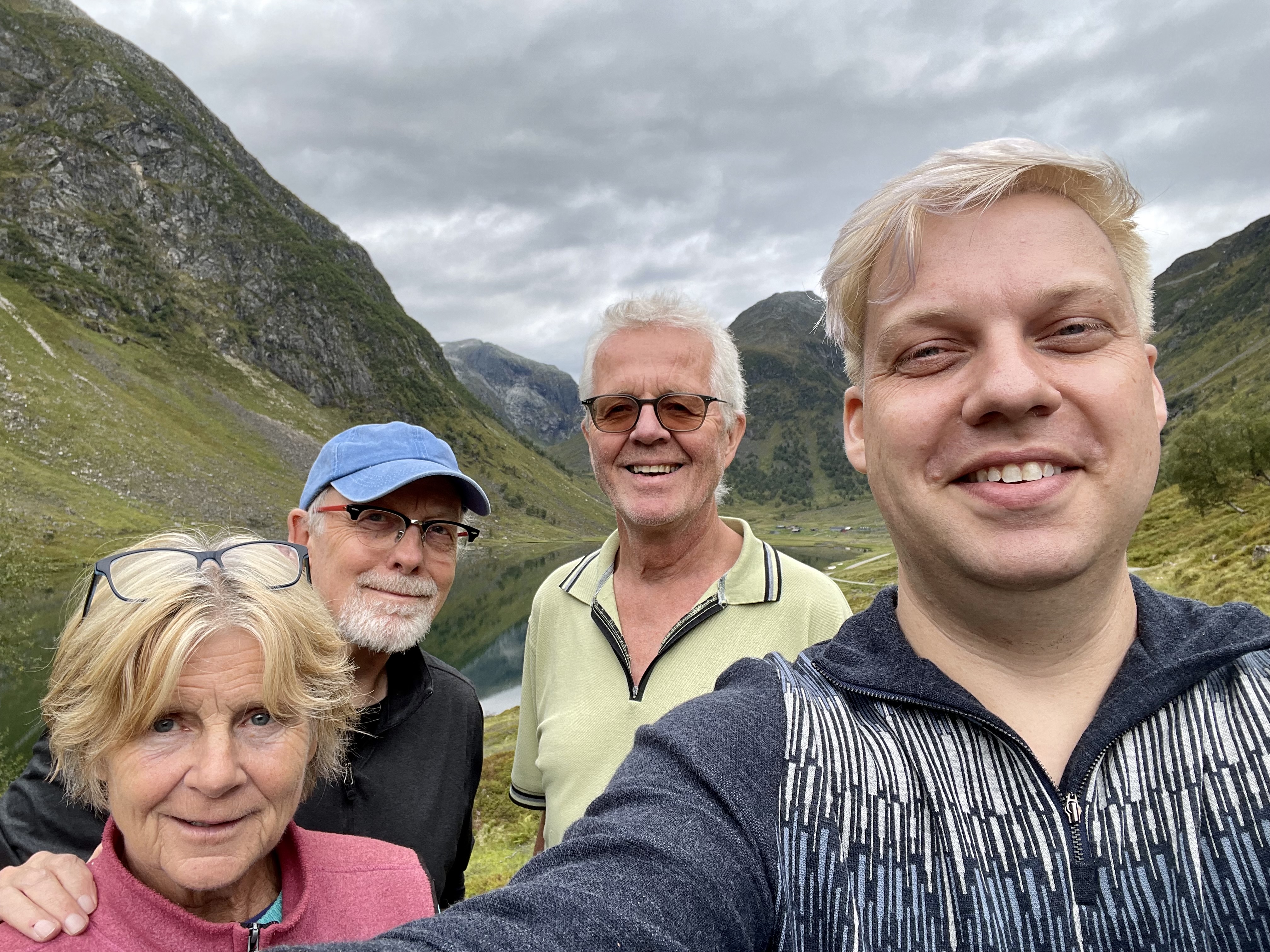
Lars, much like Erik, is an astute historian in his own right. His ability to rattle off the names and histories of families who preside over the various farms across the countryside is highly impressive. This is in stark contrast to life in America: it is increasingly common, in my experience, to know nearly nothing at all about the people living around you, in some cases even those right next door. It is less obvious if this is a difference between the American and Norwegian experience or rather that of a large city versus a small town; I would hypothesize that it is a bit of both. But even those I know from small towns in America simply don’t show this level of knowledge of their own communities. (That being said, I should readily admit that my dad’s associations in Sogndal are likely not a representative sample.)
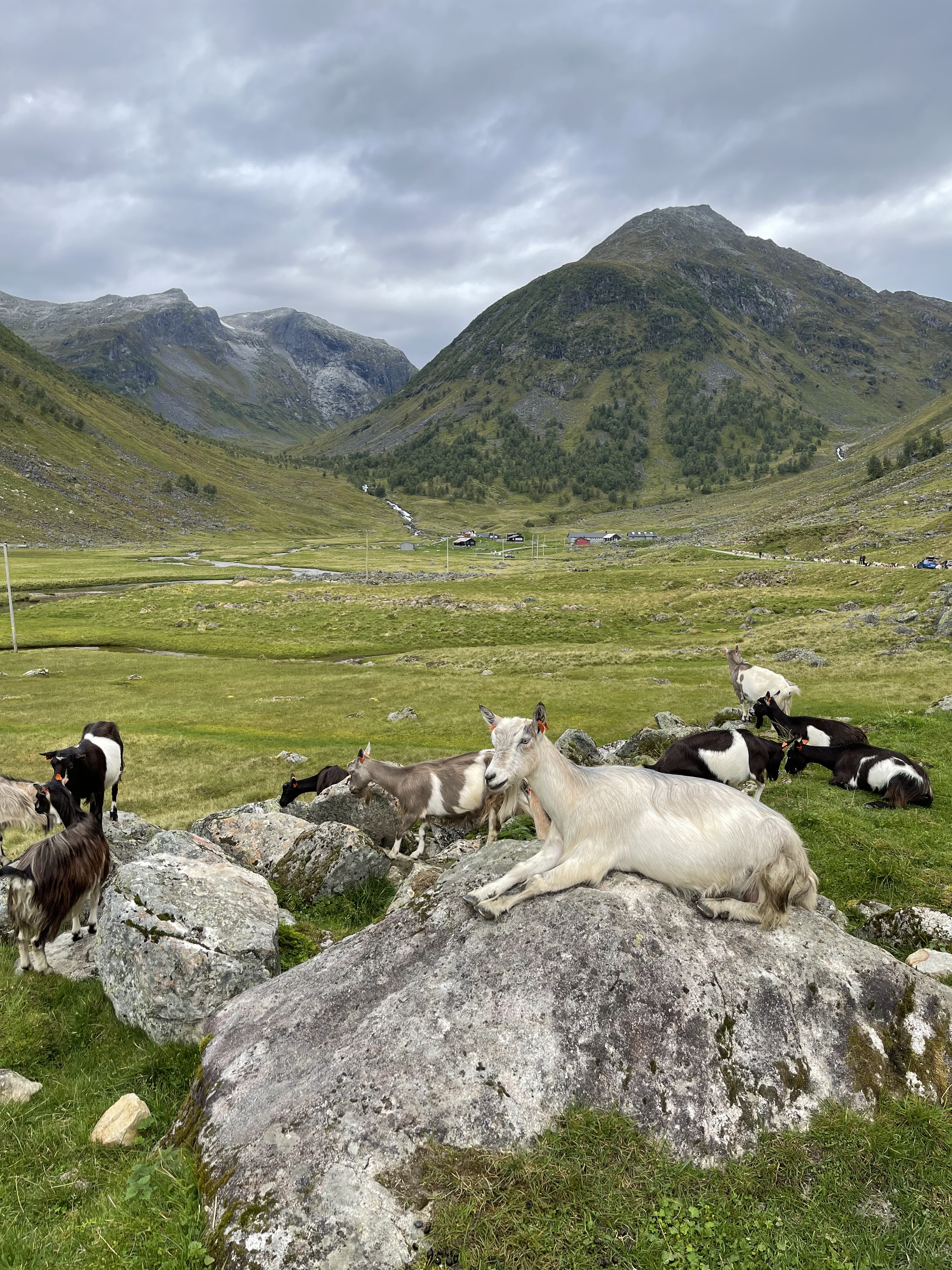
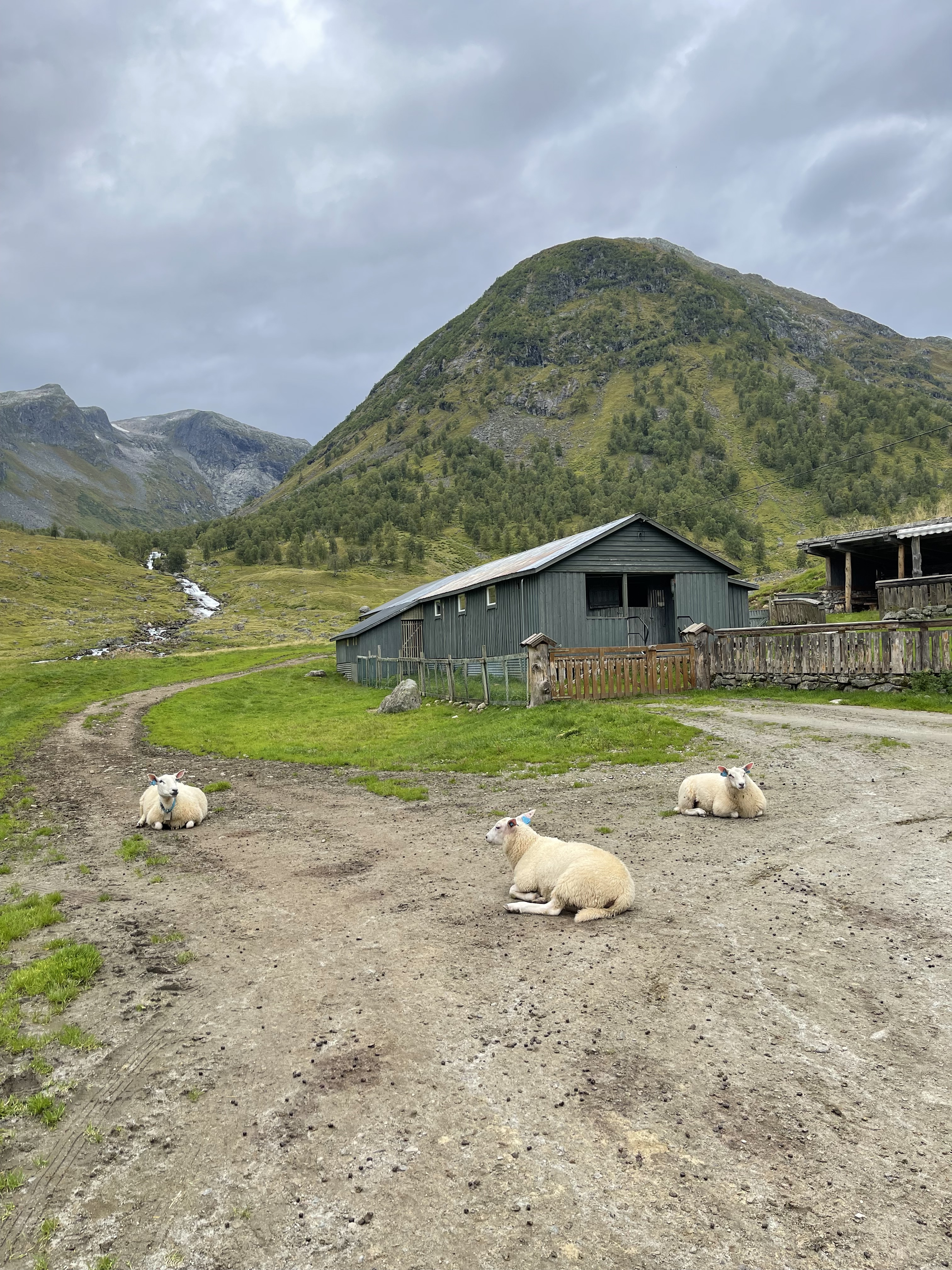
The end of the line for our trip took us to Anestølen, a goat farm in Sogndalsdalen where visitors can learn the process of making goat cheese and take in the breathtaking scenery. (The season for cheese lessons has passed for the year, or else you’d best believe I would have participated.) We had missed out on Anestølen on our 2019 trip, so I was very glad to have a second chance. As we approached the farm, we were forced to ditch our vehicle and complete the rest of the trek on foot, as the herd of goats had overtaken the narrow road. Wandering the Norwegian countryside with a herd of grass-chewing goats is an experience I can’t recommend highly enough.
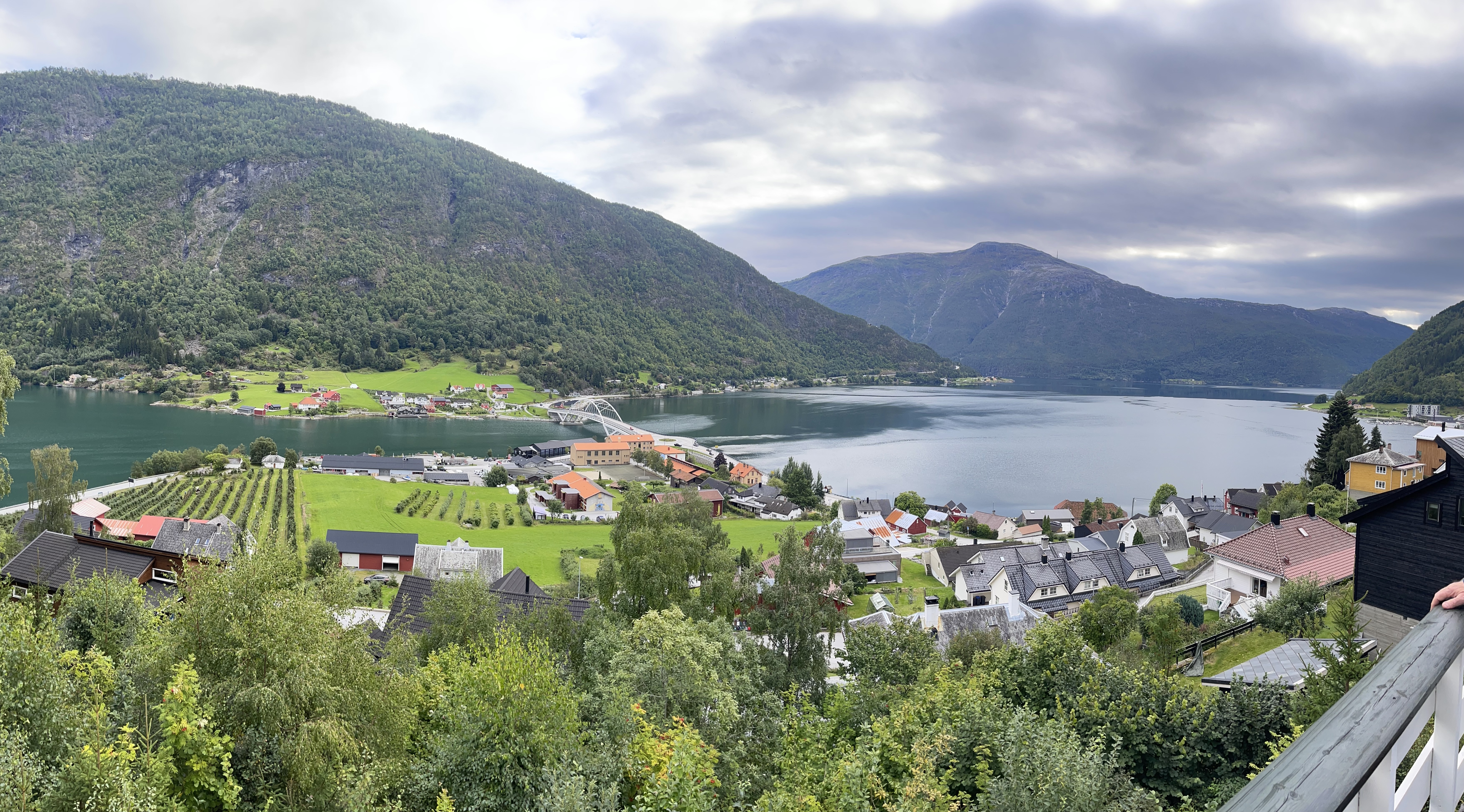
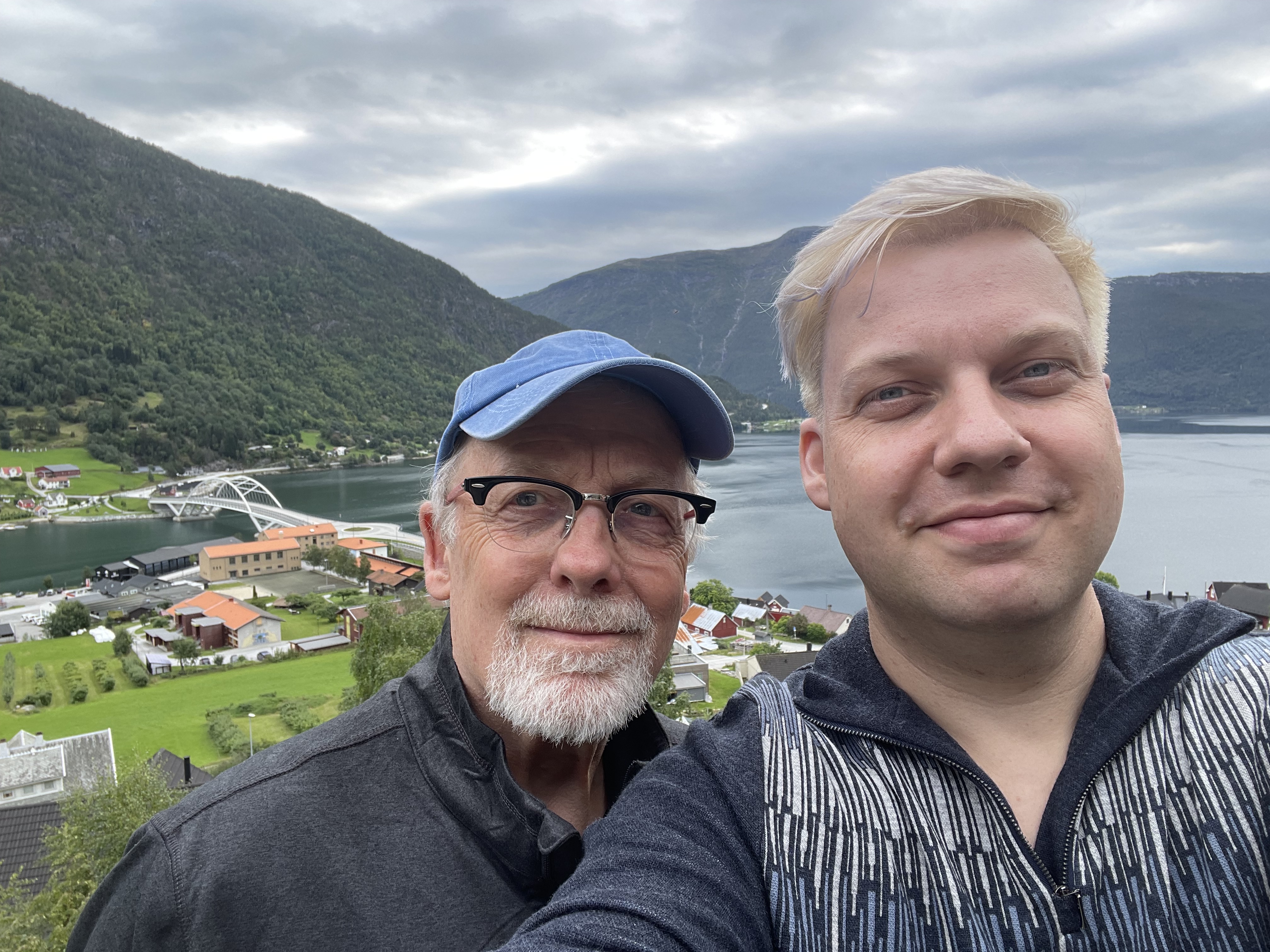
As we enjoyed coffee and waffles (the total summation of today’s activities skyrocketed our waffle count to 8) on Kari’s spectacular porch, Lars helped us contact the local coffee roastery and may have secured us a time for a tour of their operations for next week. I am very excited for this opportunity and hope it materializes!
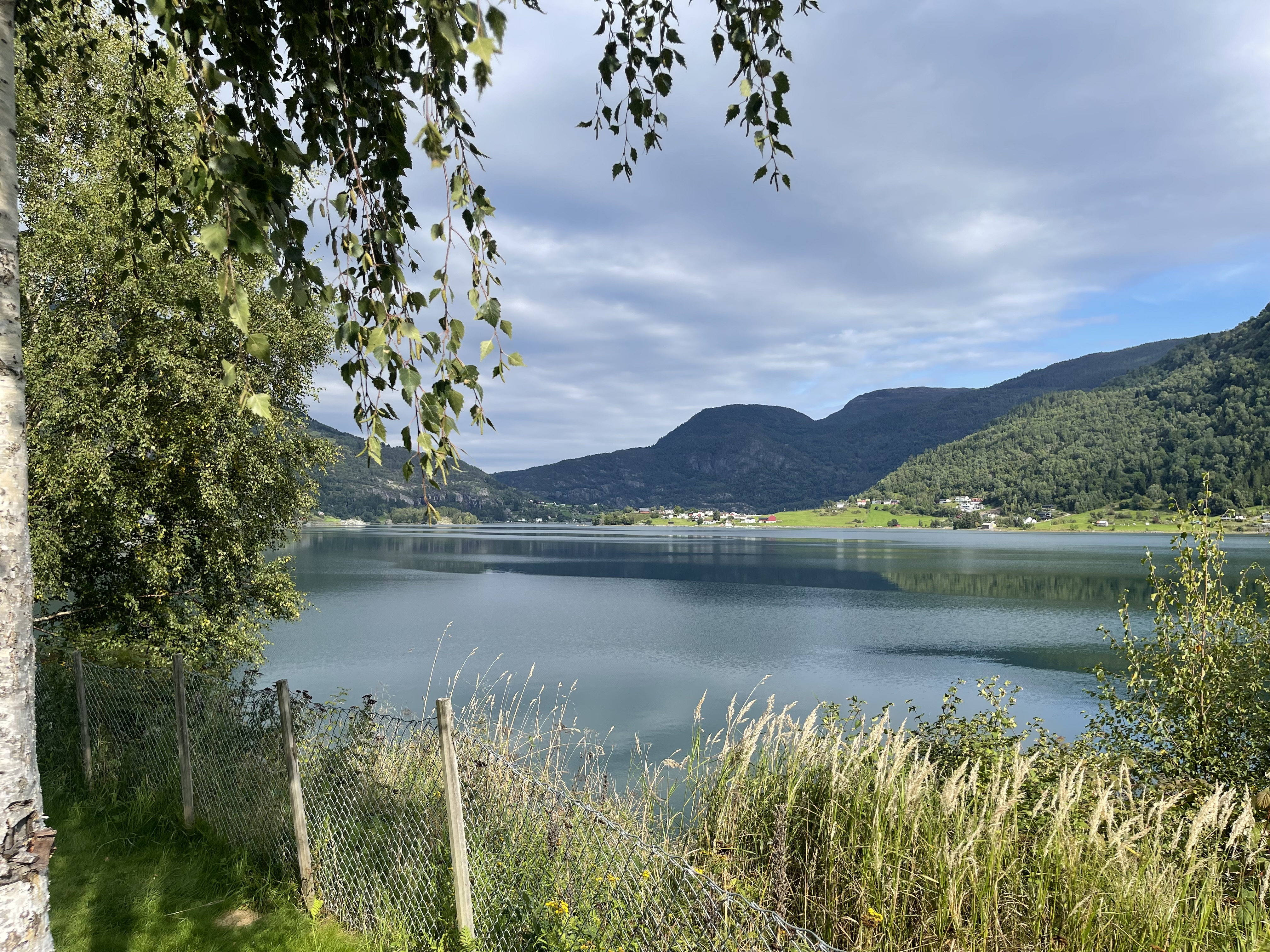
We concluded our evening at the home of Steinar Foss in Kaupanger, a short jaunt across the bridge from Sogndal. Steinar is the son of Oddvar, who is one of the six Foss brothers mentioned in previous posts. We were joined at dinner by Steiner’s wife, Kristin; their sons, Roger and Kenneth; and their nephew, Eirik. As the visitors in this tale, my dad and I are generally interested to know about local issues in Norway, but Roger in particular reminded us of the relatively heightened awareness other countries have of the goings-on in the United States. I was impressed by the specificity of his knowledge and the level of detail in the questions he posed about American culture and politics (and also thankful for his skill as a translator).
Tomorrow will likely be our first day of venturing out on our own for a little road trip, unless we are abducted by one of many Foss relatives or ambushed by a change in the promising weather forecast. In the meantime, I’ll be dreaming of goats.
 Where the Waterfalls Mean Home
A mere eight waffles so far?
You won’t be surprised to know it would be higher if I didn’t possess considerably honed skills of polite refusal.
You can be arrested here for refusing a waffle.
I would argue one should be fined for waffle refusal at the very least.
Have fun you two! Keep the blogposts coming!
I’m sure your Dad has told you how he ran into his cousin Cindy at the docks in Oslo in 1971. That’s me, reading your blog and getting to know his son. What a beautiful writer you are. I’m sincerely enjoying your trip, Stefan.
Thank you very much! I so appreciate that you are following along and hope that you can revisit some fond memories through our travels.