
In 1184, a highly consequential naval battle took place at Fimreite, located just across the fjord to the southwest of Sogndal. Two kings–Magnus Erlingsson and Sverre Sigurdsson–clashed in a bloody affair resulting in the deaths of at least 2,000 men, including Magnus himself, cementing Sverre’s claim as the sole ruler of Norway. The result of the battle changed the course of Norway’s history immeasurably.
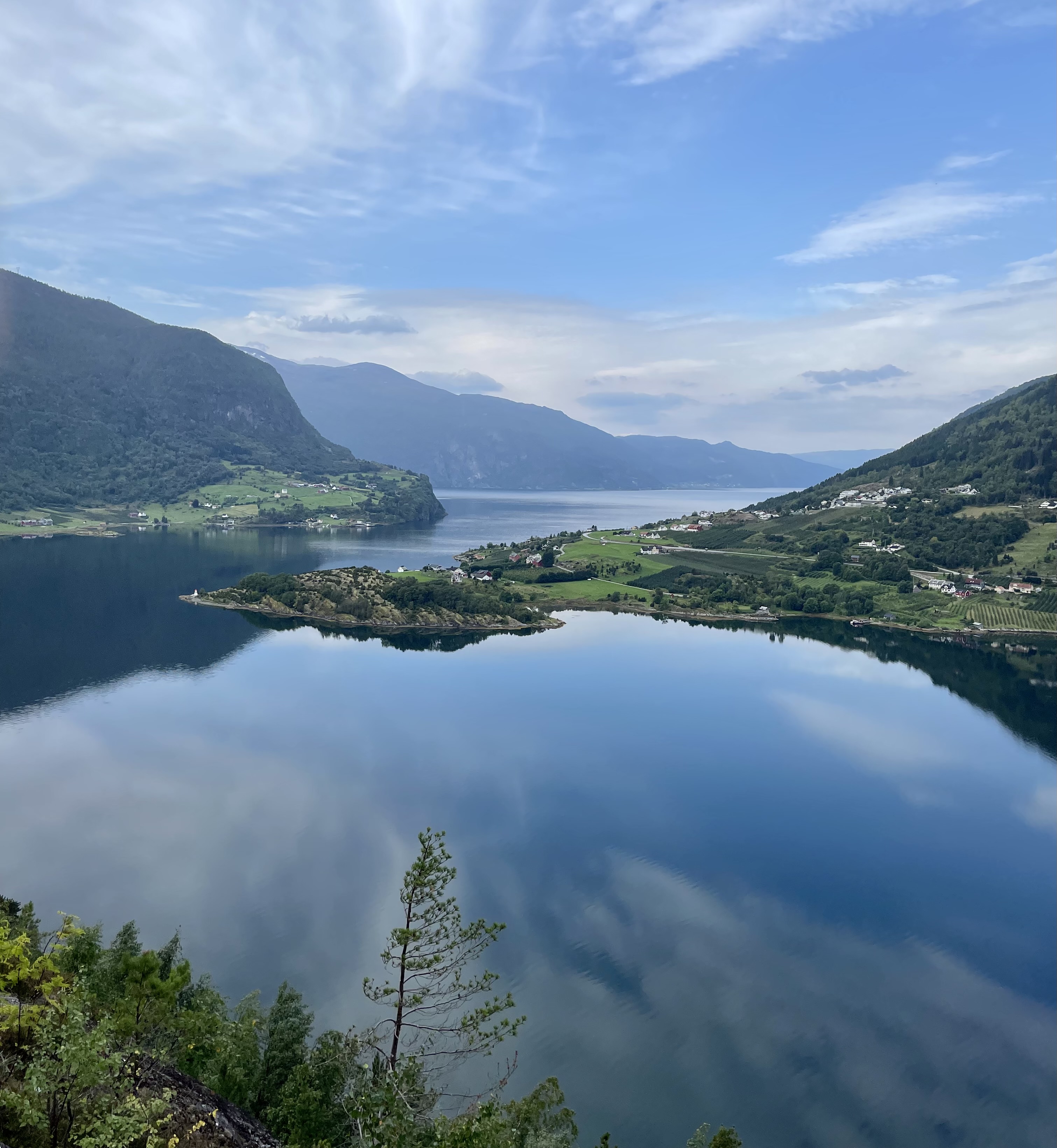
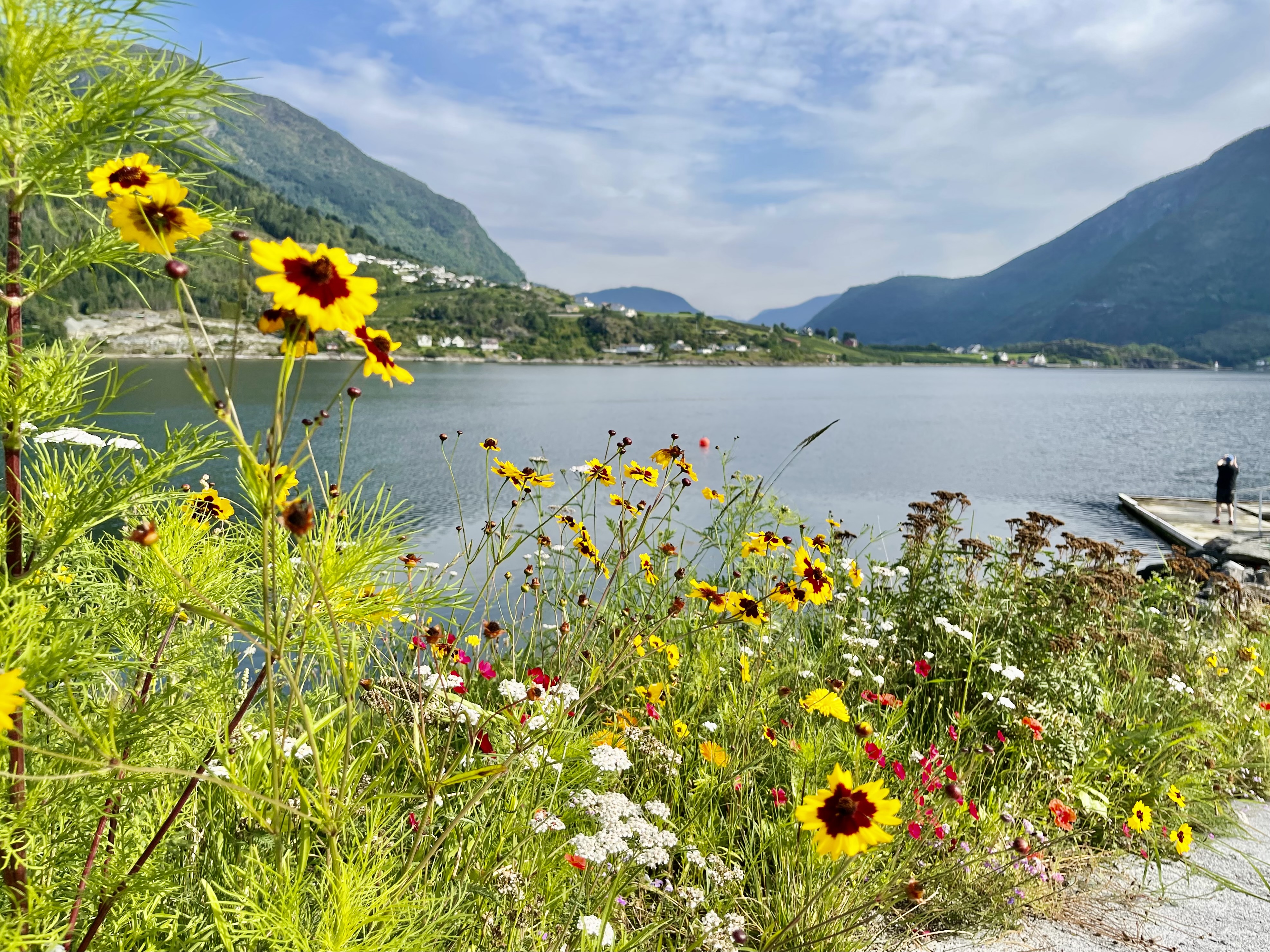
Events that took place 840 years ago can be difficult to conceptualize, particularly as an American. Today, however, my dad and I had the privilege of touring the site of the Battle of Fimreite with local historian and journalist Rune Timberlid, an author of several historical texts who has made understanding the details of the battle his most recent passion project and academic pursuit. Rune has been working with teams of divers and specialists with underwater equipment in an effort to locate clues that can help us piece together the specifics of how the carnage unfolded on June 15, 1184.
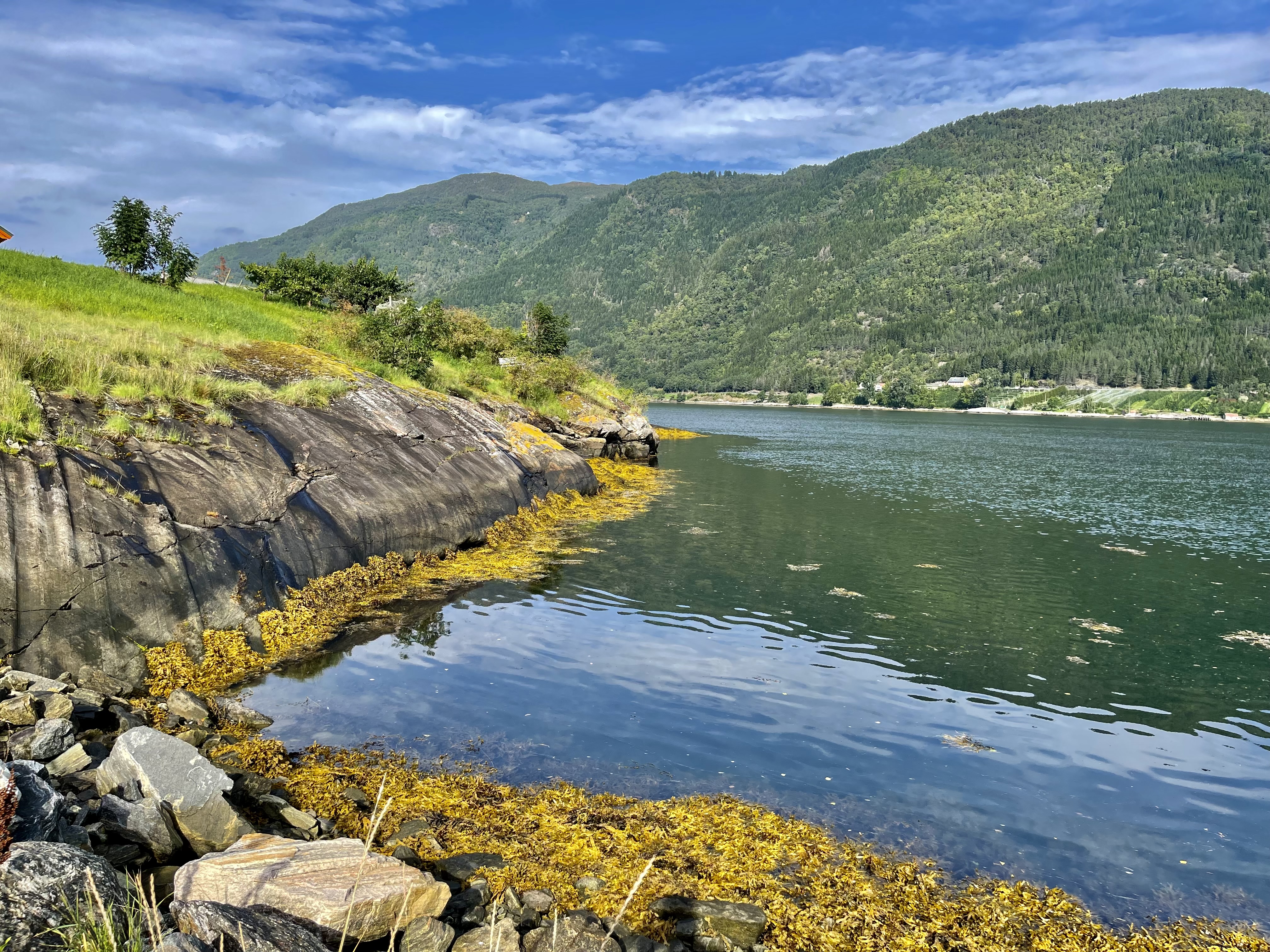
Learning about the research process and the painstaking efforts that go into reconstructing a historical event from so long ago was a fascinating experience. It was a rare treat to get to pose questions to someone who has immersed himself so deeply in a subject; hearing anybody talk about something they passionately enjoy is always wonderful for me. Having our conversation overlooking the actual site where the battle occurred elevated the experience even further. The way Rune was able to paint a visual picture of what took place made the historical significance palpable, as if there was a weight of consequence in the air.
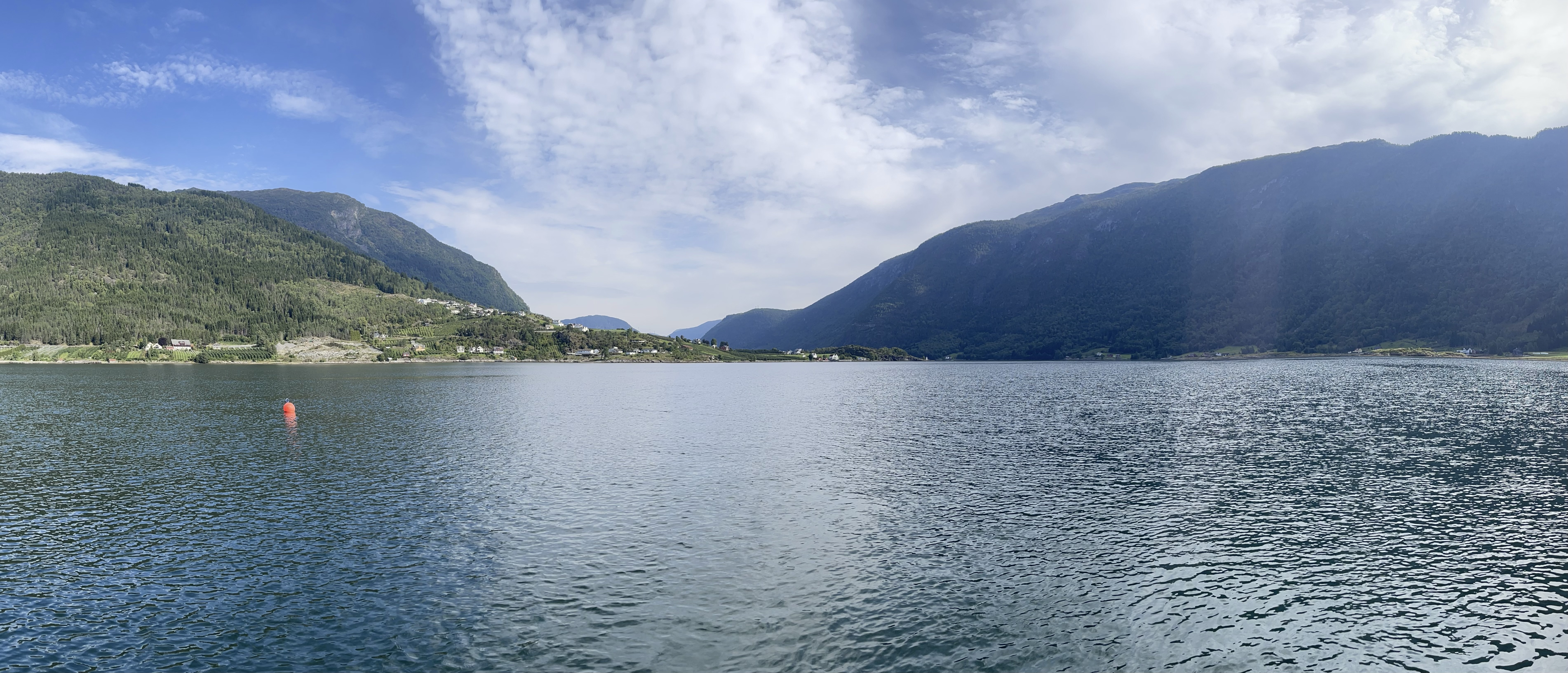
Rune took us back to his place and gifted us signed copies of some of his other published works, and I only regret that my Norwegian isn’t (yet?) up to snuff enough to fully appreciate them. But I know my dad and I are especially grateful for his time today and look forward to his future discoveries.
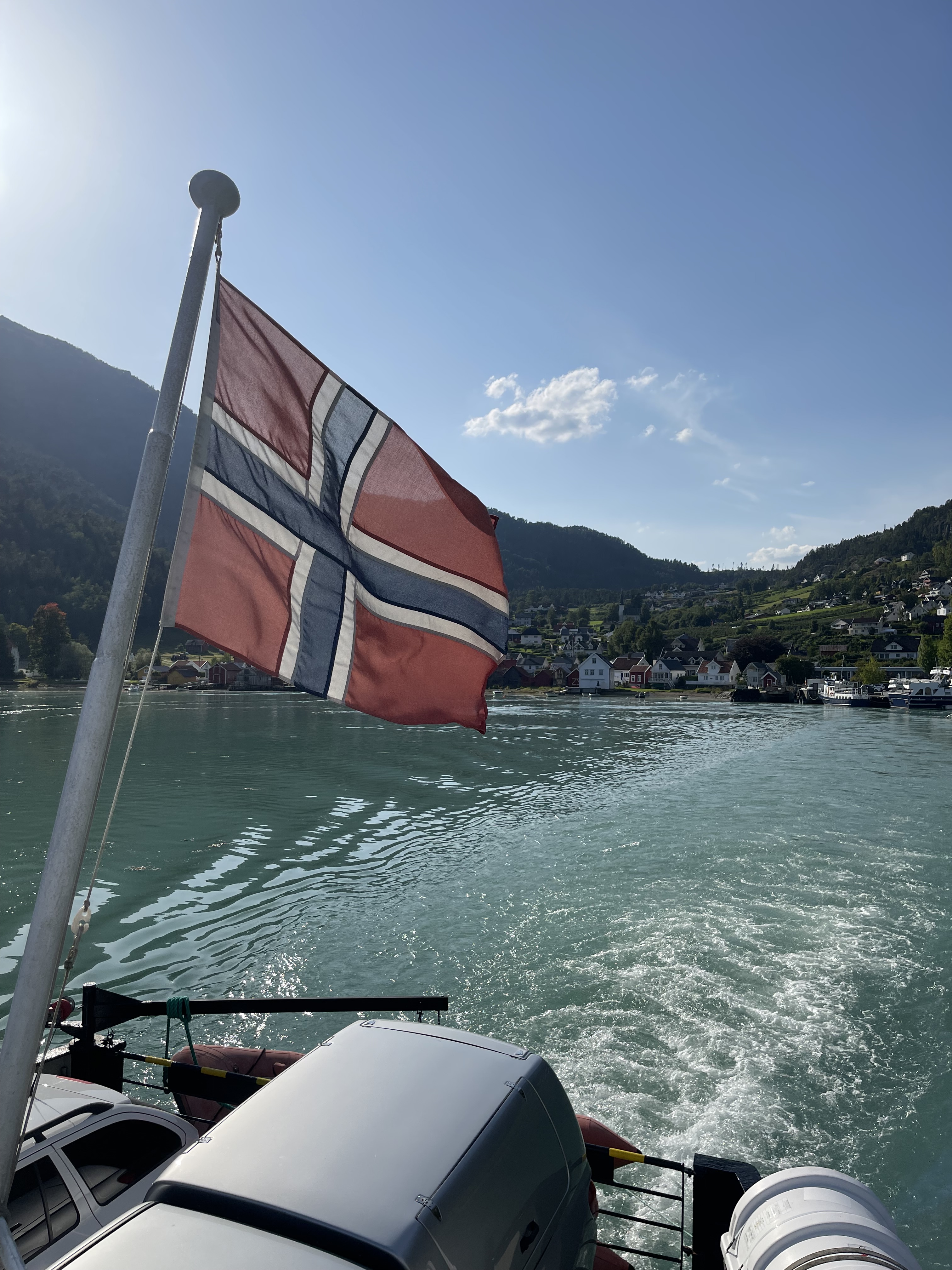
After a brief rest, we took advantage of another day of beautiful weather and decided to visit the town of Ornes, which features one of the oldest stavkyrkjer–stave churches–in Norway. UNESCO has declared this particular church a World Heritage Site, granting it special levels of protection for its historical significance and delicate upkeep requirements.
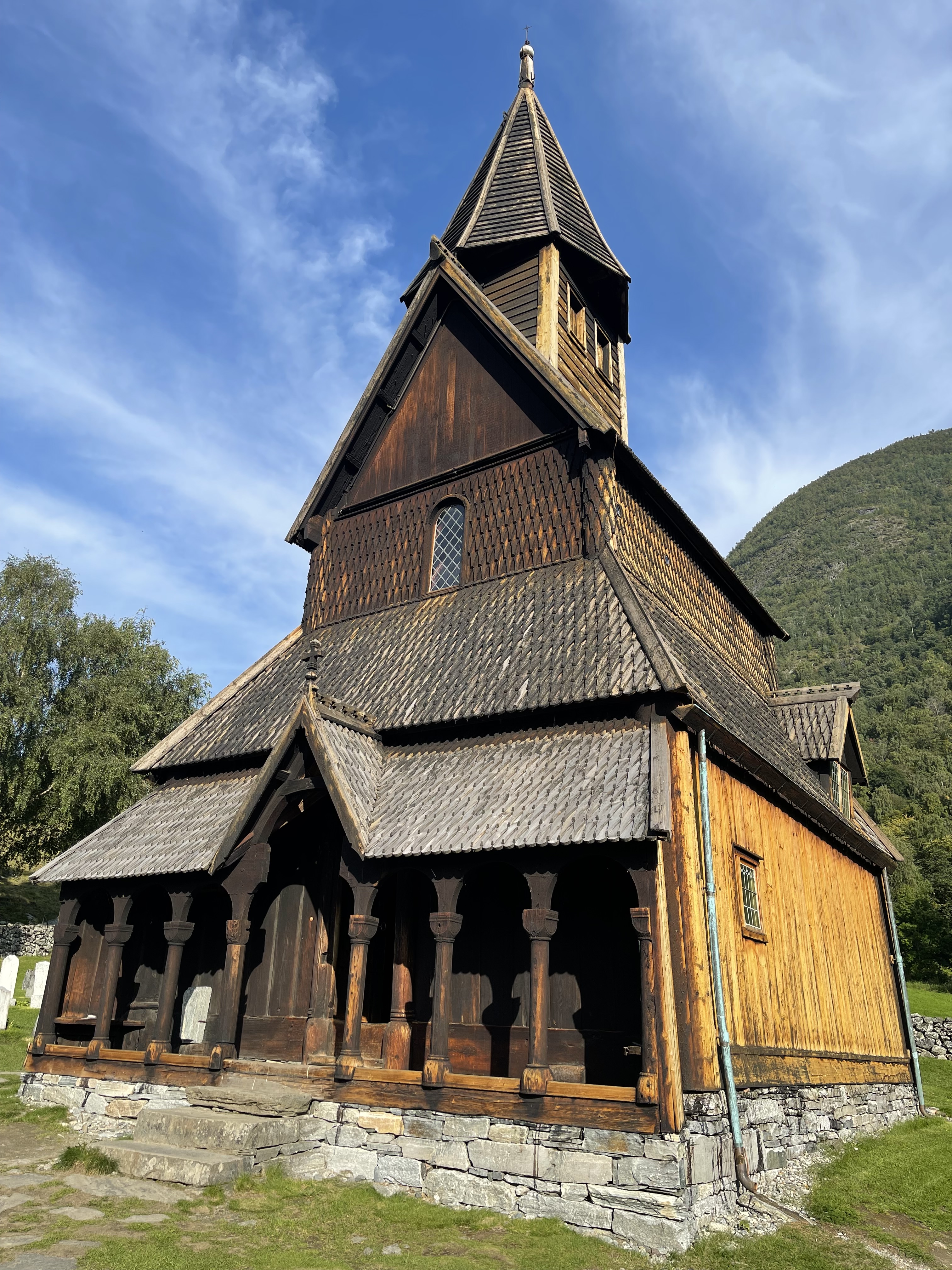
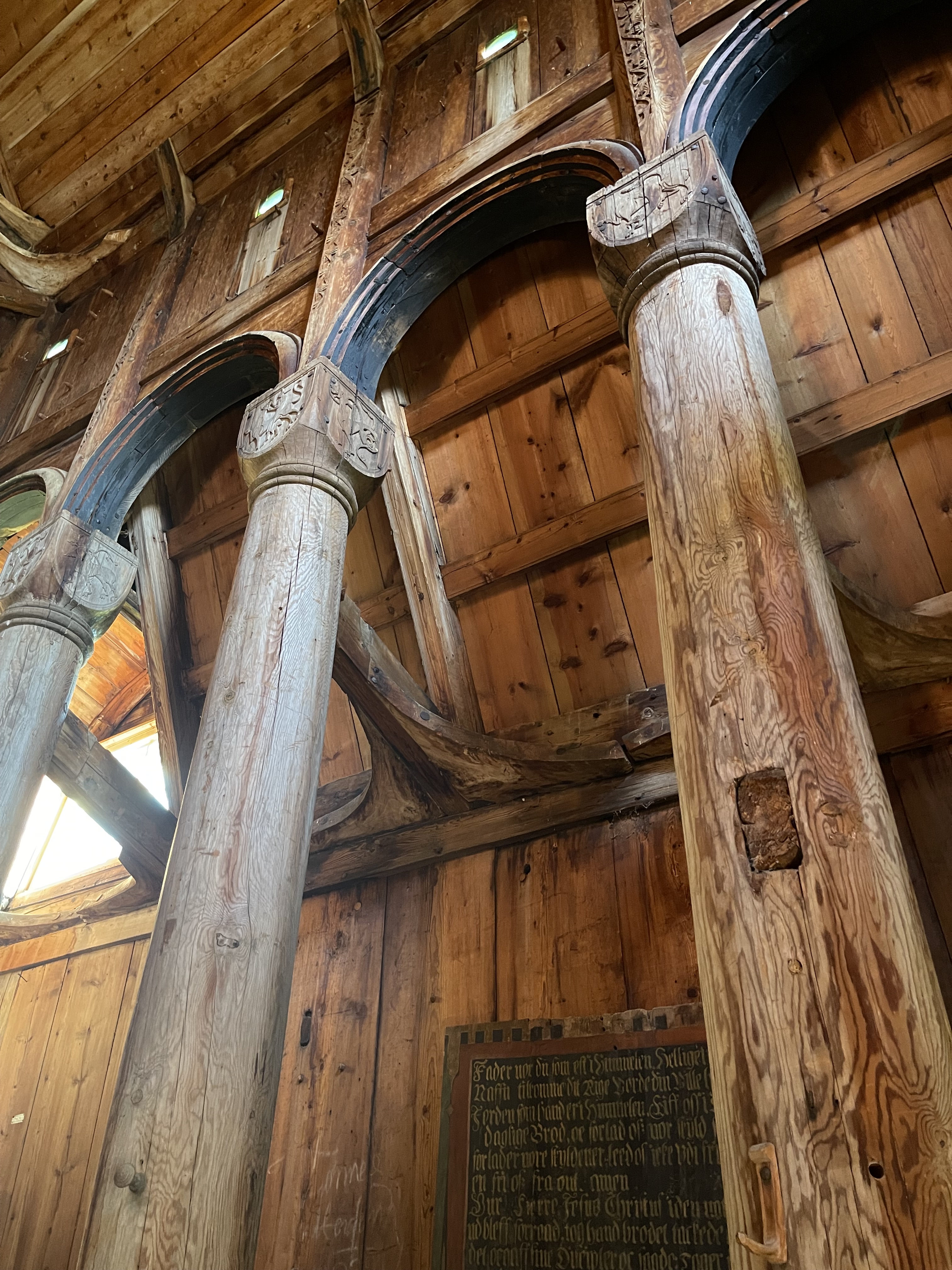
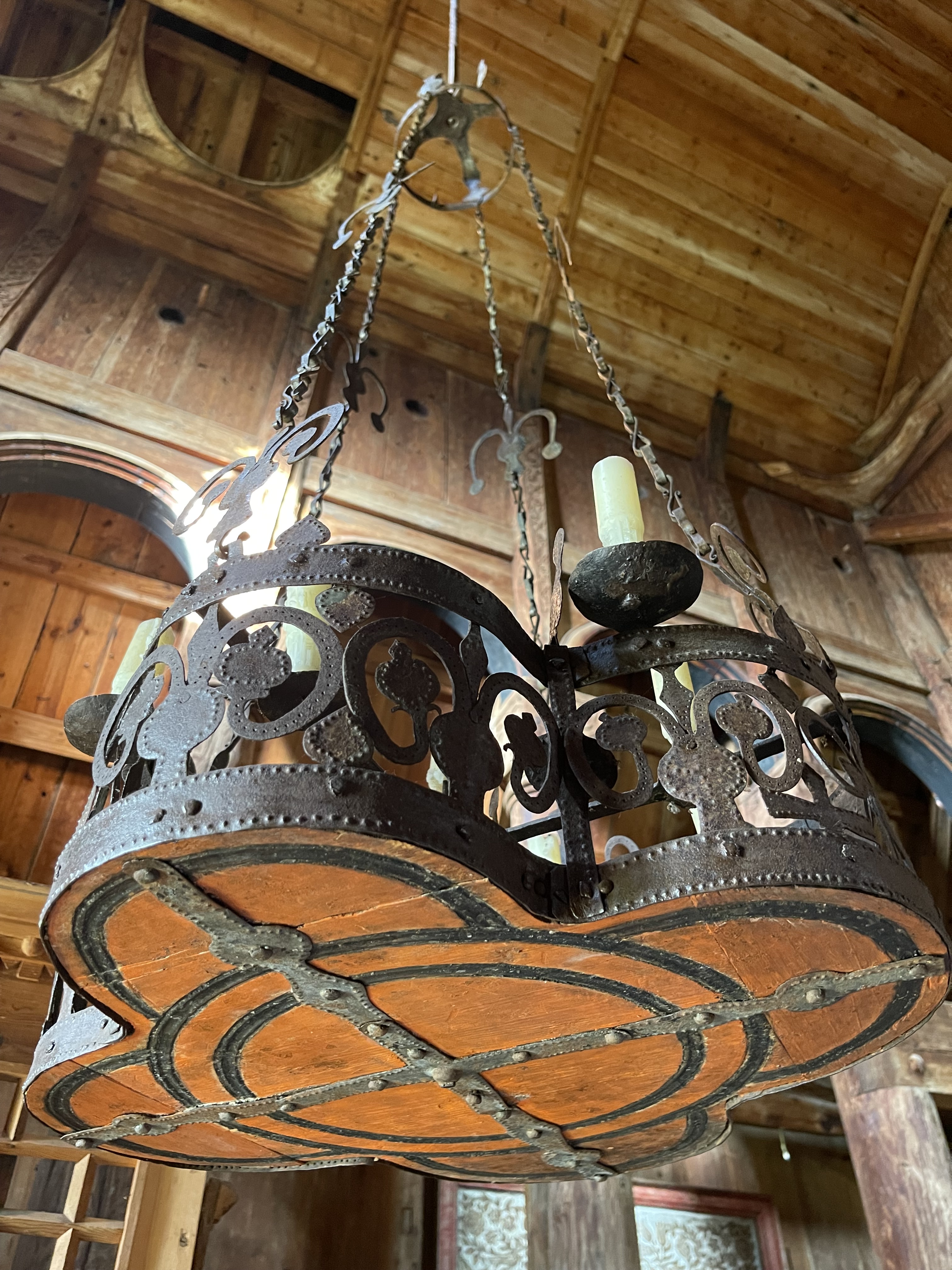
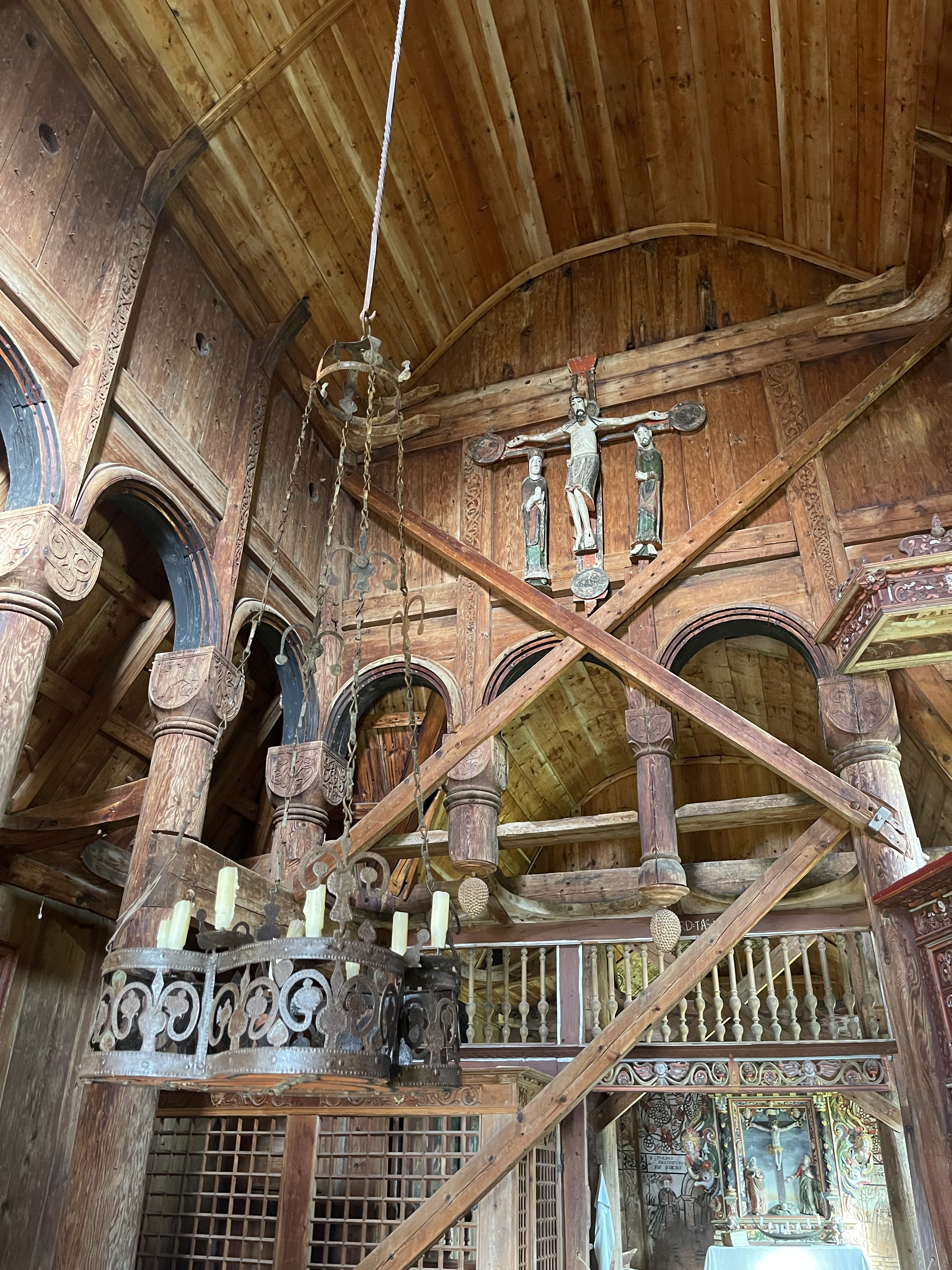
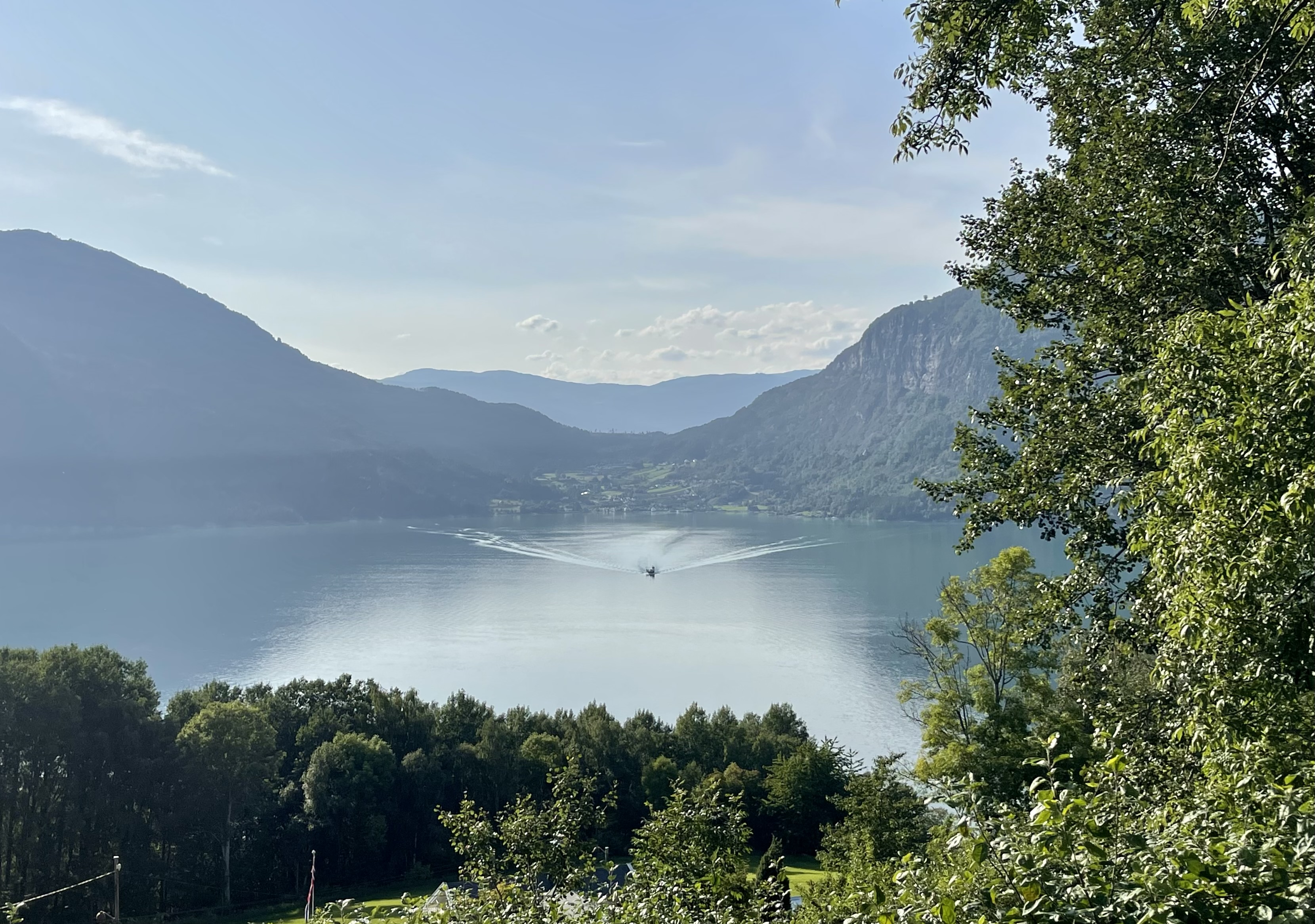
Had we known about the long, steep climb required to reach the church, we likely would have taken our car most of the way; instead, my dad and I elected to take the ferry across the fjord from Solvorn to Ornes on foot and were obligated to put in our workout for the day (or week) to reach our destination. The church itself stirred similar feelings to our conversation earlier in the day about Fimreite: the weight of history hung in the air around the structure. The construction of the interior told stories, inviting visitors to imagine how the church was used in centuries long past. The exterior architecture featured “the northern portal,” actually a surviving element from a previous construction of the church that was later replaced. The people of the era believed that demonic influences originated from the north, and the portal was an architectural feature whose inclusion was designed to ward off this evil. (We chose not to pay for the guided tour offered at the site, but I am a skilled eavesdropper. Call it frugality.)
We will wrap up our evening with another conversation with Erik Foss, although I am publishing this before that takes place, so any notable and newsworthy developments will be documented later. Erik shared that nights are often the most difficult for him ever since his wife Kari’s passing, as he now has to endure them alone. We are therefore happy to spend some of these twilight hours with him to lessen his burden. More soon.
 Where the Waterfalls Mean Home