
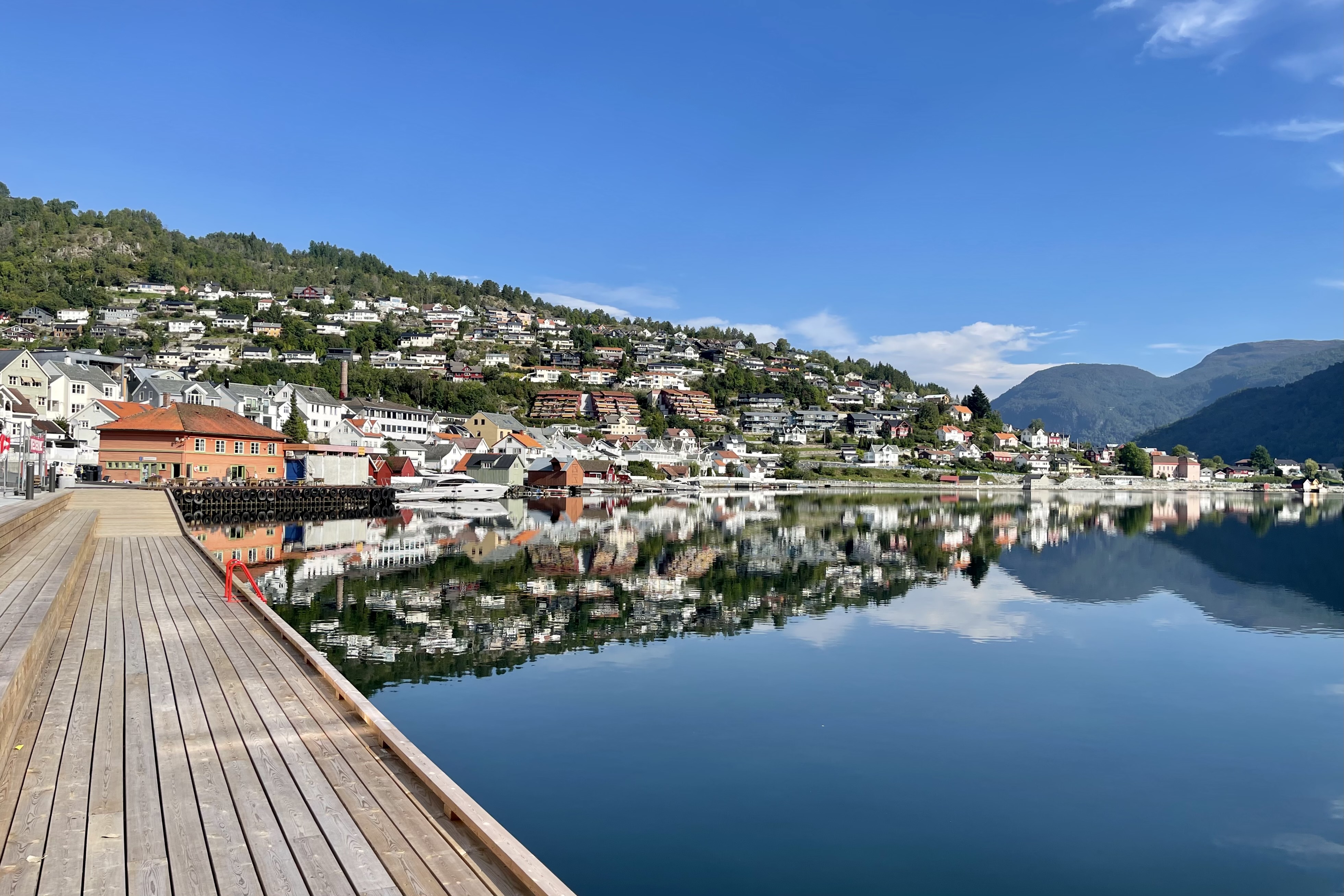
Having decided that I hadn’t punished my legs enough already with yesterday’s climb to Ornes, I set out this morning on a solo trek up the roads that wind across the Sogndal hillside. As several of my pictures have likely demonstrated, Sogndal sits along the edge of a massive fjord. But the city also nestles up against the side of one of many nearby mountains, and as a result many of the roads throughout the city have an incline that is difficult to imagine if you were, say, raised in the flatlands of Wisconsin.
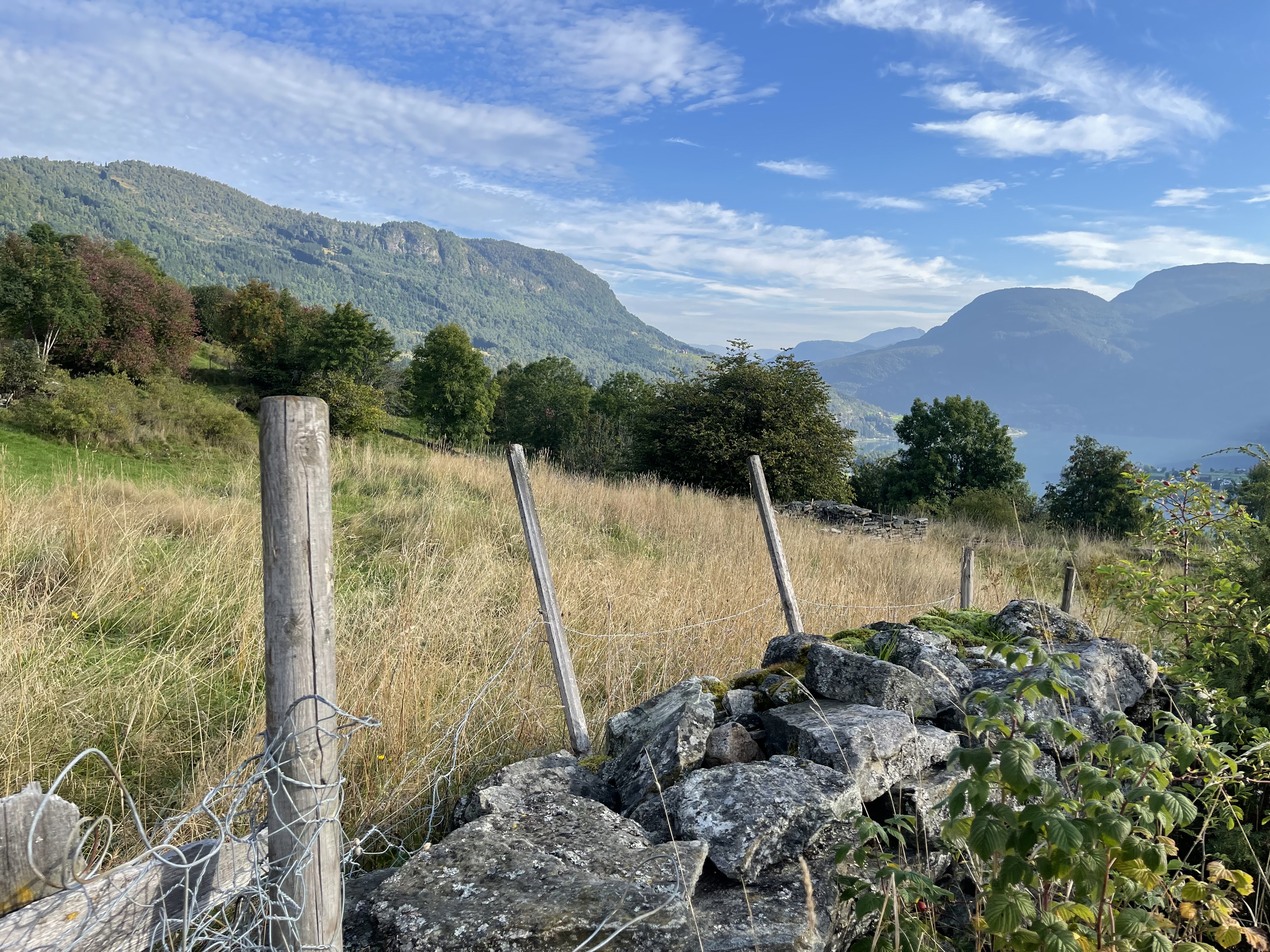
Friends of mine from home are well aware that I have been preparing physically for this trip for some considerable time now. My last trip here laid bare the level of fitness required to fully experience all that Sogndal has to offer. You can travel nearly everywhere by car, yes, but you would miss out on some of the semi-hidden passageways that connect the different shelves of houses along the mountain wall. There are also perspectives of the city only available as rewards for reaching them on foot. I was happy to directly experience the benefits of my preparation efforts over the last two days and hope to extract even more from them in the coming weeks.
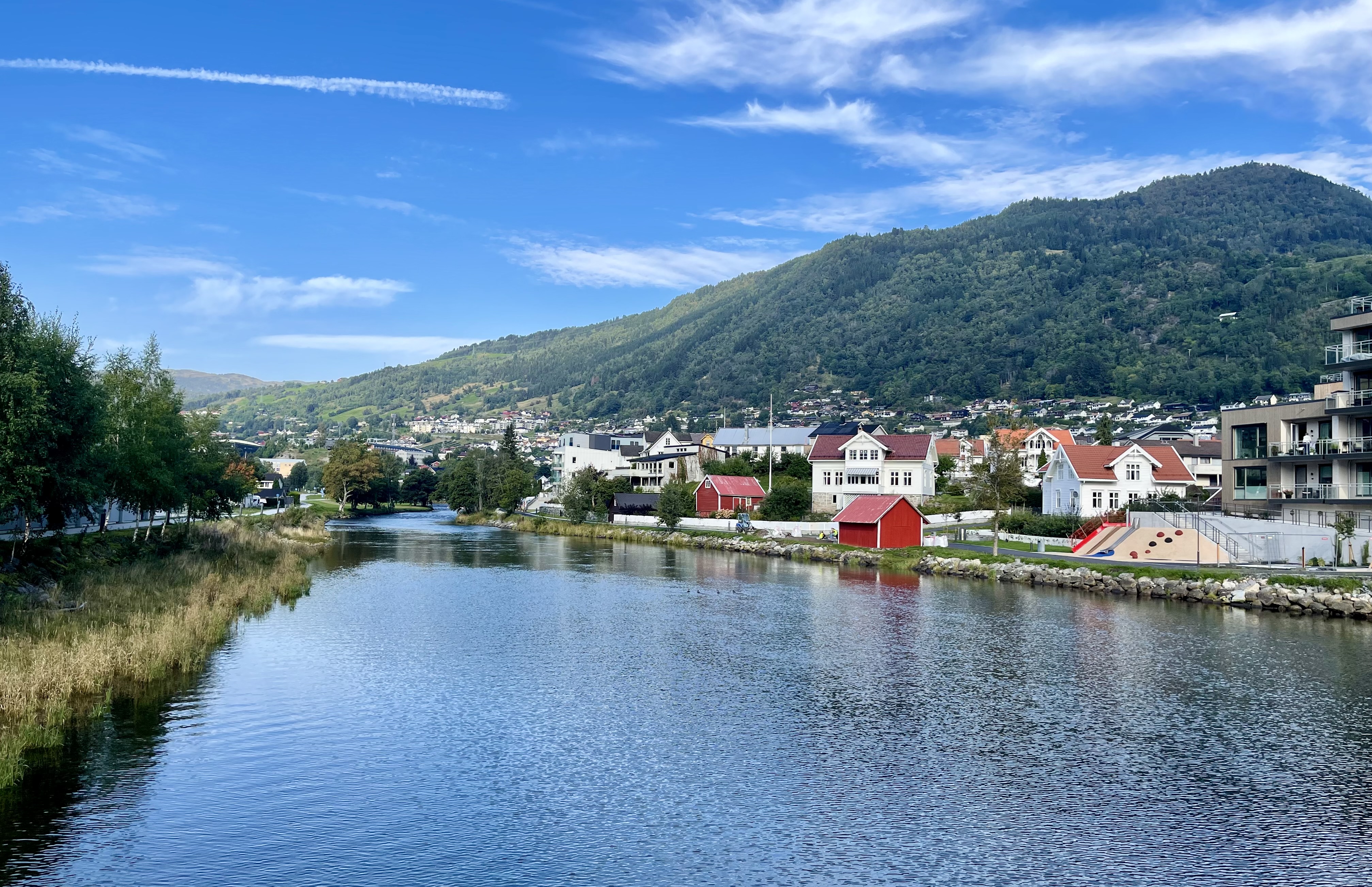
A new addition to Sogndal since our last visit is a walking bridge that crosses the point where the water that runs down from Fossfossen—our namesake waterfall—meets the Sognefjord. My dad and I have wanted to check it out, and since our uncharacteristic streak of sunshine appears poised to end tomorrow, we seized the opportunity. The trail follows the fjord to the Leikanger tunnel, where it continues on for a long way past where we elected to turn around to head back.
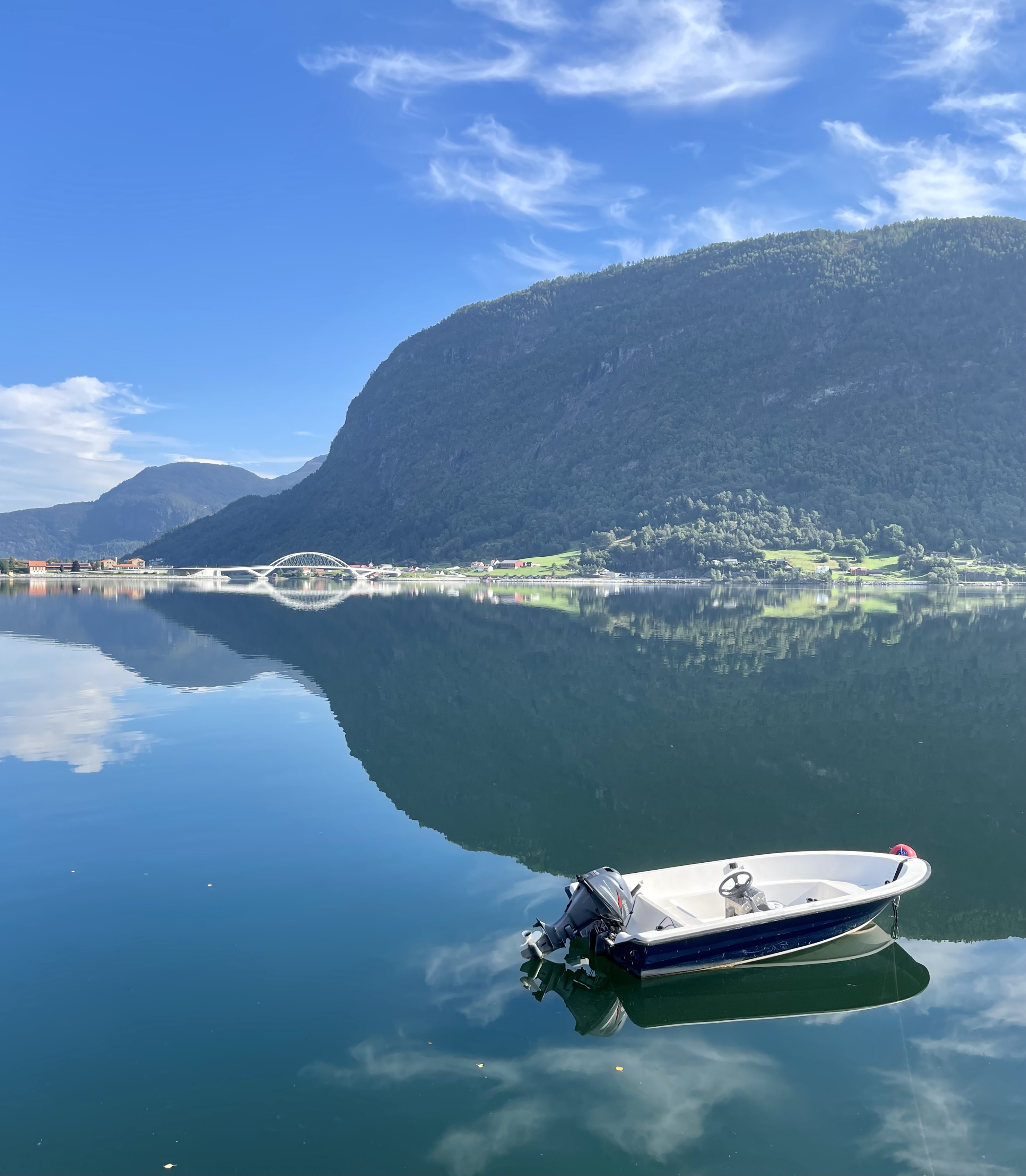
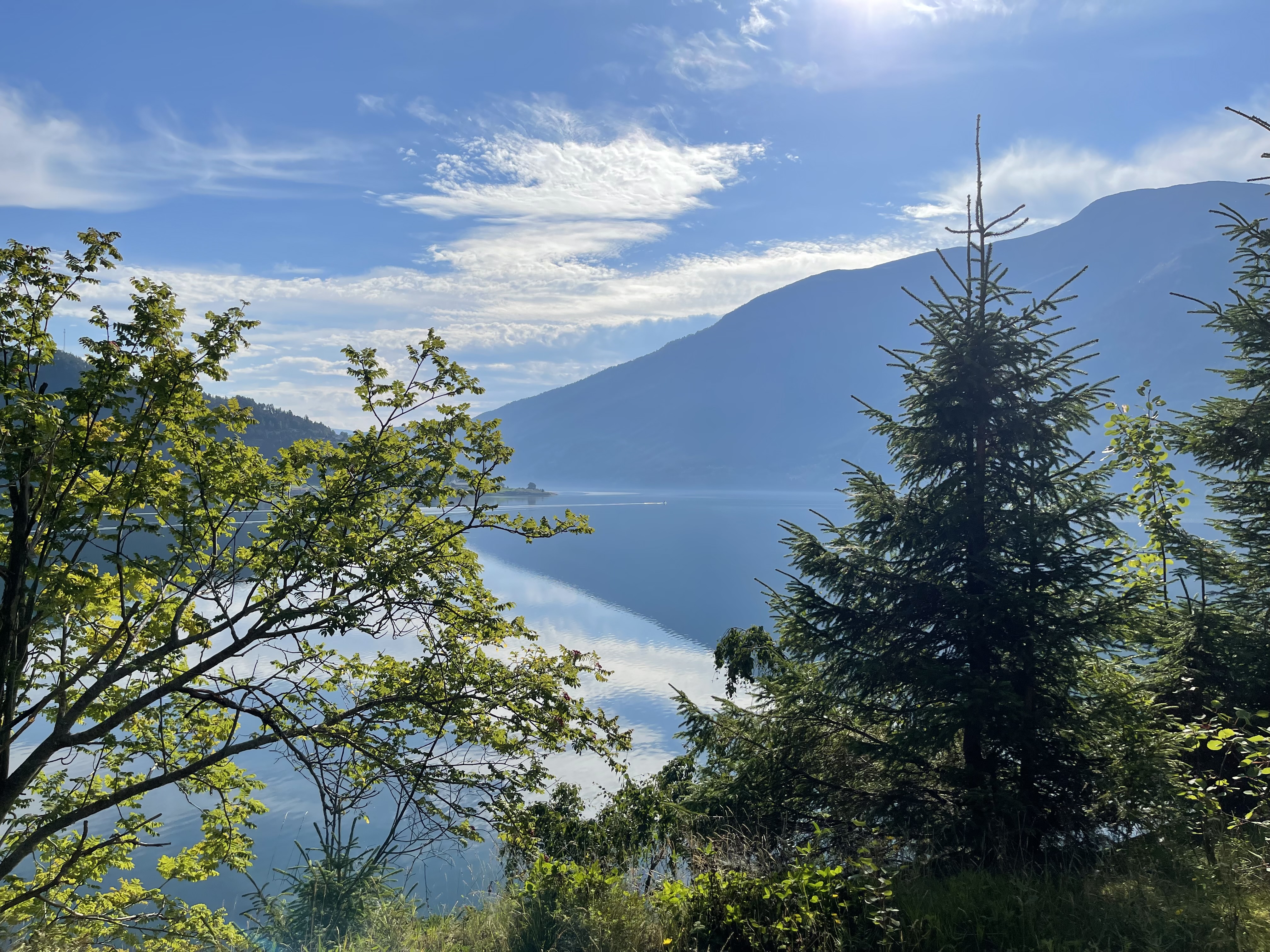
You could successfully run a postcard business featuring only the sights from your choice of walking trail in Sogndal. This being my second blog covering the city, I’ve simply run out of superlatives to describe the view. While I know that locals here have a deep appreciation of the nature that surrounds them, I am sure that even they are amused by the wide-eyed stammering that ensues nearly every time we traverse the place. I live in Oregon now, unlike when I last visited, and while the Pacific Northwest boasts some incredible sights of its own, nothing touches the awesome, towering majesty of the fjords.
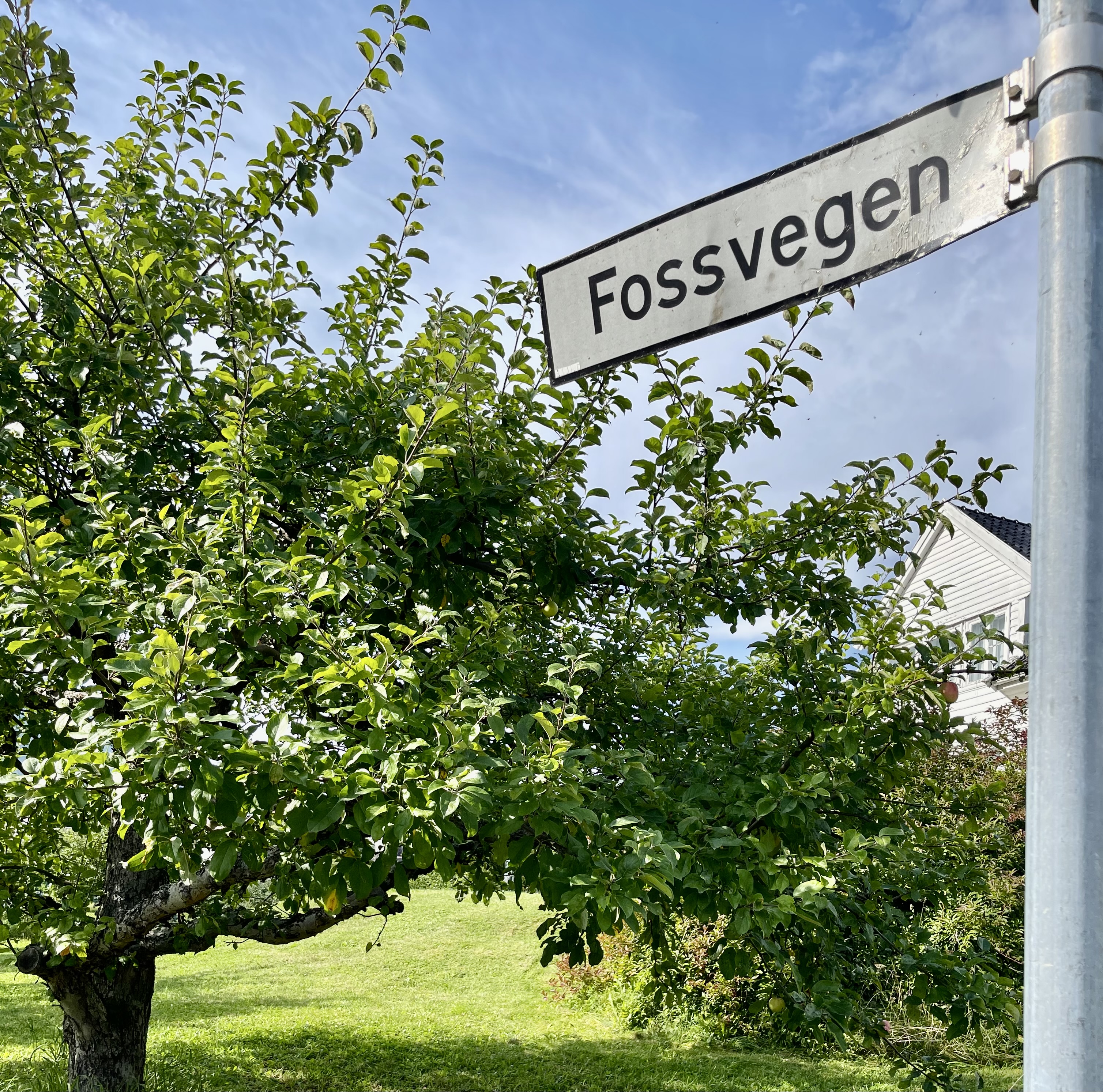
We later meandered our way to the town center, where Sogndal was hosting what I’ll call a community festival centered on the upcoming Monday election. At the risk of betraying my ignorance on the subject, I won’t attempt to detail the Norwegian political system; however, what I can say is that I was struck by some immediately apparent differences between the Norwegian and American approaches. The gathering featured activities for children, which I can only assume is a helpful way to encourage them to become civically involved adults. We also enjoyed a conversation with Olaug Marie Bjelde, who works with one of the many government parties (and is also married to Lars from some of my previous posts). She explained that politics in Norway are very different from what we experience in the United States, in that parties with different views coexist amicably with little hostility.
My approach to politics in the United States is similar to many others’: I avoid the subject unless I am confident that I am in like-minded company. Politics are rarely about policies these days, and are instead flooded with hate-fueled debates about who is and is not allowed to exist, to a point where it can be dangerous if you find yourself in disagreement with the wrong person in the wrong place at the wrong time. In Norway, I am still evasive, but for a very different reason: the state of our country, to be frank, is embarrassing, and being in a country like Norway places a magnifying glass on that fact. The other day, Lars pointed out that policies decried as “radical socialism” in the United States would be considered mainstream policy in Norway. There is a clear abuse of the general public’s lack of knowledge by mainstream politicians who employ fear tactics to remain in power. Moreover, the specter of Trump continues to plague our international standing, and likely will for decades: such was his impact on our credibility and reputation. For our part, we do what little we can to demonstrate that not all Americans are so cruel, so crass, so devoid of humanity.
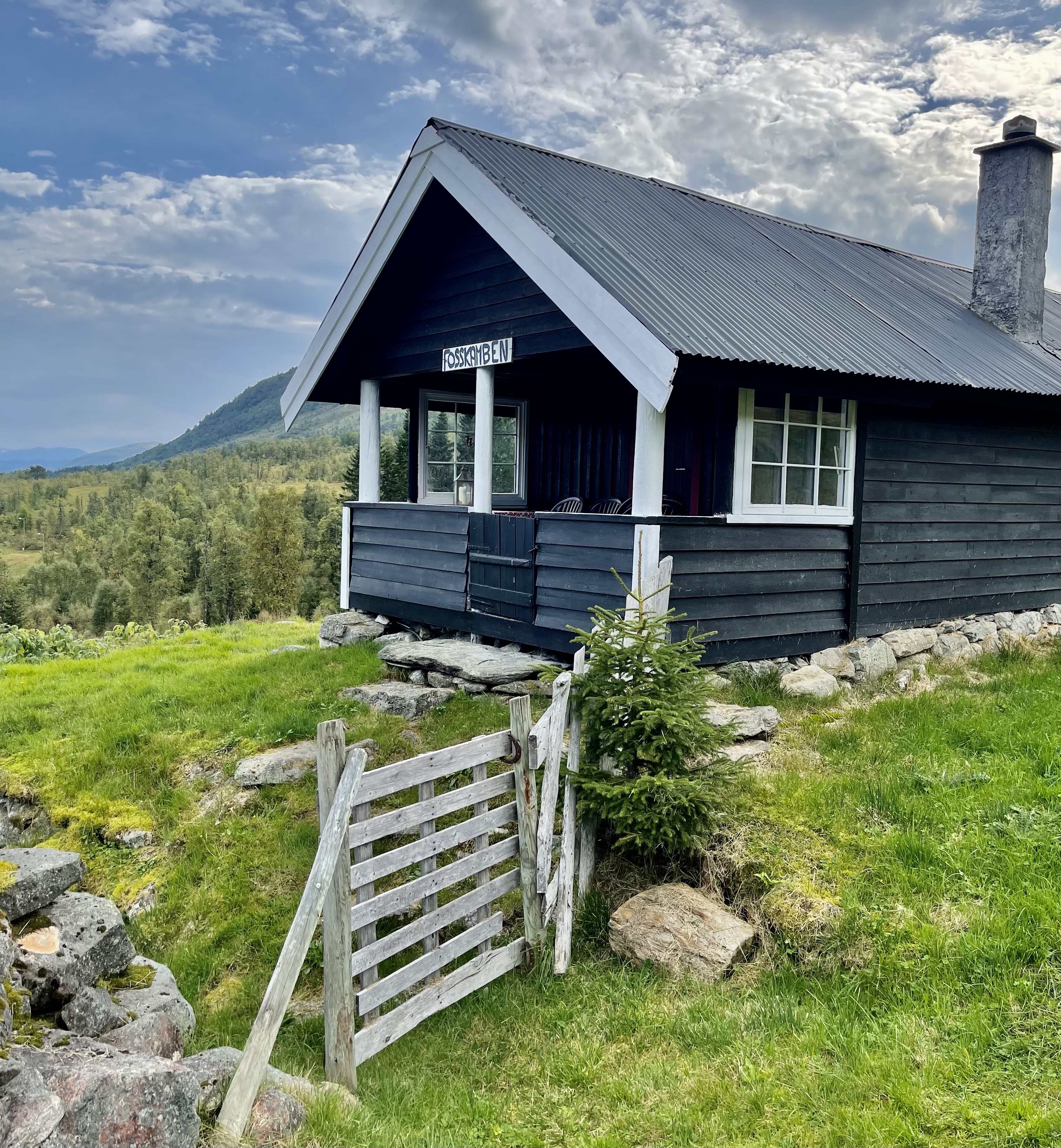
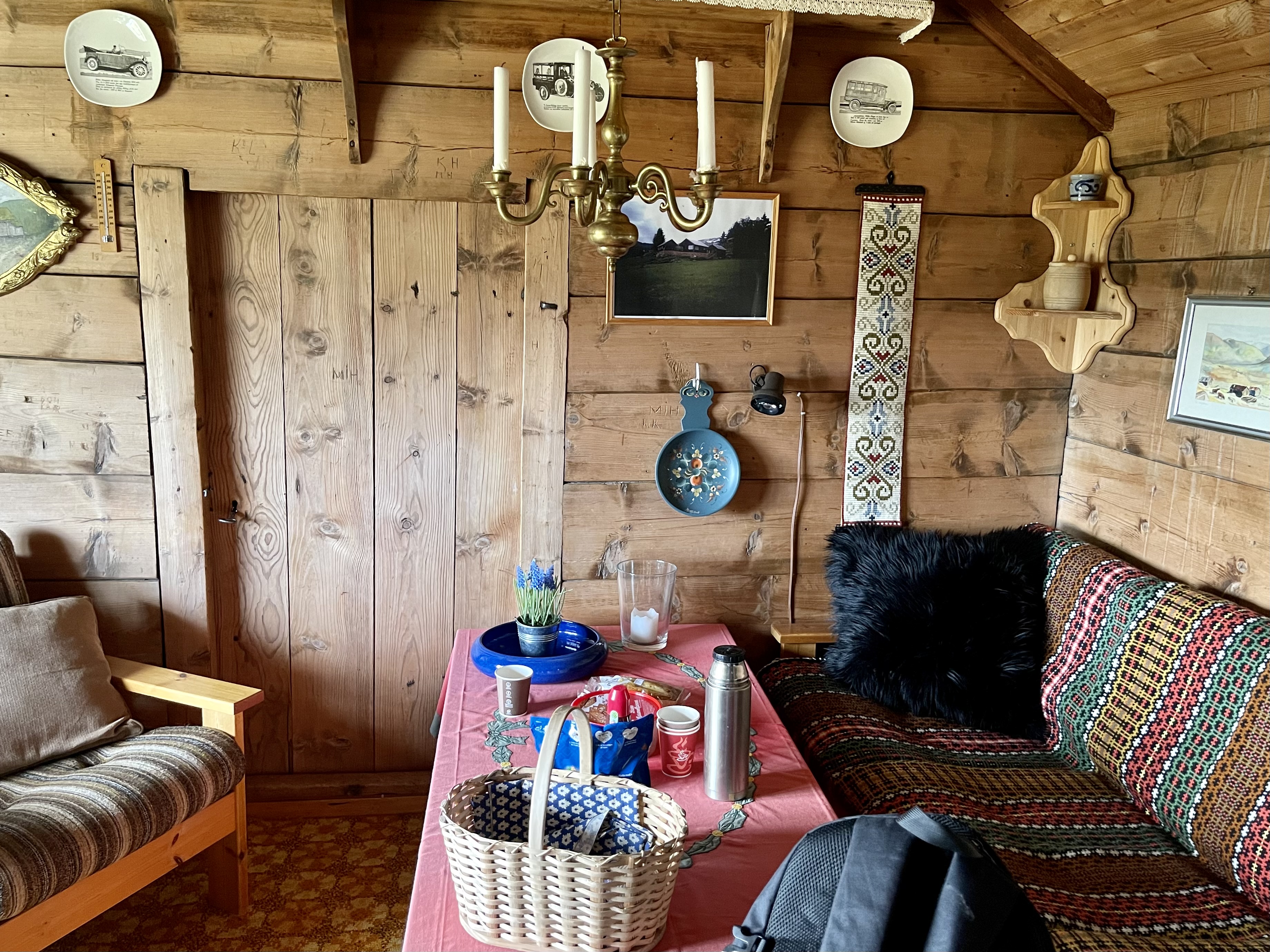
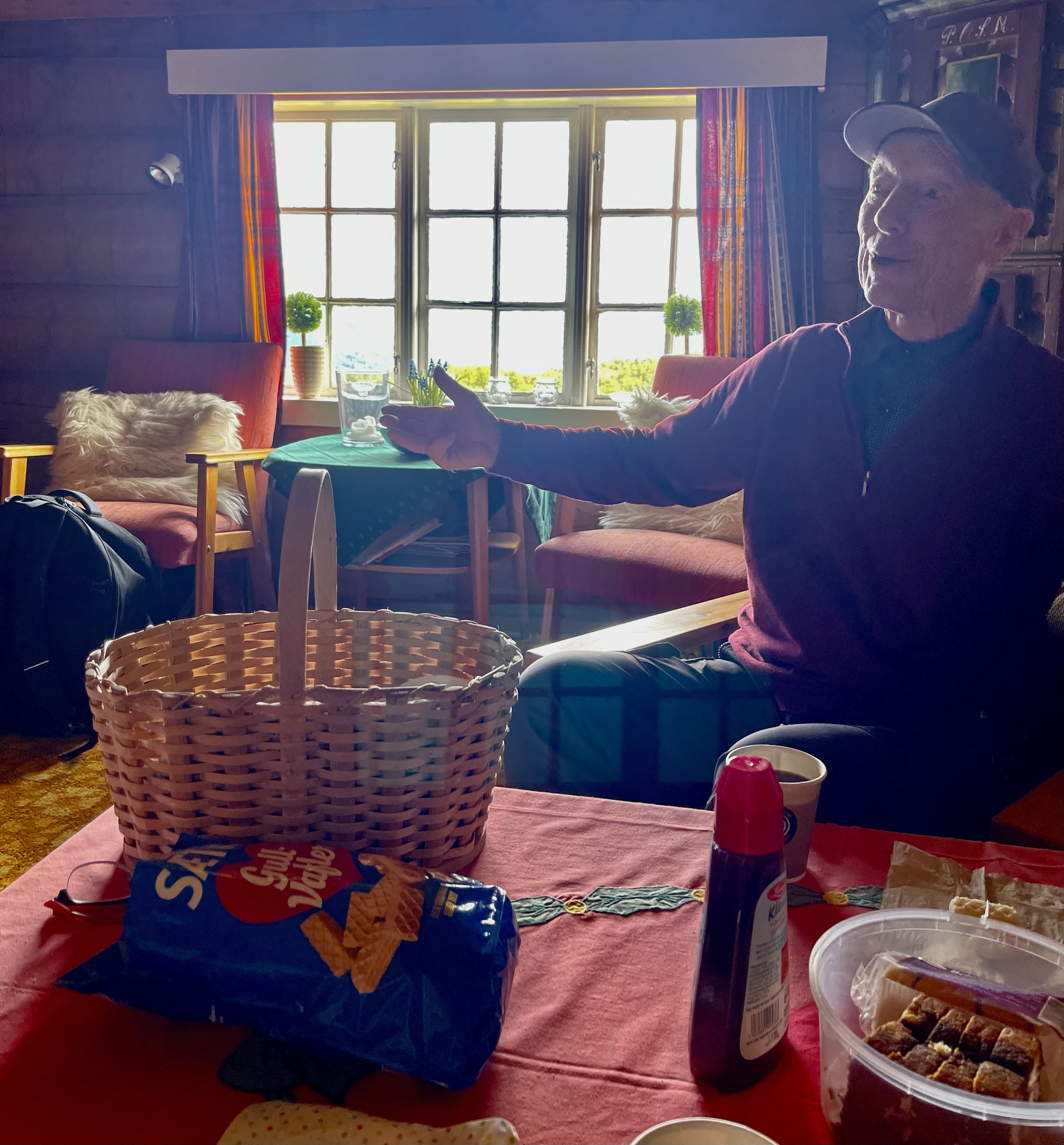
We joined Erik for “a little trip” (his favorite way to suggest a car ride somewhere) to Fosskamben, a summer farm where he maintains a cabin high in the mountains overlooking Songdalsdalen. My parents shared their honeymoon there in 1982, so the place holds special significance to both the Norwegian and American sides of the sprawling Foss family tree. Entering the cabin is like stepping into a time capsule. Much of the decor has remained the same for decades–and certainly since the last time I visited. But the same cannot be said of the surrounding area. A newly erected ski center, as well as dozens of modern, nearly resort-like homes (many of them rental properties), have all but eliminated the remote privacy my parents enjoyed so many years ago. While I am generally in favor of understanding that times and places change, it is difficult not to share my father’s cynicism towards this invasive gentrification.
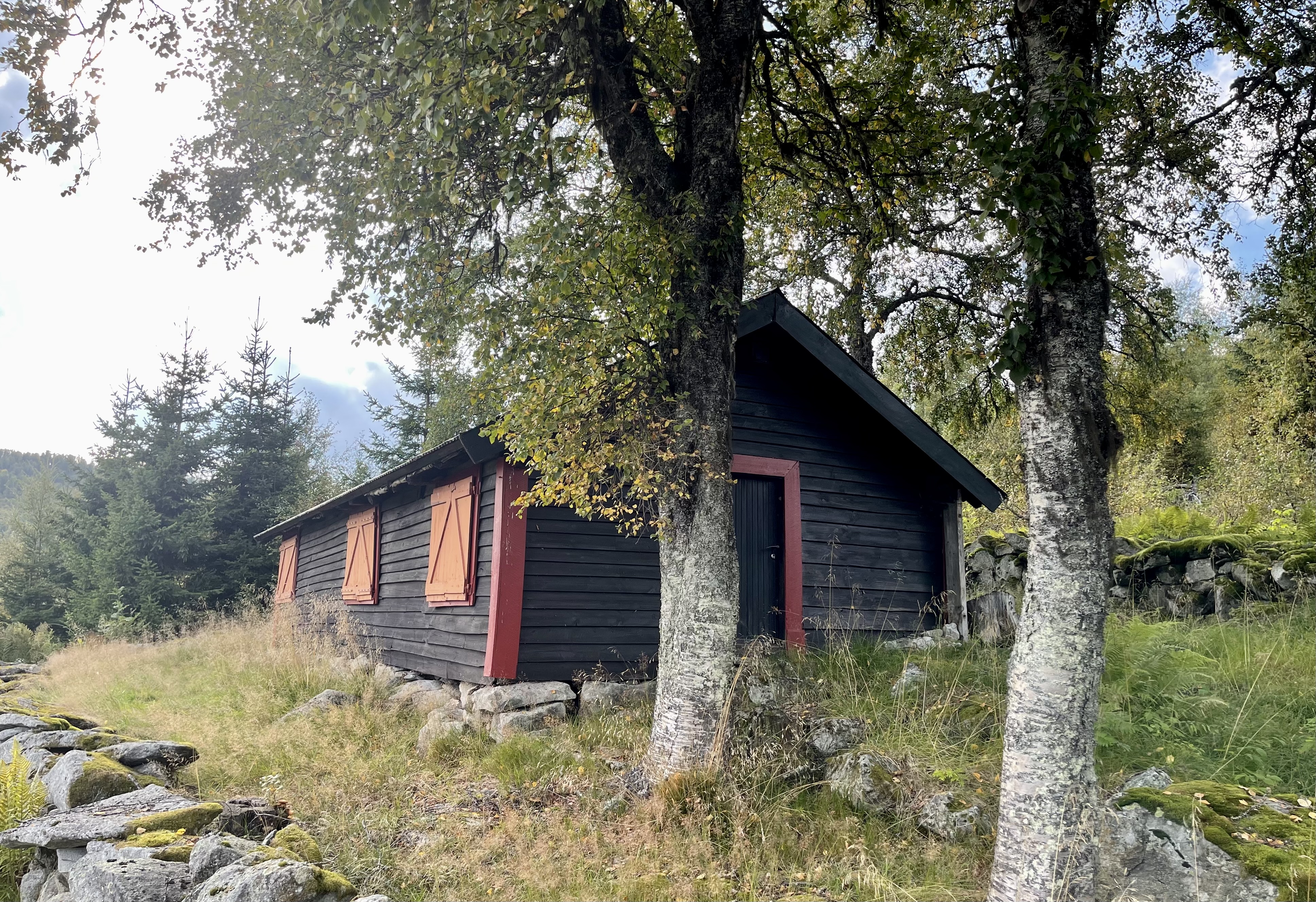
An old cabin stands across the road from Erik’s and strikes quite a contrast from the shiny exteriors of the newer constructions. It belonged to the late Olav Foss, a storied and well documented member of the family who played a significant role in Siskin, a resistance group who disrupted Germany’s efforts during World War II. Olav used this particular cabin as a base from which he would exchange radio messages with allied forces in London, and, on one particular occasion that Erik recounted today, came perilously close to being killed by German soldiers who had bribed impressionable locals for information about Siskin’s whereabouts. While the cabin is now somewhat overgrown and in a state of slight disrepair, its significance as a location pivotal to the war is palpable. Erik’s ability to add color and life to the space with his storytelling is a gift I will remember.


Once again, many keen observations!