
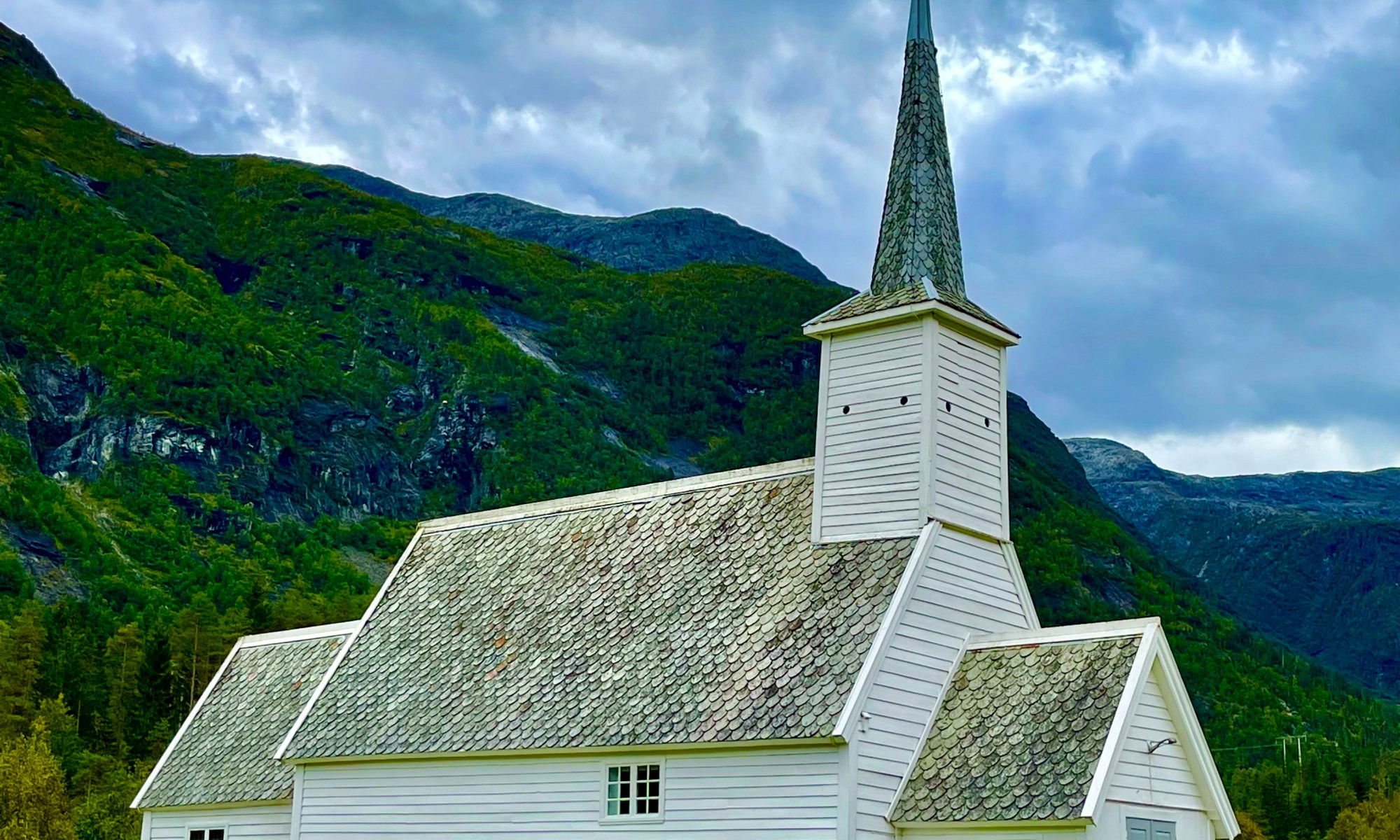
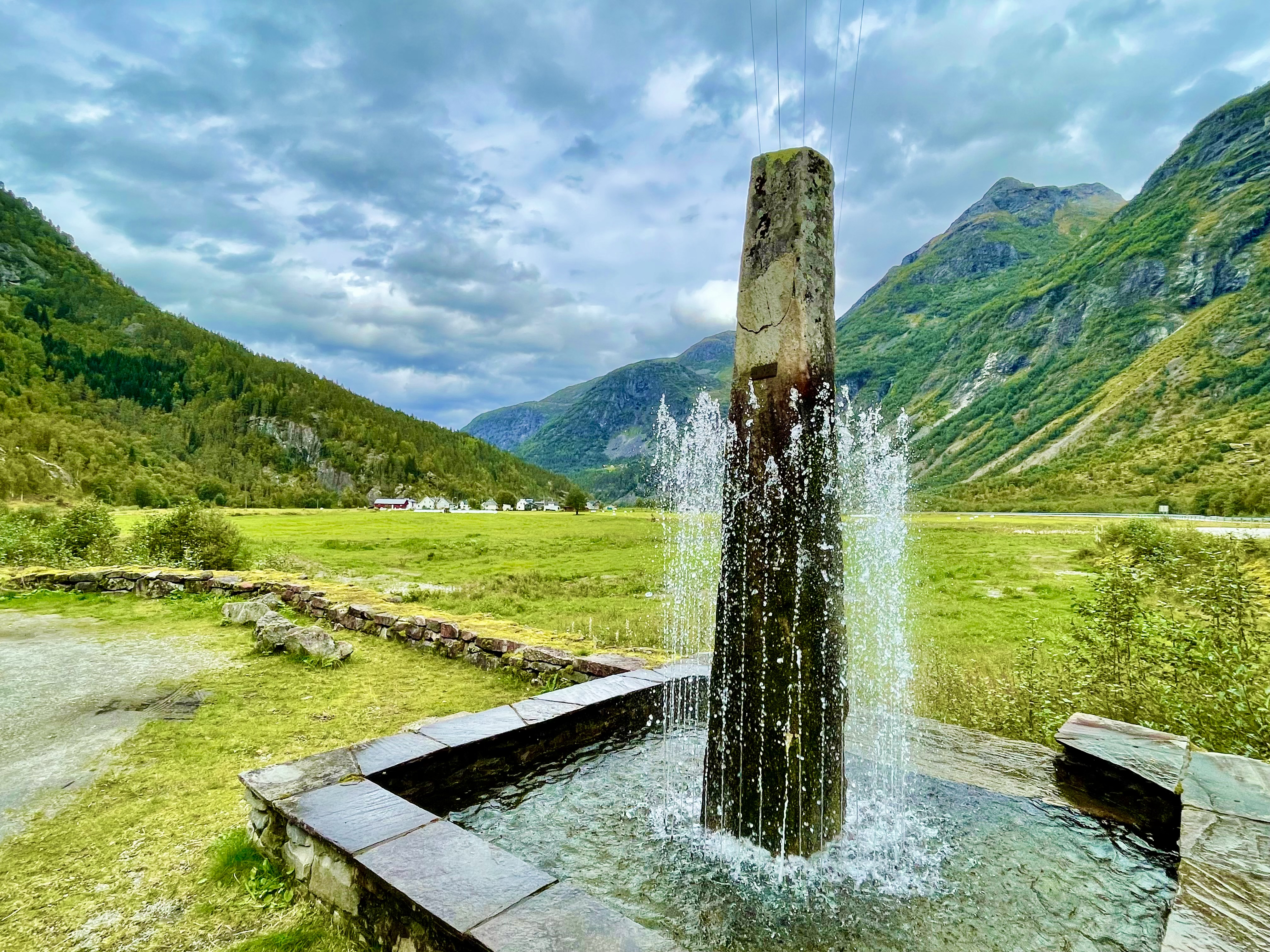
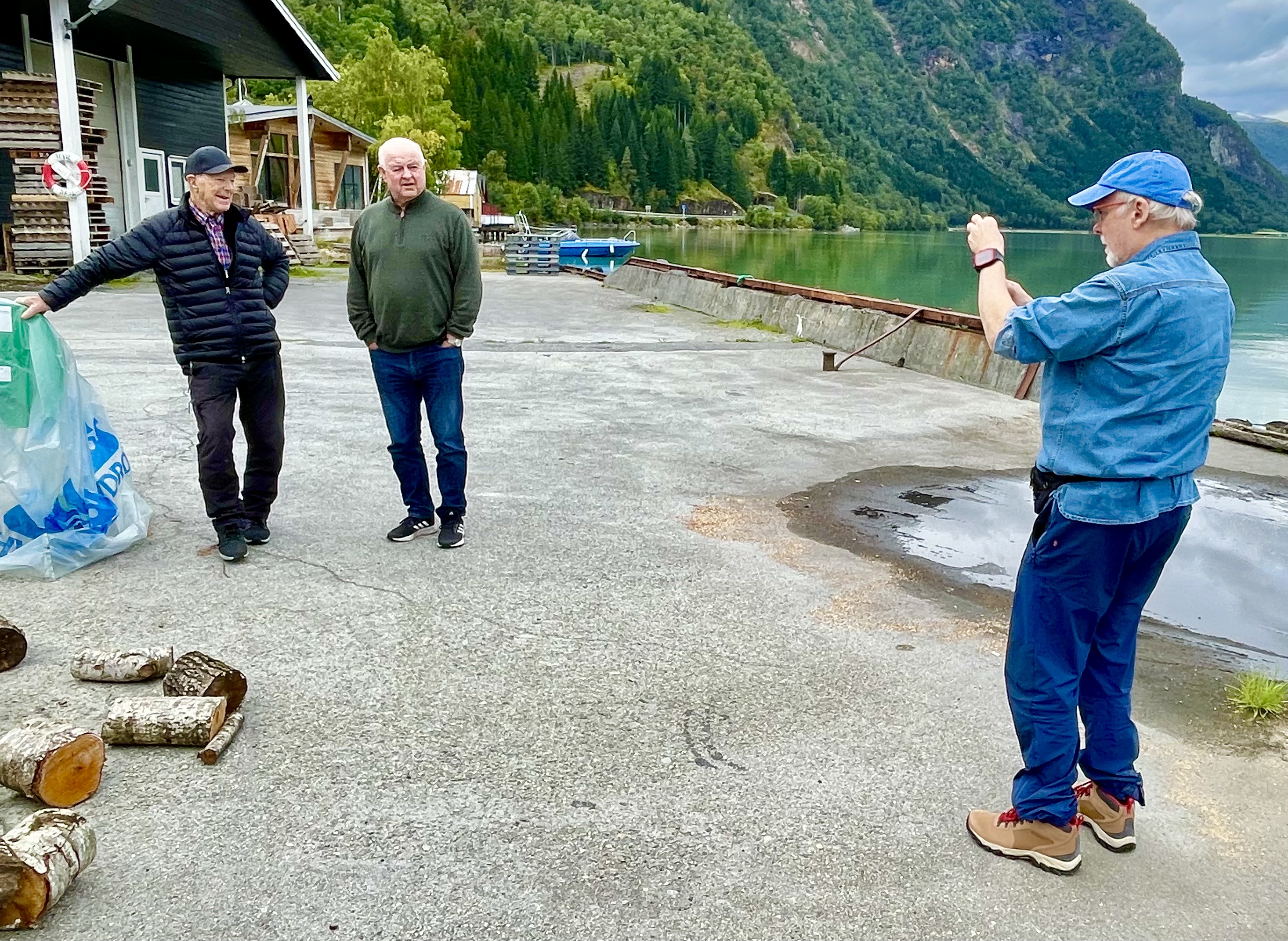
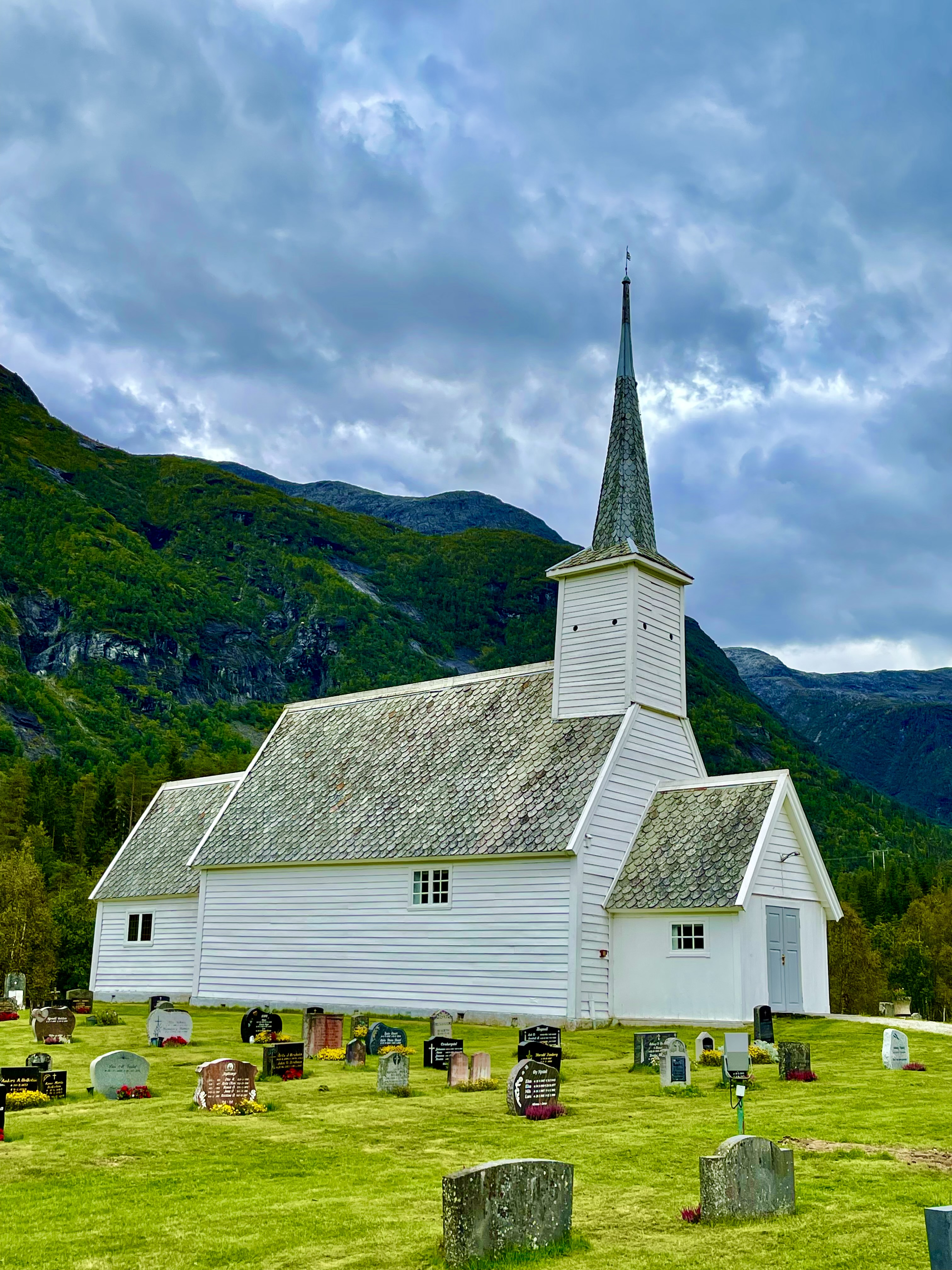
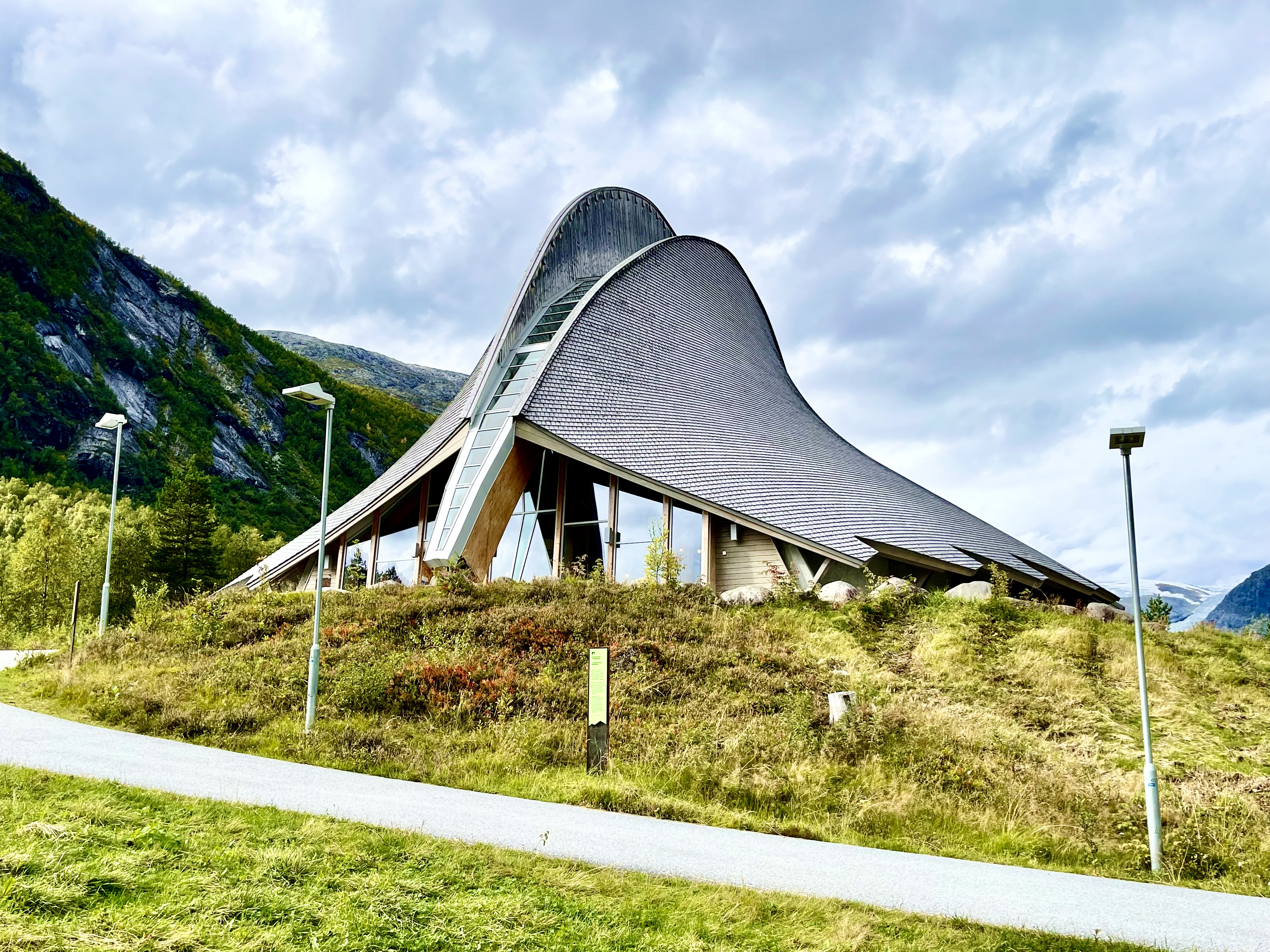
Jostedalsbreen–the Jostedal Glacier–is the largest glacier on the European continent and cuts across a large swath of mountain just an hour north of Sogndal. The evolution–and, more recently, the quickening liquification–of the glacier plays a critical role in the natural ecosystem of the surrounding Jostedal valley. One particular example of this is memorialized along the route we drove with Erik Foss and cousin Torvald Fosse today, documenting the catastrophic flood that occurred in 1979 when a combination of heavy rain and glacial melting led to a sevenfold increase in the water levels of Jostedalselva–the Jostedal river–over a sixteen hour period.
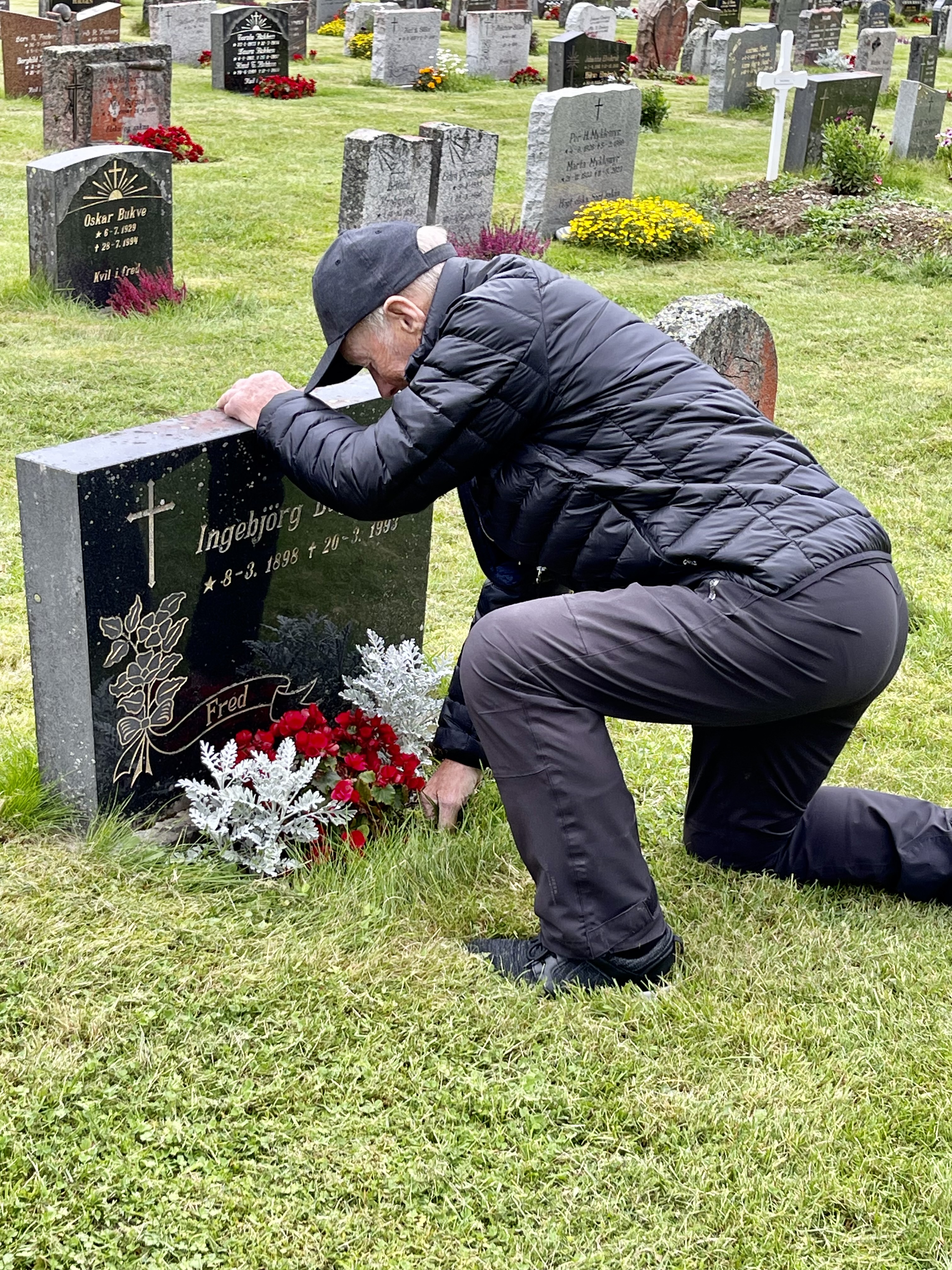
Fascinating though the ecological implications of the glacier are, they were not the primary motivation for our drive through the Jostedal valley. Instead, we were there to accompany Erik to the gravesite of his budeie from his youth–a family milkmaid who also served many of the same functions we would more modernly assign to a nanny. Erik, his voice breaking as he fondly recalls his early memories with Ingebjörg, refers to her as his “second mother” and credits her for his advanced sensibility at an early age. Touchingly, Erik visits her tombstone regularly to refresh the flowers and tidy the surrounding grass. We joined him for the task in 2019 as well, and his appreciation for the company is clear, the pain of her passing still tender after thirty years.
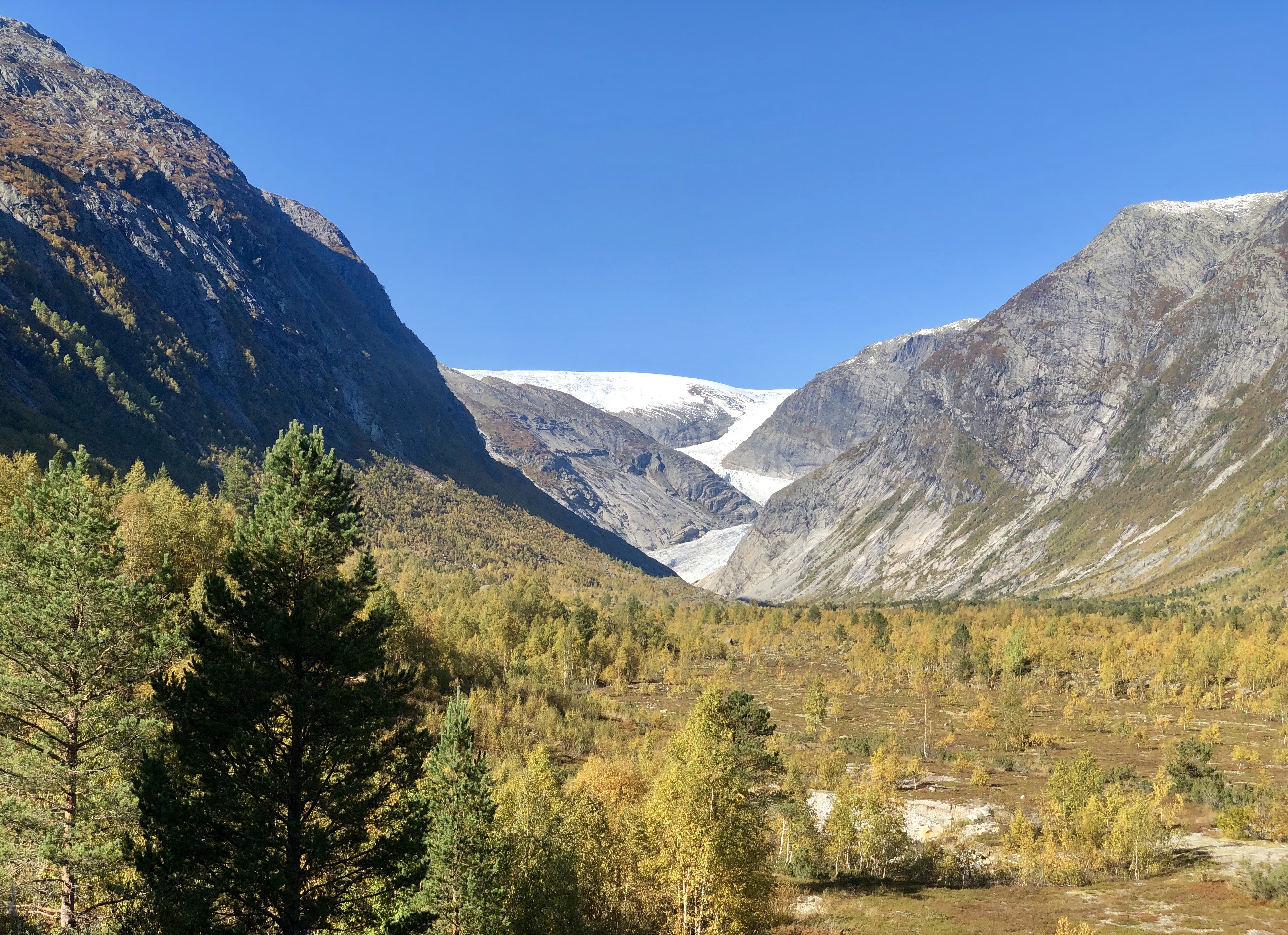
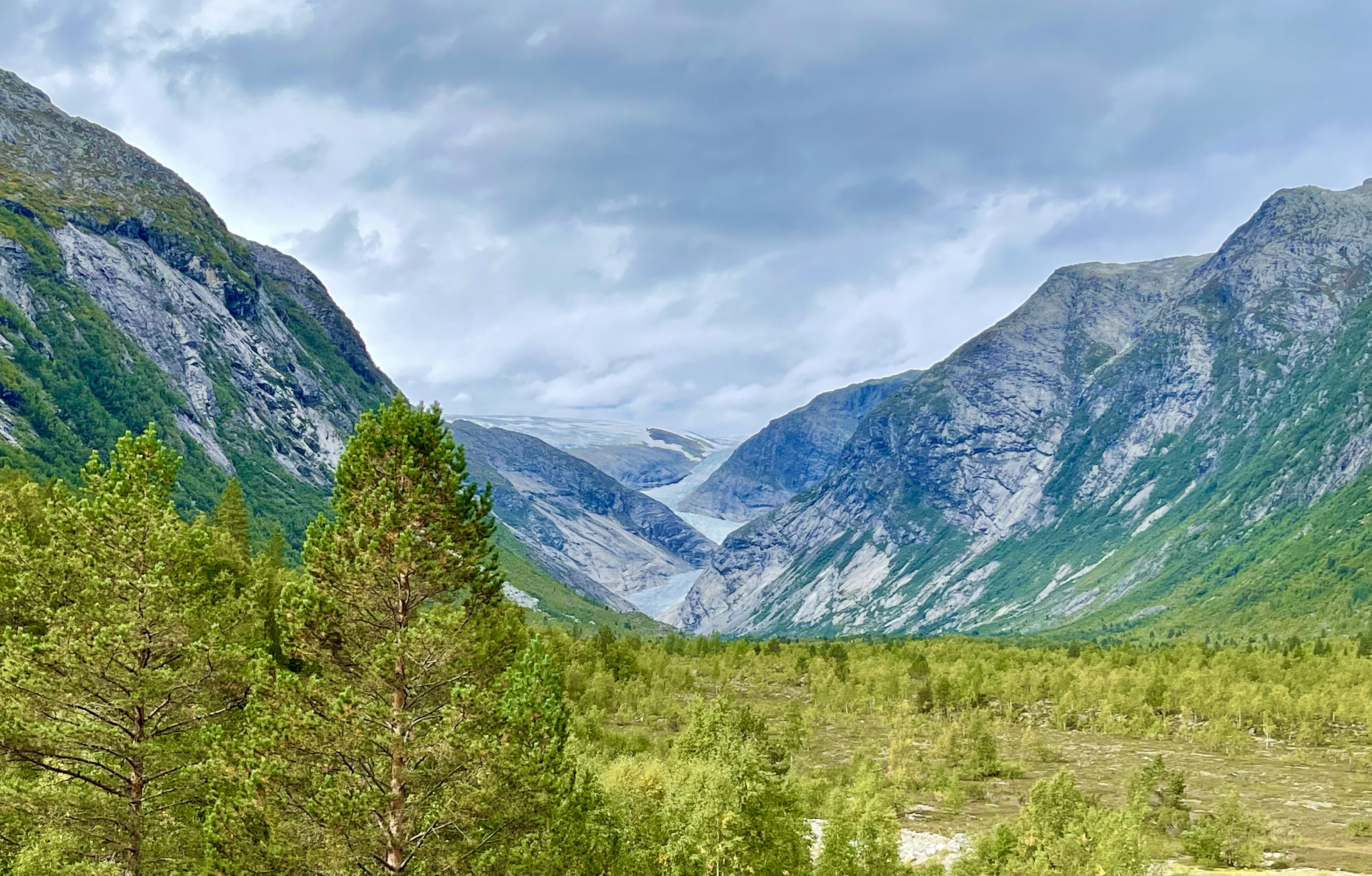
We made time before heading out of the area to stop at Nigardsbreen, a section of glacier belonging to the larger Jostedalsbreen that we had also seen in 2019. There, we were confronted with a frankly alarming sight. In a short four years–what should be a literal blink of an eye relative to the lifespan of a glacier–the disappearance of sections of ice is apparent to the naked eye. It was a difficult sight to behold without feeling overwhelmed with helplessness.
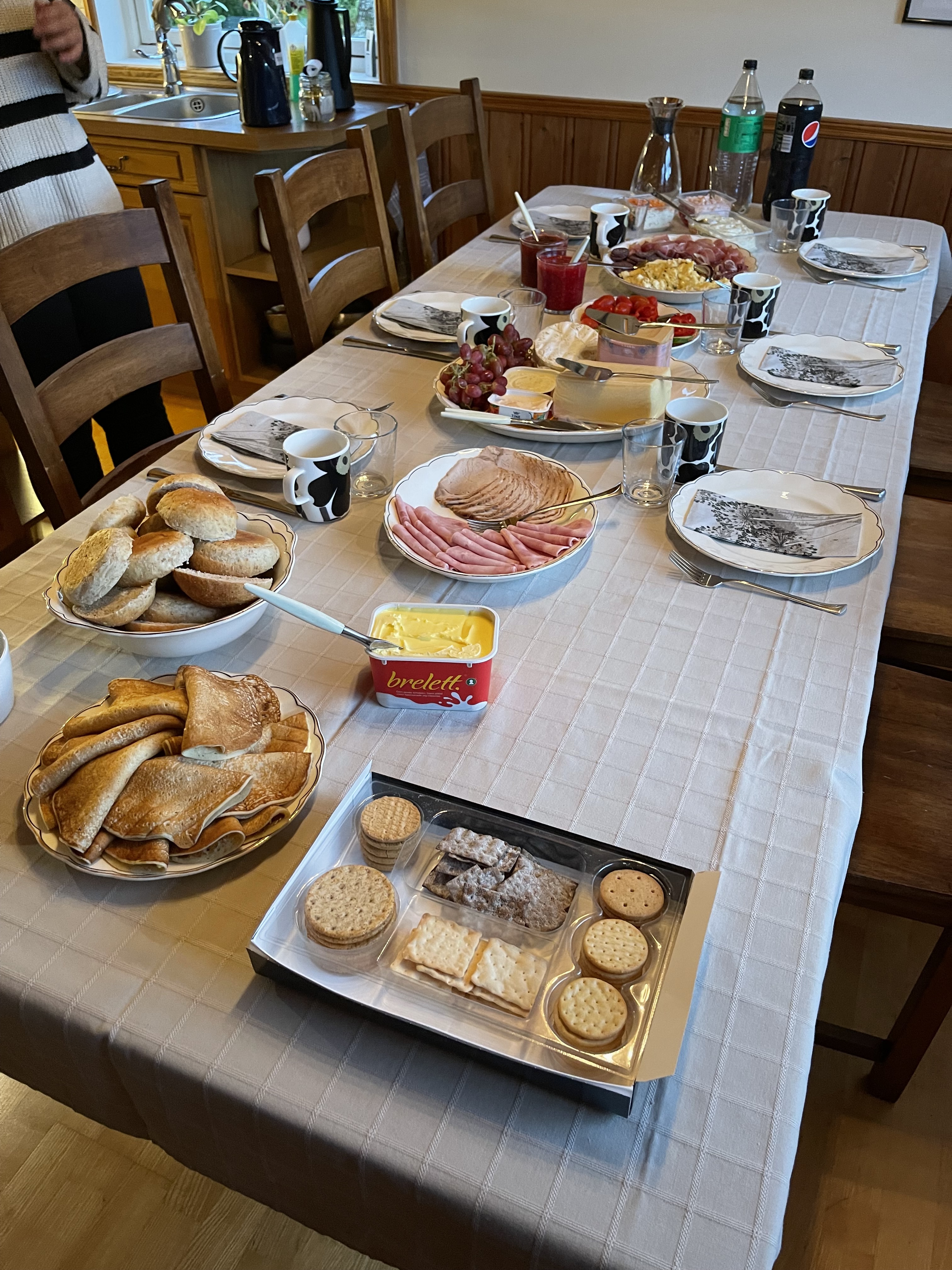
After our return to Sogndal, we took some time to recollect ourselves before it was time for another Foss clan house visit. This time, we were graciously invited to the home of Hjørdis and husband Robert, where we were also joined by her father, Magnar, and their daughter, Ida. (Magnar is one of the six elder Foss brothers mentioned in previous posts.) We swapped stories and life updates over an incredible assemblage of meats, cheeses, jams, and other goodies before retreating to the living room to share photos of our homes in America as well as Foss-themed memories. Spending time with Hjørdis’s family was a highlight of our 2019 trip, and this year was very much the same–so much so that I am burning the midnight oil as I pen this blog entry as a result of our extended conversation. I was immediately reminded why we so enjoyed our time with them four years ago and greatly appreciated the opportunity to catch up with them again.
 Where the Waterfalls Mean Home
The glacial melt is so very sad. If only we humans had been warned…
Really enjoying your daily posts, Steffen! It’s a great way to capture and process the experiences.
Thank you, Cristina!
I have enjoyed this trip as much as the last one. We visited the glacier when we were there also.